
Toyota's Hydrogen Trucks Now Refuel in Eight Minutes, Matching Diesel
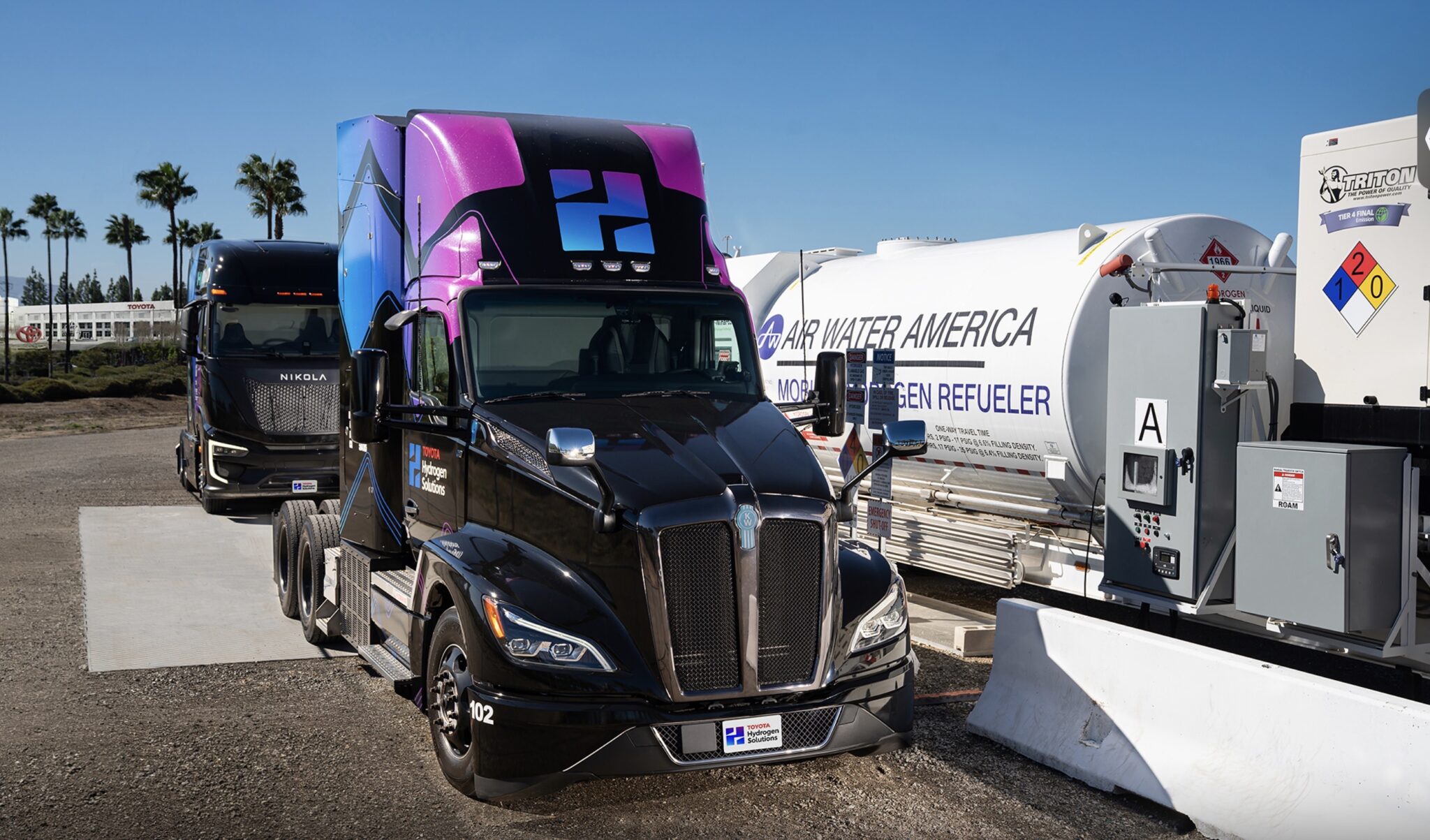
Toyota has cleared one of the nagging doubts around hydrogen freight: refuelling time. Working with the National Laboratory of the Rockies in Golden, Colorado, the automaker says its fuel cell heavy trucks can now take on hydrogen in roughly eight minutes — enough for up to 450 miles (724km) of driving.
That puts them on the same footing as a diesel rig at the pump, at least on paper. Trucks running Toyota fuel cell powertrains are slated to begin commercial service in the US in 2027.
The work was done under the SAE J2601-5 standard, using high-flow 70MPa fuelling at rates up to 300g/s. In plain terms, that’s about five times quicker than the kind of refuelling a passenger car sees, and it pushes energy into the tank at a rate comparable to a 20MW charger.
Key Specs: ~8-minute refuelling · Up to 450 mi (724 km) range · 70MPa high-flow fuelling at 300g/s · Commercial service from 2027
From Gardena to the Port of LA
Toyota isn’t stopping at lab results. The company plans to bring the private station at its Hydrogen Headquarters in Gardena up to the same high-flow standard.
It has also placed two mobile hydrogen stations at its North American Parts Center California, the largest of its US parts distribution centres. Those units will serve trucks hauling goods from the Port of Los Angeles to Ontario and across the surrounding region. Early runs will use trucks operated through Hyroad Energy, with vehicles fitted with Toyota’s certified fuel cell powertrain following later.
A permanent station open to the public is planned for the same site. It would offer both high-flow and conventional fuelling for heavy trucks, along with a separate area set aside for cars.
Speed Isn’t the Whole Story
Eight-minute refuelling knocks down one argument against hydrogen trucks. It doesn’t touch the bigger ones.
Fuel cost and the thin spread of stations have done more to hold the technology back than fill times ever did. That explains why Toyota is building its own supply at its own facilities rather than waiting for a network to appear.
Battery-electric rivals are chasing the same downtime problem from a different angle. On the same day, CATL made its case for battery swapping as China’s route to keeping heavy trucks on the road.
Two very different answers to the same question. Which one freight operators pick in 2027 will say a lot about where the money goes next.
Source: Automotive World
What do you think?