
Toyota's Second-Gen Sora Hydrogen Bus Adds 50% Range While Using Less Fuel
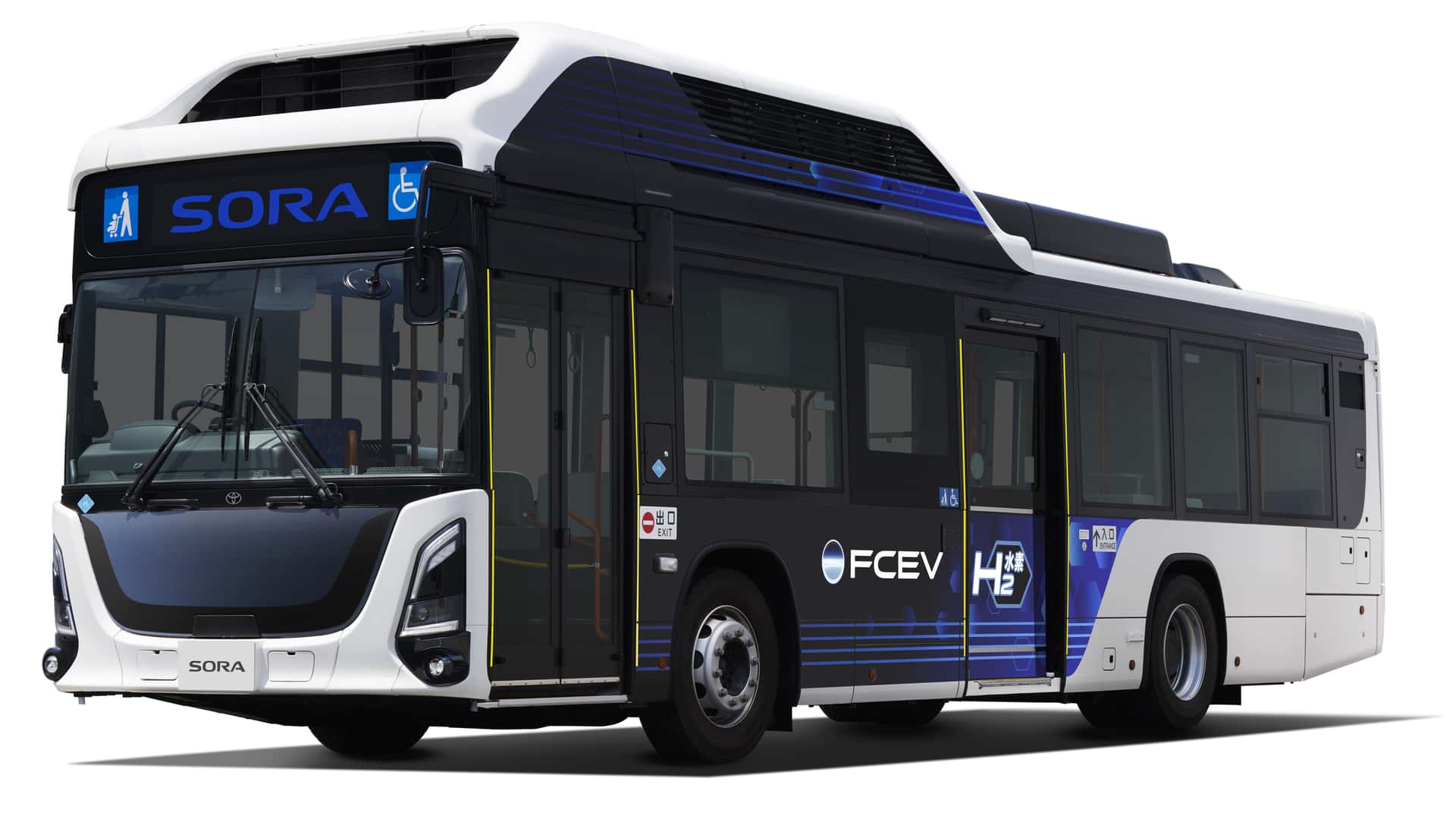
Toyota has pulled the wraps off the second-generation Sora, a hydrogen fuel-cell bus co-developed with Isuzu. The headline figure is a driving range of over 186 miles (300 kilometers), roughly half again as far as the original Sora that arrived back in 2018 — and it achieves that despite carrying a smaller hydrogen supply than before.
The mechanical layout is a split effort. A roof-mounted fuel-cell stack, rated at up to 113 kW, generates electricity that feeds an 88-kWh lithium-ion battery, which in turn supplies a pair of 110-kW electric motors. Together they produce 295 horsepower and 715 pound-feet of torque. Away from the roof-mounted hydrogen hardware, the vehicle is essentially a rebadged Isuzu ERGA EV, a model that first appeared in 2024; Isuzu is now offering its own fuel-cell ERGA FCV variant off the same partnership.
Refueling remains one of hydrogen’s practical selling points here. The roof tanks hold 471 liters and can be topped up in roughly ten minutes, and Toyota expects future filling stations to cut that time in half. As with the first-generation bus, the high-voltage battery can send power outward through an external supply, letting the Sora double as an emergency electricity source when the grid is down for extended periods.
Passenger-focused details include a fully flat floor and an optional one-touch securement system that simplifies travel for wheelchair users. Buyers will be able to choose from four versions — two configured for urban routes and two for suburban service — each with its own seating layout. On the safety side, Toyota fits the Emergency Driver Stop System and a Driver Status Monitor, both capable of bringing the bus to a complete halt if they determine the driver can no longer take control.
Production is scheduled for fiscal year 2026, spanning April 2026 through March 2027. Assembly will take place at the Utsunomiya Plant in Tochigi Prefecture, Japan, handled by J-Bus, the 50:50 joint venture between Isuzu and Hino Motors. The announcement signals that Toyota intends to keep investing in fuel-cell technology for heavy-duty transport even as its passenger hydrogen efforts, including the slow-selling Mirai, continue to face limited demand and sparse refueling infrastructure in markets like the United States.
What do you think?