
TomTom Cuts EV Onboarding From Months to Minutes With New Self-Service Platform
TomTom has rolled out a new piece of infrastructure aimed at the companies that build electric cars rather than the people who drive them. The Dutch location-technology firm has added “Electric Vehicle Management” to its E-Mobility Suite, a self-service platform that lets automakers register freshly launched EV variants with nothing more than core specs: battery capacity, connector types, physical dimensions and curb weight. The payoff TomTom is selling is speed. What historically took months of back-and-forth integration work can now be completed in a matter of minutes, according to the company.
Once a vehicle is logged into the system, it receives a digital identity that travels across TomTom’s entire service stack. That single record feeds route planning, charging stop selection, range estimation and turn-by-turn navigation, removing the need to re-enter the same vehicle data separately for each application. The same underlying dataset can power in-car infotainment, smartphone companion apps and browser-based tools, so an automaker maintains one source of truth instead of several parallel integrations.
The heavy lifting after onboarding falls to an AI-driven consumption model. TomTom pairs conventional physics-based calculations with anonymised real-world driving data to produce vehicle-specific projections for how far a given model will actually travel and when it will need to plug in. Because the model is continuously fed by a growing pool of fleet data, TomTom expects the accuracy of those forecasts to improve over time rather than staying fixed at launch.
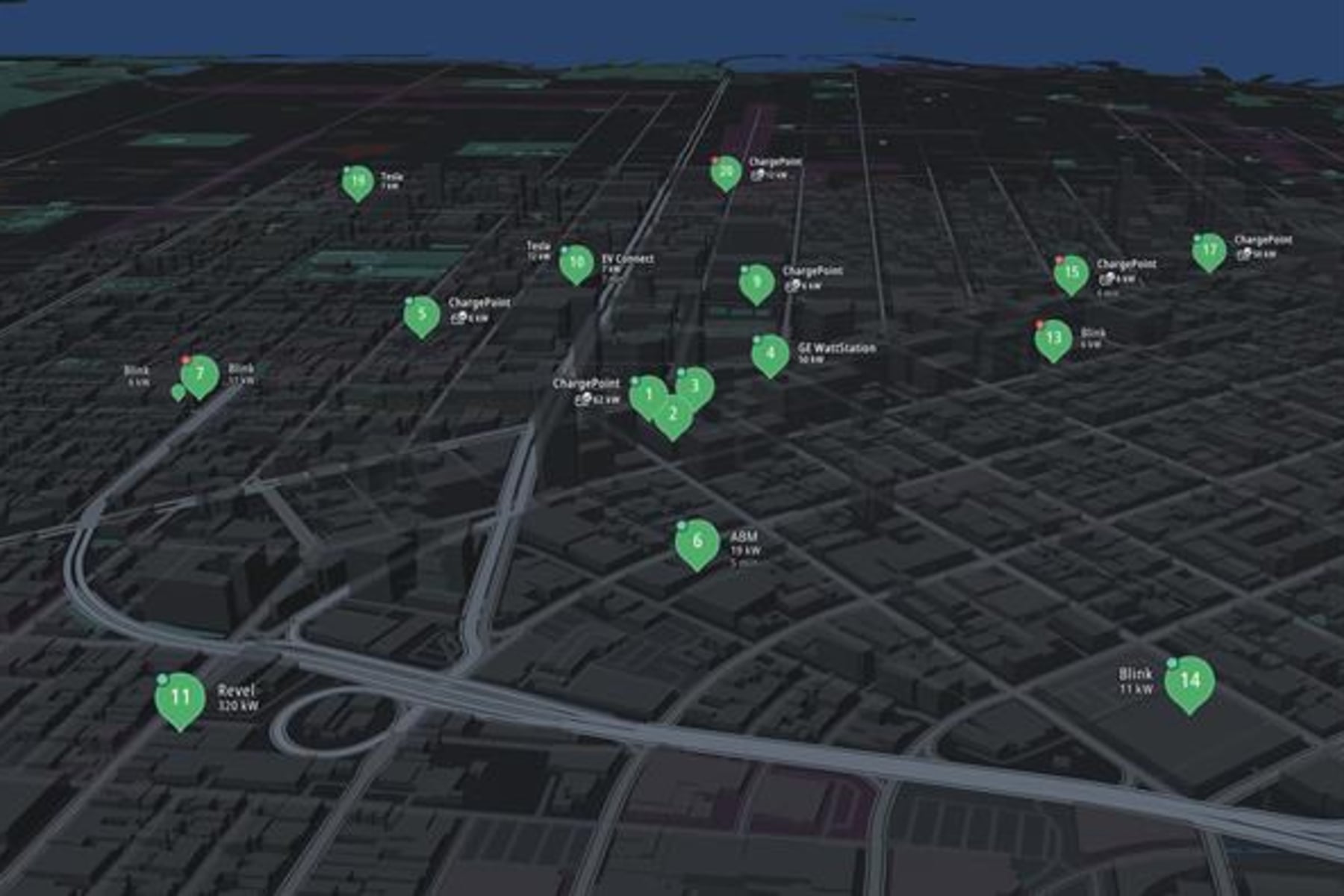
Drivers, meanwhile, get an upgraded layer of tools. TomTom’s charging search function now spans more than 2.3 million connectors distributed across 117 countries, and returns details including power output, opening hours, live availability and a prediction of how busy a site will be when the driver actually arrives. A reliability score flags locations that are often out of service, helping motorists steer clear of dead ends. The routing engine automatically places suitable charging stops along a journey and reworks the plan on the fly if a driver skips or swaps one, and trips sketched out in a phone app can be pushed straight to the car’s display.
TomTom is not starting from zero in this space. The company already works with automakers on EV navigation, and in 2024 it showed off an optimised electric-car routing solution built with Cariad, Volkswagen’s software arm, that factors in range, traffic conditions, driving behaviour and charger availability, with an initial rollout tied to Audi. TomTom says its services now reach more than six million electric vehicles globally. The new capabilities can be pulled in through APIs and SDKs or consumed via TomTom’s own navigation products, with Electric Vehicle Management accessible through the MyTomTom portal.
What do you think?