
EVX to Build Pole-Mounted DC Fast Charger in Australia
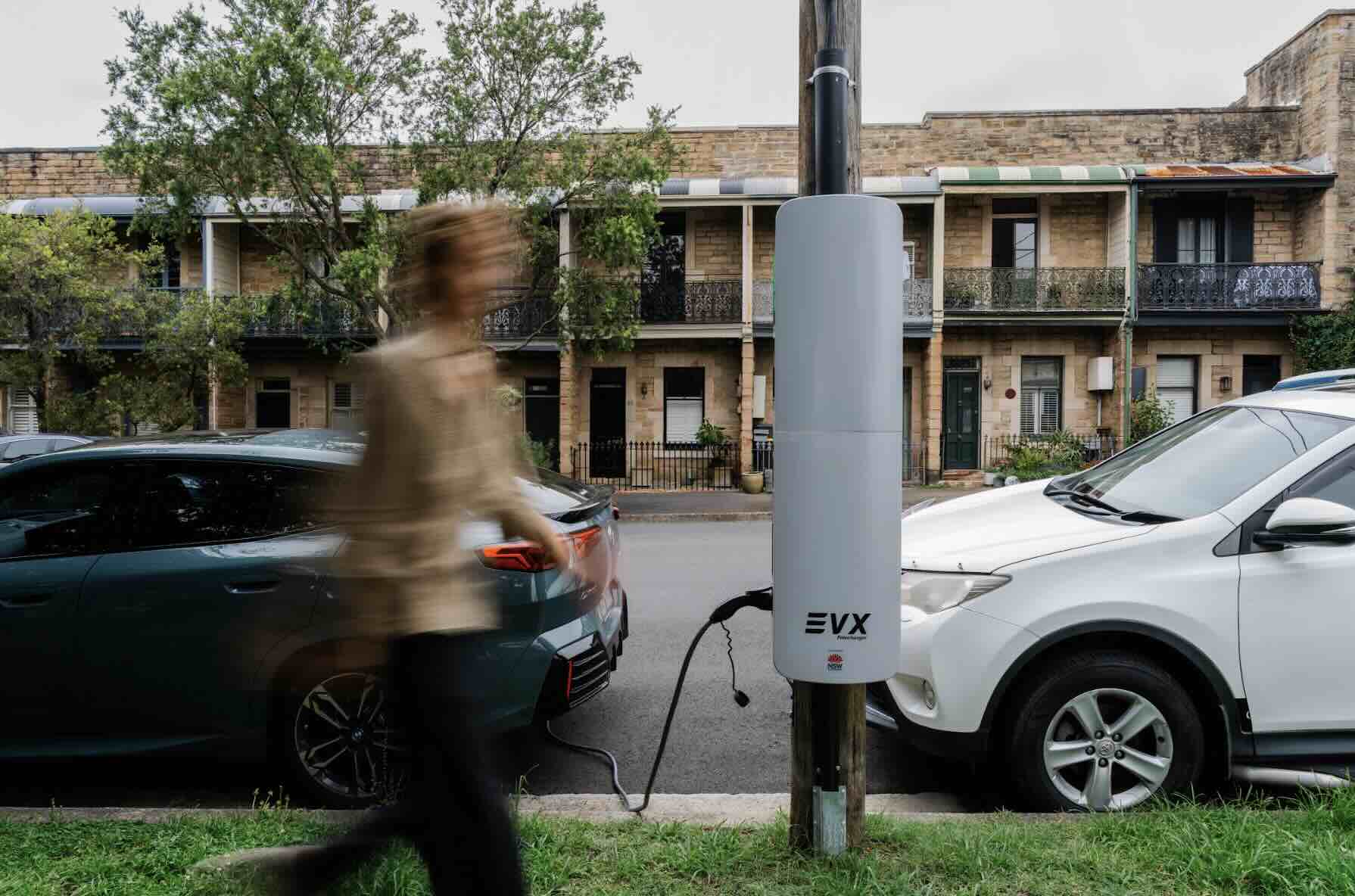
Australian charging hardware maker EVX has confirmed it is moving beyond AC kerbside units and into the direct-current fast-charging space with a new product called Polecharger Rapid. The unit, rated at 40-50 kW, is being engineered with the country’s electricity networks, local government rules and public-space constraints in mind, rather than adapted from an overseas design.
EVX has been building pole-mounted chargers since 2021 and now operates 518 units spread over 259 locations in New South Wales and Victoria. The company’s existing hardware is a 22 kW dual-output Polecharger that hangs off utility poles already standing on residential streets. Polecharger Rapid takes that same street-level philosophy but swaps AC for DC, roughly doubling the power available at the kerb.
“We have already demonstrated that public EV charging infrastructure can be designed and manufactured locally and deployed at meaningful scale,” said EVX chief executive Andrew Forster, adding that the Rapid variant extends that local capability into DC charging and is tailored to where councils, networks and communities actually need it.
By choosing existing poles as its mounting point, EVX sidesteps one of the biggest cost hurdles in urban charging: securing land and running new civil works for dedicated charging bays. That approach matters in dense suburbs where drivers often lack off-street parking, a common situation in Australian cities and a frequent argument against EV ownership there.
EVX said it is still working through detailed engineering, certification and manufacturing plans, and will not yet disclose full technical specifications. More detail on production partners and the first installation sites is expected closer to the commercial release. The company has said early deployments are targeted for early 2027, split between busy urban activity centres and regional and rural communities. Local manufacturing of charging hardware is a relatively small niche in Australia, so a homegrown DC product at this power level would be a notable step for the segment.
What do you think?