
Tesla's Long-Awaited Roadster Stuns in Waco with Flight, Upside-Down Driving, and Record Acceleration
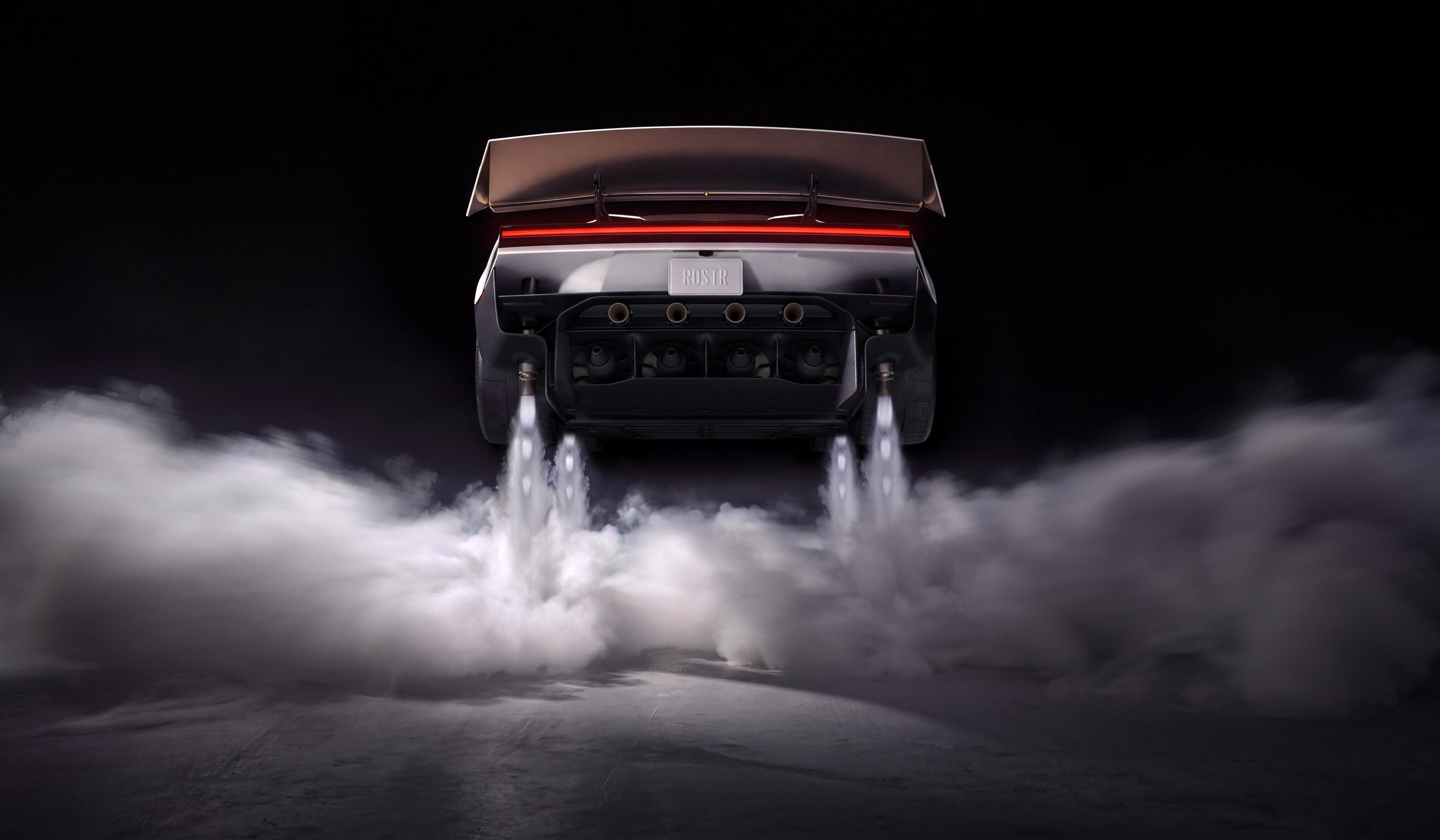
Tesla’s next-generation Roadster has been in development for nearly a decade, and over the weekend in Waco, Texas, the electric supercar finally made a dramatic public appearance. The demonstration, lasting less than half an hour, felt less like a conventional product reveal and more like an elaborate stunt show. Elon Musk took the stage to promise a 2028 production start, but the main attraction was the hardware itself: the Roadster drove up a steep, multi-story ramp, clung to the vertical surface thanks to a fan-based suction system developed with SpaceX, then flipped around using cold-gas thrusters to descend gently. After that, the car launched over the rest of Tesla’s lineup — the Model 3, Model Y, Cybertruck, Semi, and Cybercab — executing what VP of Engineering Lars Moravy described as a “kick flip.”
Musk explained that the Roadster is equipped with attitude-control thrusters and rear main thrusters, giving it rocket-like maneuverability. “It can basically fly like a rocket,” he said, adding that it could perform rolls and other aerial gymnastics. “This is not necessarily a safety-optimized car, but it takes the fun meter to 11 out of 10.” The vehicle carries two ultra-high-pressure air tanks with a combined volume of 600 liters, holding roughly 250 kilograms of air, and uses ten nozzles to execute its maneuvers. The compressed air system can be refilled without a specialized chemical propellant. While Musk claimed the car will be street-legal, Tesla later admitted it would not meet road regulations — an unsurprising caveat given the involvement of both the FAA and NHTSA in any such vehicle.
Underneath the theatrics, the Roadster is a two-seater with seats molded directly into the chassis. It features steer-by-wire technology for steering, brakes, and throttle, a retractable rear wing for downforce, and a rear diffuser housing the thrusters and fans. Musk called it “the last best driver’s car” and said the design drew inspiration from aerospace vehicles like the SR-71 reconnaissance aircraft. During the event, Tesla claimed a 0–60 mph time of just 0.81 seconds, and Musk suggested the production version could improve on that. “You’ve got to crack halfway to the speed of sound,” he teased, hinting at Mach 0.5 or slightly higher.
After the demonstration, Tesla updated its website to detail three performance tiers for the next-gen Roadster. The entry-level “Performance” variant, designed for road use, seats two and combines active aerodynamics with a multi-mode suction system; it targets a 0–60 time under 1.6 seconds and a range exceeding 300 miles. The mid-tier “Thrust” version adds rear-mounted cold-gas thrusters, cutting 0–60 to under 0.9 seconds, and will see a limited release. The flagship “Rocket” model is a single-seater with a full perimeter of cold-gas thrusters, enabling lateral and rotational midair movement; it boasts a top speed over 230 mph and a 0–60 time under 0.59 seconds. Tesla says this version is invite-only and not approved for public road use.
The Roadster’s journey to this point has been anything but smooth. First announced as a surprise at the 2017 Tesla Semi event, it promised specs that seemed ludicrous even then: 0–60 in 1.9 seconds, a 250+ mph top speed, a 200 kWh battery, and 620 miles of range for $200,000. Musk said deliveries would begin in 2020. Early adopters put down $50,000 deposits (or $250,000 for the Founders Series), effectively providing interest-free funding for Tesla’s expansion. But the Roadster soon became an afterthought as Tesla focused on mass-market models like the Model Y and grappled with the Cybertruck. Occasional updates from Musk only raised expectations, culminating in the promised “SpaceX package” with cold-gas thrusters and hovering capability. Musk has since downplayed the Roadster’s financial significance, calling it a “small potato situation” and framing it as a joint engineering collaboration between Tesla and SpaceX. Some analysts see the renewed push as an attempt to set the stage for a rumored Tesla-SpaceX synergy, but for now, the car flew — and that was enough for the crowd.
What do you think?