
Tesla Pulls the Wraps Off a Flying Roadster Prototype, Targets 2028
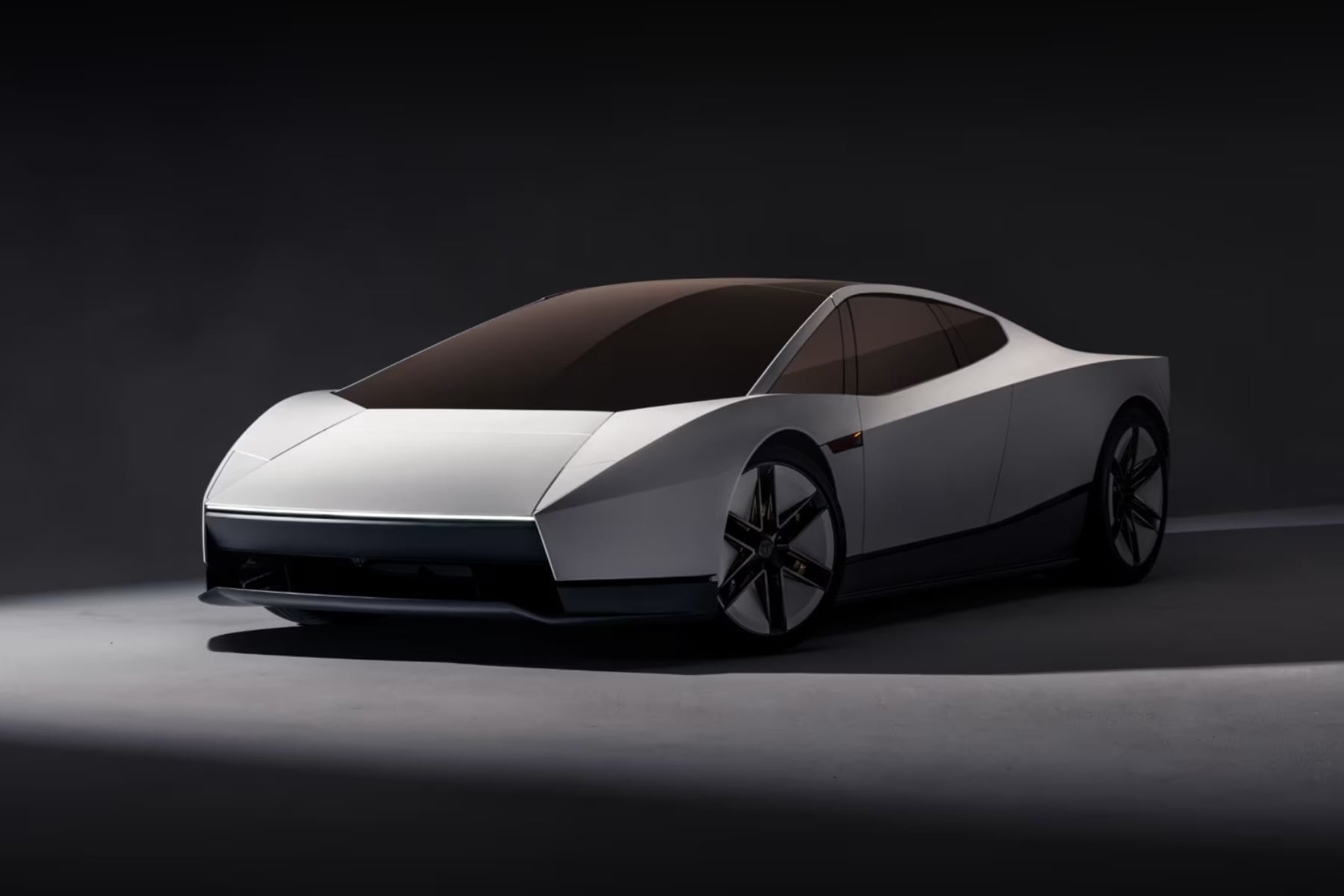
Tesla used an outdoor stage at SpaceX’s McGregor, Texas test facility on 15 October 2026 to reveal a dramatically reworked Roadster — and the headline act had little to do with conventional driving. The angular, Cybertruck-inspired machine fired up ten cold-gas compressed-air thrusters and physically lifted off the ground, rotating about its longitudinal axis before settling back down with rocket-like precision. A steer-by-wire setup with a yoke controls the airborne prototype.
A second party trick involves the underbody. A multi-stage fan paired with a sealed floor extracts air from beneath the car, letting the Roadster hold itself against a ceiling even while stationary — a downforce concept the McMurtry Spéirling demonstrated back in April 2025. From that inverted position the Tesla reportedly fired its thrusters, rolled over and landed on all four wheels, then cleared a line of parked Tesla models (Model 3, Model Y, Cybertruck, Cybercab and Semi) without damage.
On the ground, Elon Musk — narrating live — quoted a 0-60 mph (96.5 km/h) time of 0.81 seconds, subjecting occupants to up to 3.3 G. Active spoilers and a track mode that drops the car’s ride height are also part of the package.
The production-relevant numbers, however, look quite different from what Tesla promised when this project was first shown in 2017. The originally touted 200 kWh pack and roughly 1,000 km of range have been scaled back in the name of weight savings, with a maximum of about 480 km now cited. Top speed has been trimmed from over 400 km/h to roughly 370 km/h. The old rounded 2+2 GT shape is gone, replaced by a Cyber-style body with two seats — or a single seat in the Rocket package. Musk and design chief Franz von Holzhausen pointed to stealth aircraft such as the SR-71 Blackbird and F-35 as inspiration, visible in concealed headlights, a full-width rear light bar, an ‘Ano White’ finish and gold-tinted glass. Magnesium, titanium and carbon fibre, plus fixed-mounted seats, keep mass in check; the cabin is a minimalist white-grey microfibre space with a central touchscreen and two smaller displays.
Three configurations now appear in the configurator. The road-legal Performance entry model, with two seats and the suction system, is listed at a sprint of around 1.6 seconds and requires a €50,000 reservation (€5,000 up front, €45,000 within ten days). The track-focused Thrust variant adds rear cold-gas thrusters for sub-0.9-second runs and carries a €250,000 reservation fee, limited to one unit per customer. The Rocket package — one seat, ten thrusters and what Tesla labels a flight capability system, with a claimed 0.59-second sprint — cannot be ordered publicly and will be handed out by personal invitation only. Production is said to begin in 2028, though hard technical data on the road-legal car remains thin.
What do you think?