
Tesla Roadster: 1,341 HP, 320 Miles of Range, and a Trunk Full of Compressed Air
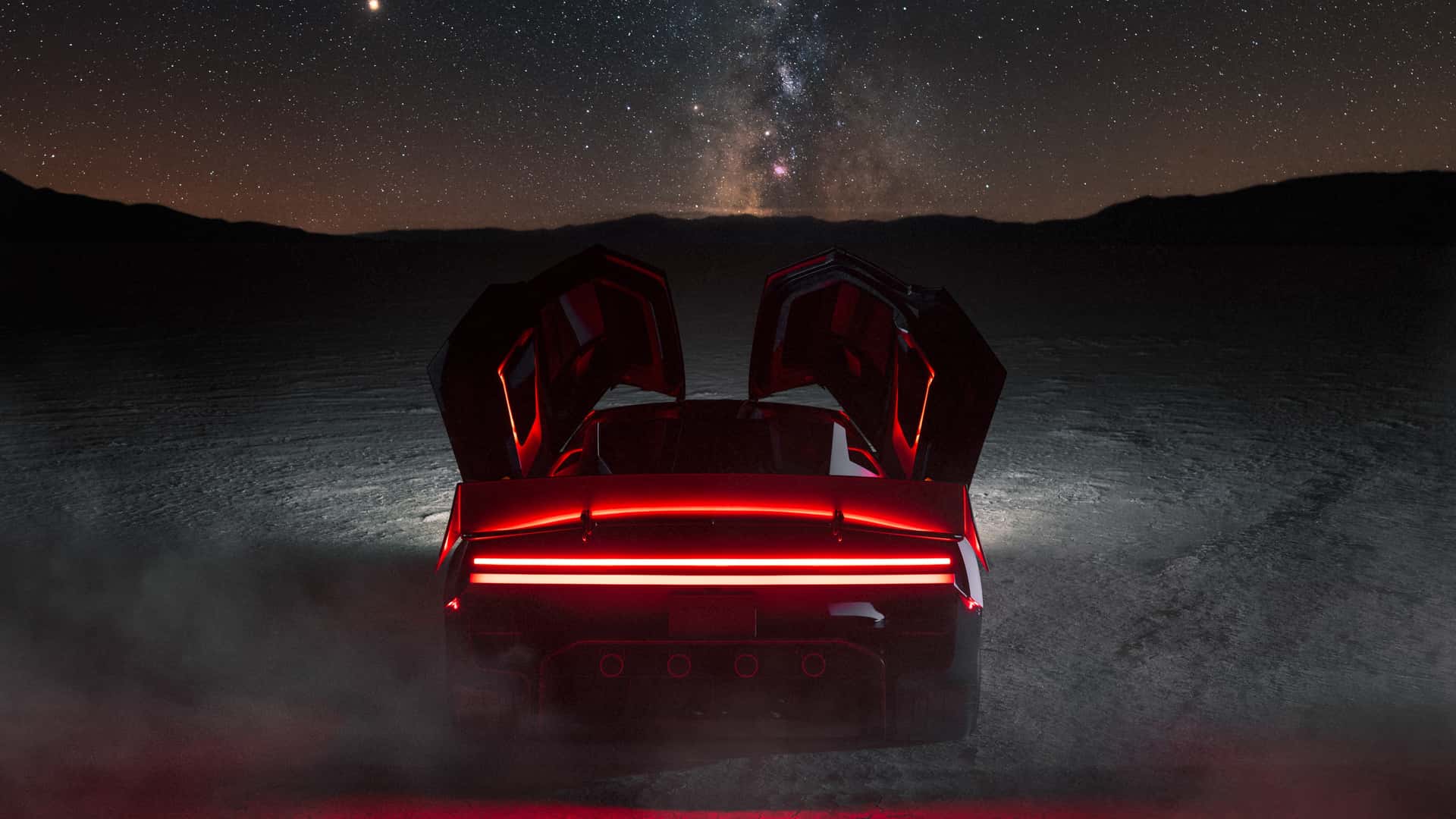
Tesla has finally put numbers to the second-generation Roadster. After a flashy debut event that left enthusiasts without a spec sheet, chief engineer Lars Moravy and design chief Franz von Holzhausen sat down for a lengthy video interview to walk through the platform, the battery, the motors and the styling — confirming a 2028 production start in Texas.
The headline figures are split between genuine engineering substance and past promises that have quietly shrunk. The car rides on an all-new aluminum and carbon-fiber chassis with steer-by-wire and brake-by-wire, backed by carbon ceramic rotors. Its bespoke high-voltage pack runs between 800 and 1,000 volts on nickel-based lithium-ion cells developed specifically for this car. Tesla declines to state the energy capacity, but Moravy says real-world range lands at roughly 310-320 miles. That is barely half of the 620 miles the company advertised when it first showed the concept in 2017.
Performance and charging are where the Roadster pushes boundaries. Four trim levels are planned, all rear-wheel-drive, with a pair of motors providing torque vectoring for sharper cornering. The lightest version weighs approximately 3,700 pounds. The entry model produces more than 1,073 hp and 885 lb-ft of torque, while stronger variants claim over 1,341 hp and 1,032 lb-ft. Top speed is presently 214 mph, though Tesla says the goal is 330 mph. The pack is also the quickest-charging battery Tesla has built, accepting up to 500 kW from a V4 Supercharger and delivering up to 1,000 kW of output, which Moravy says takes the car from 15% to 85% in about 10 minutes. The charge port hides behind the rear wing.
Despite the name, the Roadster is not strictly an open car. The glass upper section of its butterfly doors can be lifted out to create a T-top configuration, echoing the third-generation Chevrolet Corvette. A pair of deployable active fans at the rear can suck the car toward the road for downforce or pull air through the body to generate a venturi effect, and they lower themselves to avoid road debris. Active aero elements are scattered around the body.
The most talked-about option, the Thrust version, sacrifices the two-seater’s trunk to a 200-liter pressurized air tank that feeds equal-length pipes. Filling it with a high-pressure nitrogen system currently takes two to six hours, though Tesla is developing a setup that could cut that to under 30 minutes. One charge delivers roughly five to six seconds of thrust — enough, the company claims, for a sub-one-second 0-60 mph run. The compressed-air feature also invites obvious practical questions: repeated refills, tank servicing and how the system holds up away from a workshop all remain unanswered for now.
Tesla frames the Roadster as a track-focused machine rather than a distance cruiser, which explains the range sacrifice. With production two years out, the remaining question is whether these figures survive the journey from prototype to showroom.
What do you think?