
Renault's E-Space Concept Makes a Case for the Electric Minivan
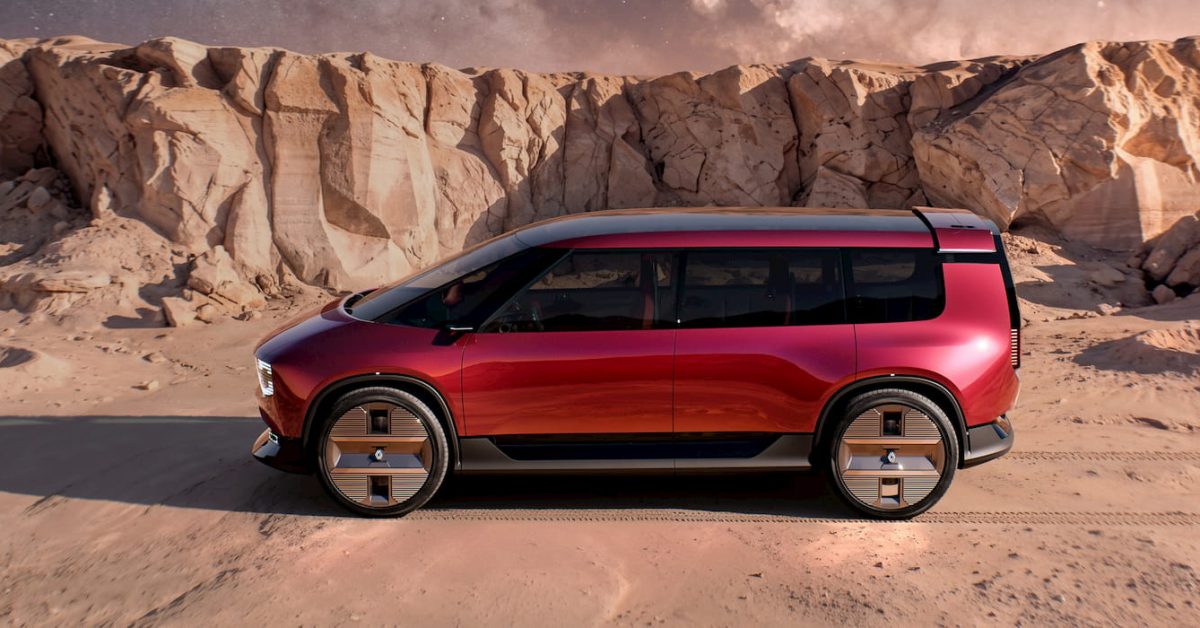
Renault used the Paris Motor Show stage to pull the wraps off the E-Space Concept, a battery-electric people mover that the company pitches as a genuine alternative to the SUVs and sedans crowding today’s roads. The design study revives a nameplate with real history: the original Espace landed back in 1984, and the new show car is framed as its electric-era successor.
In size, the concept lands in familiar territory. It stretches 4,700 mm from bumper to bumper, spans 2,020 mm across, and stands 1,670 mm tall — roughly the footprint of a Kia PV5 Passenger or a short-wheelbase Volkswagen ID. Buzz. Rather than chase the tall, blocky stance of a crossover, Renault kept the body low and the surfaces smooth, finishing the roofline with a spoiler that nods to the second- and third-generation Espace.
Glass is the defining motif inside. Renault says the fully glazed cabin draws on Bauhaus ideas, specifically the work of architect Ludwig Mies van der Rohe, with windows and a glass roof extending far below the already low waistline. Romain Gauvin, who heads advanced design and concept cars for the brand, noted that the layout lets someone standing outside see straight into the cabin — and lets the driver ride with elbows resting on the door, just as in the original.
Double-hinged rear doors open onto a flat floor with six individual seats, each mounted on what Renault describes as floating lacquered shells. Every seat swivels, and the second row can rotate a full 180 degrees to face the third row in a train-style arrangement. Second-row passengers get folding tray tables and 12.3-inch screens built into the headrests, while folding those seats opens up a table setup controlled by a remote console stocked with an air purifier, a small fridge, game controllers and a Connect 4 set.
Up front, a pillar-to-pillar curved display called OpenR Panorama is joined by a central infotainment screen, both able to pivot around a base behind the steering wheel. The compact wheel relies on steer-by-wire hardware, which Stéphane Maiore, Renault’s head of interior design, said frees the layout from the physical constraints of a conventional steering column. Renault stopped short of confirming a production version or a timeline, describing the concept only as a contemporary take on family travel that sketches out where it sees the car heading.
What do you think?