
Xpeng X9 and GAC Aion UT Earn Five-Star ANCAP Ratings Under Stricter 2026 Rules
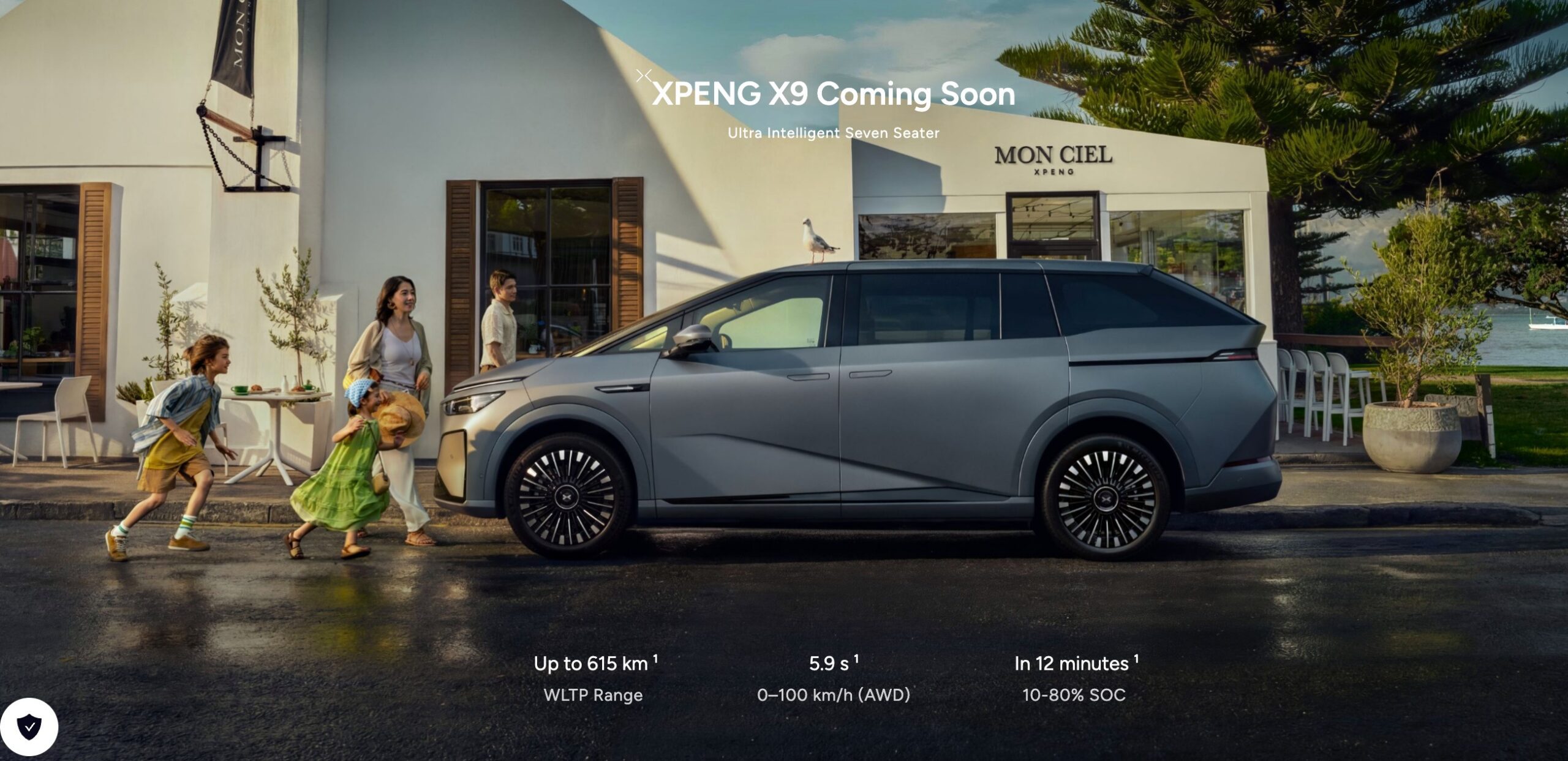
Two Chinese-built electric vehicles that recently entered the Australian market have come away with top marks from ANCAP, the country’s independent crash-testing authority, after being evaluated against its tougher 2026 safety criteria. The Xpeng X9 people mover and the GAC Aion UT hatchback both secured five-star ratings, a result that reflects the growing safety maturity of Chinese EV brands arriving in Australia.
The Xpeng X9, a luxury multi-purpose vehicle, performed strongly across the board. It earned maximum points for both adult and child occupant protection in side impact testing, and also scored full marks for seatbelt buckle unlatching, exterior door opening and tailgate release after a crash — details that matter for emergency responders. The rating covers both X9 variants: the front-wheel-drive Standard Range, priced from $89,900 before on-road costs, and the all-wheel-drive Performance Flagship, which starts at $109,900. The X9 arrived in Australia in the second half of this year as part of Xpeng’s relaunch as a factory-backed operation, a move that has already built out a network of more than 50 dealers nationwide.
The GAC Aion UT, meanwhile, showed particular strength in crash avoidance, earning top results in scenarios simulating a turn across the path of another vehicle or motorcycle, as well as when approaching pedestrians and cyclists from behind. It also achieved maximum scores in side impact and oblique pole tests. A centre airbag mounted between the front seats played a role in improving side-impact performance by reducing contact between occupants during a collision. The UT launched locally earlier this year, with the Premium variant offered at $31,990 driveaway as a promotional price. It packs a 60 kWh battery delivering up to 430 km of WLTP range, making it one of the standout value hatchbacks capable of exceeding 400 km on that cycle.
The UT is not the first hatch to earn five stars this year — the Leapmotor B05 achieved the same result. ANCAP’s 2026 requirements are notably more demanding, pushing manufacturers toward a wider array of safety technologies and higher protection levels. ANCAP CEO Carla Hoorweg also used the occasion to call on carmakers to restore physical controls for everyday functions, arguing that adjusting wipers, turning on headlights or clearing a fogged windscreen should be simple and intuitive without pulling a driver’s attention from the road. Full results for the X9 were 82% for crash avoidance, 91% for crash protection, 91% for post-crash performance and 56% for safe driving. The Aion UT recorded 74%, 90%, 88% and 68% in the same categories. For both brands, the outcome is a strong endorsement as Australian buyers increasingly weigh safety credentials when choosing an electric vehicle.
What do you think?