
Mercedes' Silicon-Anode CLA Proves Efficiency Beats Bigger Batteries
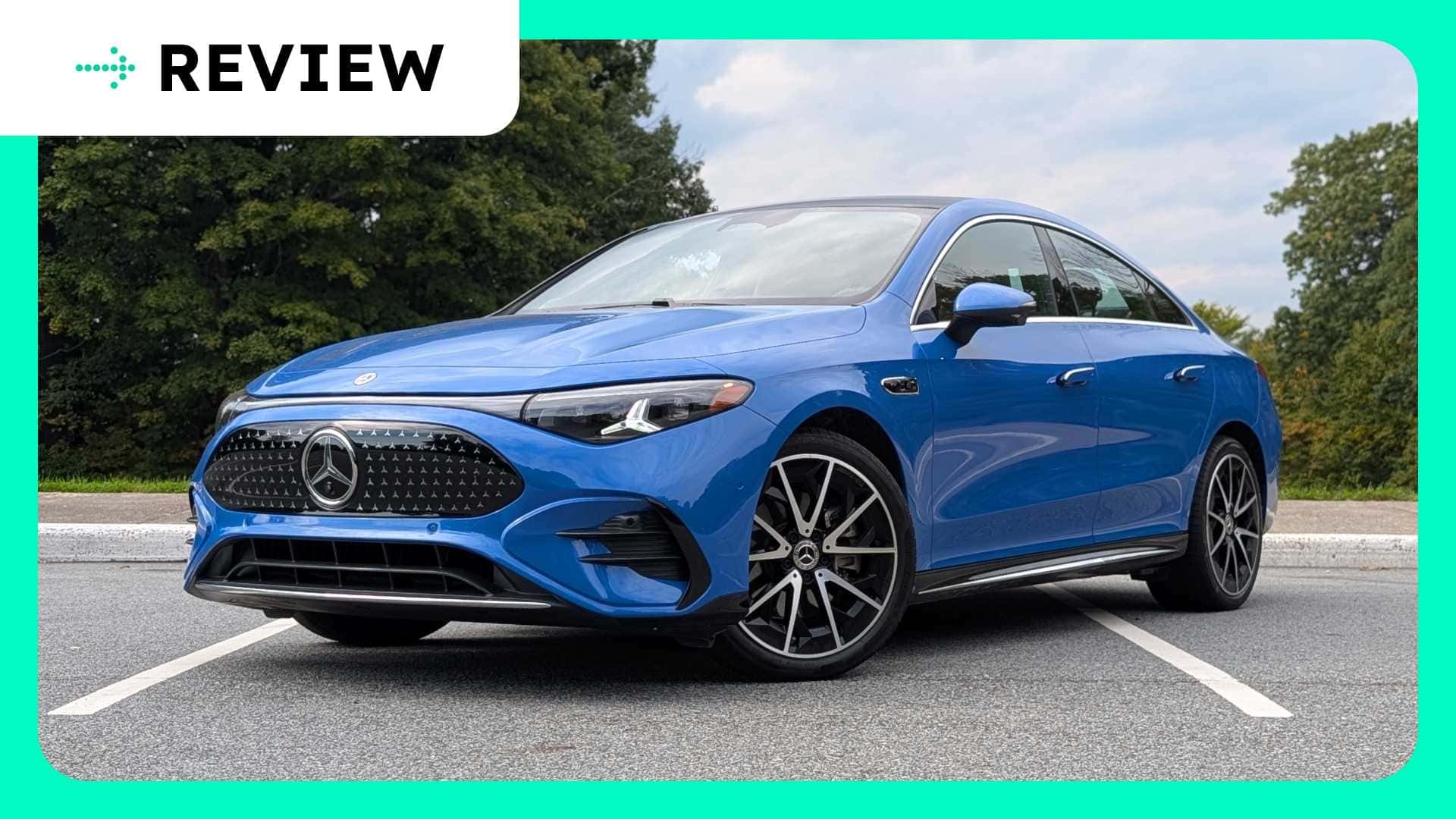
Mercedes-Benz’s electric CLA arrives at a moment when the brand badly needs a win. Its first EQ-badged wave of EVs never captured buyers’ imaginations, and Chinese rivals keep eating into its turf. The new CLA is supposed to be the reset: the first of a software-defined, high-tech generation. On paper, some of its choices raised eyebrows at launch — the illuminated grille stars, the sprawling pillar-to-pillar display that seemed to contradict the industry’s own retreat from screen overload. A week behind the wheel of a CLA 350 4Matic, though, suggests the fundamentals were the real story all along.
The headline technology sits under the floor. Mercedes’ new cells blend silicon oxide into the graphite anode — the electrode that holds lithium ions during charging. Silicon is attractive because it lifts energy density and charging speed while trimming reliance on graphite, whose processing is dominated by China and is both costly and environmentally messy. Mercedes says the new chemistry raises energy density by 20% and cuts cobalt content. In the AWD 350, that means an 85-kilowatt-hour usable pack, 349 horsepower, 380 pound-feet of torque, a 4.8-second run to 60 mph, and a two-speed transmission shared in concept with only a handful of EVs, the Porsche Taycan and Audi e-tron GT among them.
Range and charging are where the car makes its case. The rear-drive CLA 250 carries an EPA estimate of 374 miles; the AWD 350 is rated at 312. Real-world driving in Sport mode, mostly on highways in autumn weather, returned about 4.2 miles per kWh — roughly 357 miles of range on a full pack, some 45 miles beyond the official figure. Charging proved equally convincing at a 400-kW Mercedes high-power station: a peak of 280 kW, 100 miles of indicated range added in five minutes, 200 miles in 14 minutes, 80% state of charge in 20 minutes, and 90% in 26 minutes, with Plug & Charge starting the session almost instantly through the factory NACS port.
Dynamically, the CLA leans toward comfort. The two-speed gearbox shifts around 60-65 mph and is essentially invisible in use, while the steering is light but direct and the chassis settles into corners with stability rather than sparkle. Body control is decent, though broken pavement can make the ride feel busy, and the car’s weight is apparent when pressed. Four regenerative braking levels — Coasting, Normal, Intelligent, and Strong — let drivers pick anything from free rolling to genuine one-pedal operation.
The verdict isn’t that the CLA is flawless. The software doesn’t feel class-leading, and some interior decisions invite debate. But the efficiency, charging speed and drivetrain competence are so far ahead of the quibbles that they reframe the car: an excellent EV that may not feel like a traditional Mercedes, and is all the more interesting for it.
What do you think?