
Florida Traffic Stop Shows Why E-Bike Rules Already on the Books Deserve Enforcement
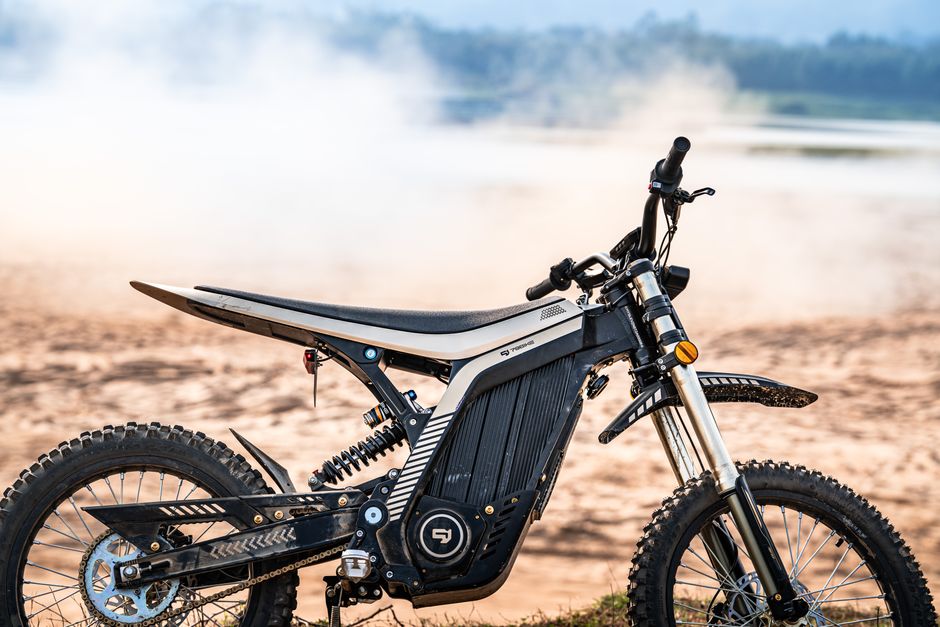
An 11-year-old in Oviedo, Florida, was recently stopped by police while riding what turned out to be a Sur Ron-style electric motorcycle toward a nearby fishing spot. The machine reportedly packed a 4,500-watt motor and had foot pegs rather than working pedals, which put it far outside Florida’s definition of an electric bicycle. Legal e-bikes in the state must have operable pedals and motors capped at 750 watts, with speed limits of 20 mph for Class 1 and 2 and 28 mph for Class 3.
Police said the vehicle could hit roughly 50 mph, while the boy’s father told a local news outlet it was limited to 20 mph. Either way, the missing pedals and high-output motor made it a motorcycle in the eyes of the law, not a bicycle.
That means registration, DOT compliance, and a driver’s license with a motorcycle endorsement would all be required — none of which an 11-year-old can provide. Officers cited him for operating an unregistered motor vehicle, had the bike towed, and fingerprinted him before issuing a mandatory court date.
Reasonable people can question whether fingerprinting a child and sending him to court is the right response. But the traffic stop itself points to a larger issue: many of the machines alarming cities and states are not e-bikes at all.
Around the country, complaints about Sur-Ron-style electric motorcycles on streets, sidewalks, and bike paths have led to proposals for registration, licensing, age limits, and even new restrictions on legal Class 3 e-bikes. Yet a 4,500-watt, pedal-less dirt bike does not become an e-bike just because its motor is electric. If the same child had been riding a 50cc gas dirt bike, no one would be rewriting bicycle laws.
Instead of adding rules for the millions of riders on perfectly legal Class 1, 2, and 3 e-bikes, authorities could simply enforce the motor vehicle laws that already exist. If a rider lacks a license, registration, or insurance on a machine that qualifies as a motorcycle, that is a matter for existing statutes. The lesson from Oviedo may be simpler than a new wave of e-bike legislation: use the rules we already have.
Photo: Pexels User NING · Pexels (Pexels License)
Source: Electrek
What do you think?