
BYD's Third-Gen Qin Plus Arrives October 27 With a Bigger Body and LiDAR
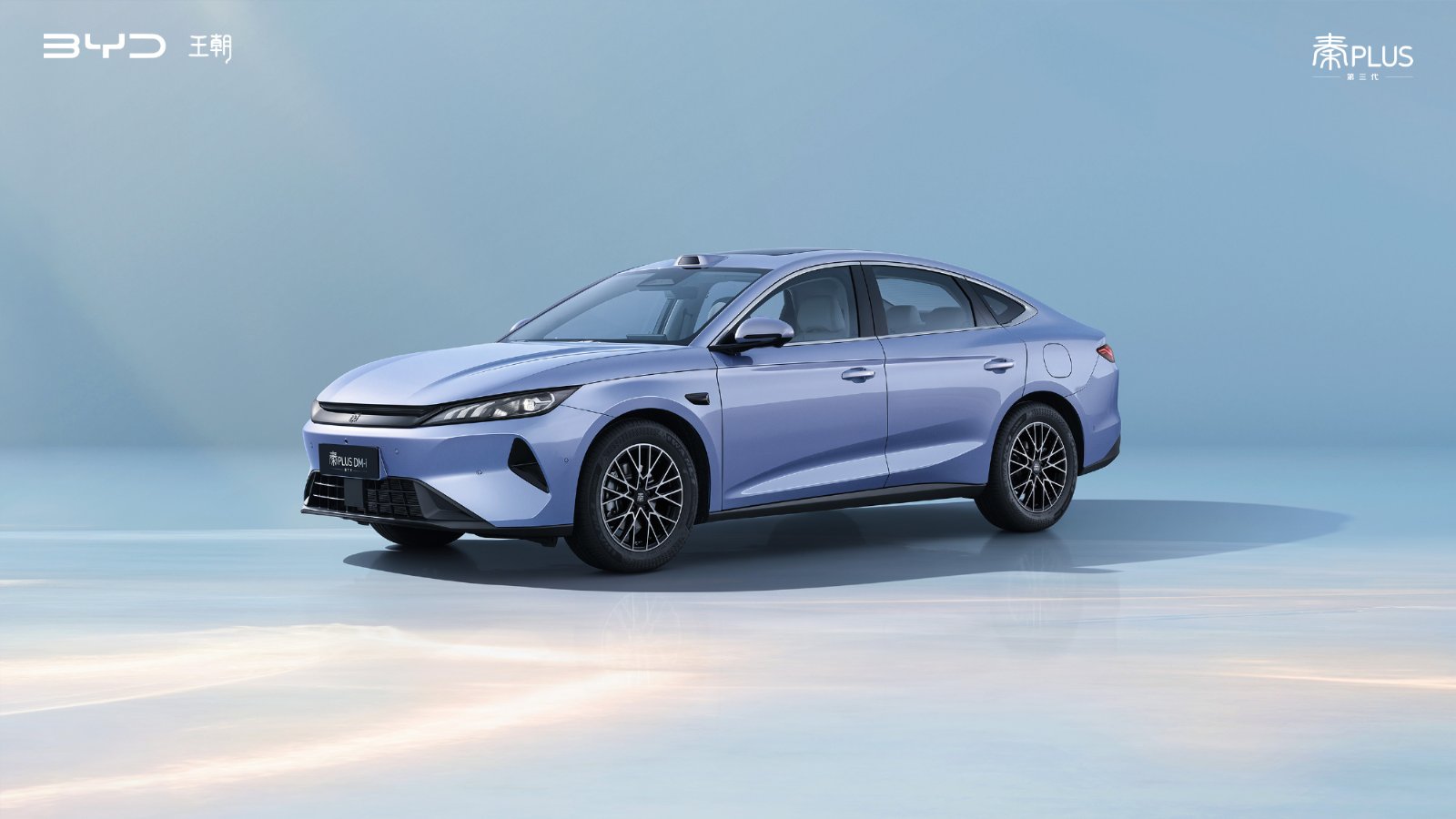
BYD is giving its long-serving family sedan a serious makeover. The third-generation Qin Plus will officially debut on October 27, bringing a stretched body, fresh sheet metal and — for the first time on this nameplate — a roof-mounted LiDAR unit.
The launch date surfaced through Auto Home, which cited official information. BYD itself has stayed quiet on the schedule, though it has already released exterior and interior photos in the run-up. Pricing remains under wraps.
The Qin needs this one
There’s a reason the redesign is landing now. The Qin family has been sliding hard: 23,472 cars sold in September, down 65.27% year-on-year. Over the first nine months of 2026, cumulative volume hit 207,589 units — a 54.71% drop compared with the same stretch last year.
The month-on-month picture is slightly better, with September up 7.54% over August. Still, the trend line is hard to ignore for a car that once anchored BYD’s volume ambitions.
What’s actually new
The car has grown in every direction that matters to buyers in this segment:
- Length: 4,840 mm (+60 mm)
- Width: 1,900 mm (+63 mm)
- Height: 1,498 mm (+17 mm)
- Wheelbase: 2,800 mm (+82 mm)
Key Specs: 4,840 mm long · 2,800 mm wheelbase · 1.5L PHEV engine at 74 kW · 120 kW PHEV motor · 100 kW BEV motor
On the outside, BYD has gone for a wide front fascia, a fastback roofline and full-width taillights finished with a Chinese knot motif. A new island blue paint option joins the palette. The company hasn’t said which trim levels will actually get the LiDAR hardware.
Inside, the cabin follows the latest design language from BYD’s Dynasty line: a two-spoke multifunction wheel, a floating central touchscreen, partially hidden air vents — and, notably, a few physical buttons left in place.
Lu Tian, who runs BYD’s Dynasty sales division, said when the interior shots went out on October 22 that customer feedback shaped several changes, including extra storage, revised seats and an upgraded panoramic sunroof.
Two powertrains, same formula
Regulatory filings point to a plug-in hybrid running a 1.5-liter engine rated at 74 kW paired with a 120 kW electric motor. The battery-electric version uses a single motor peaking at 100 kW.
For context on where this sits, the outgoing Qin Plus ranged from 79,800 yuan to 131,800 yuan across its EV and DM-i variants. The Qin badge now covers more ground than ever, with the Qin L and the pricier Qin Max — launched in August — also offering both BEV and PHEV setups.
That crowded lineup is part of the puzzle. The Qin Plus has to stand out against its own siblings as much as against rivals, and a bigger cabin with an optional LiDAR roof pod is BYD’s answer.
Source: CnEVPost
Curious how this compares to other EVs? Try our comparison tool →What do you think?