
GM's Next-Gen EVs: LMR Batteries, a Superbrain, and OnStar That Talks Back
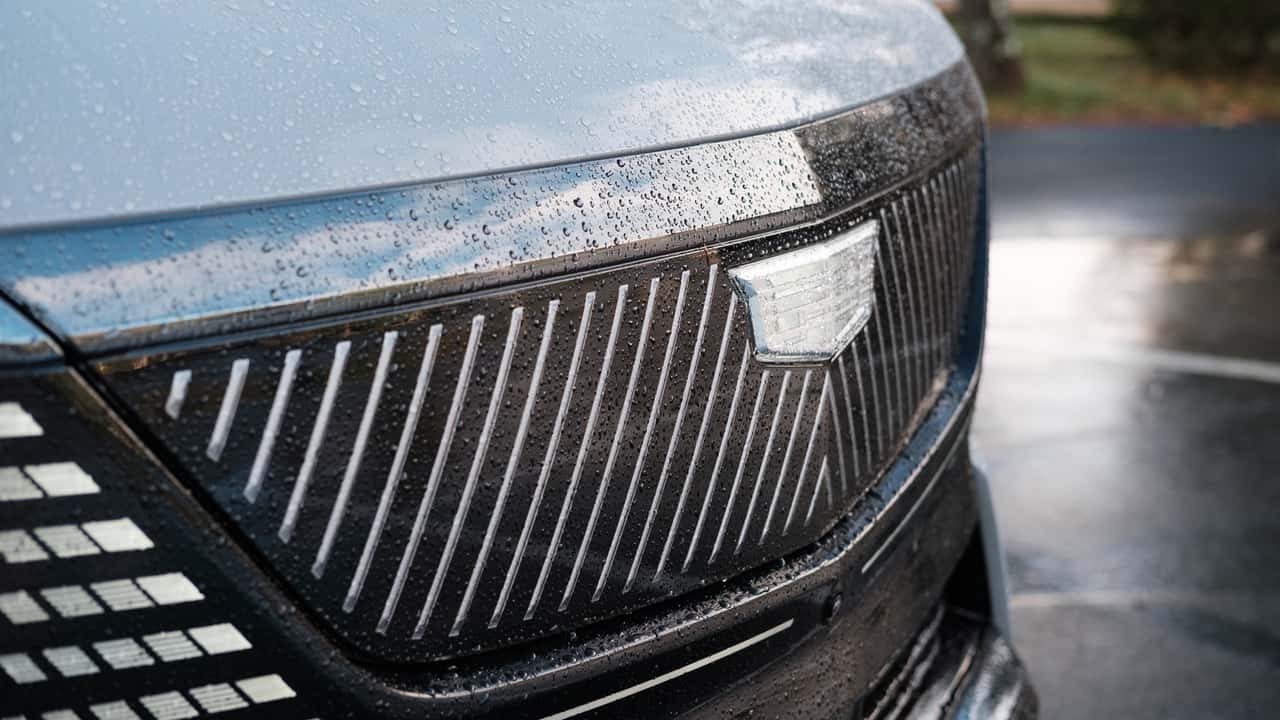
General Motors used its annual GM Forward tech gathering in New York to sketch out what its next wave of vehicles will look like — and the short version is that they’ll be lighter, cheaper to build, and far more software-driven than the Cadillacs and Chevys rolling out today.
A good chunk of the material had surfaced before in one form or another. Still, seeing it assembled in one place gave the clearest read yet on how GM plans to go toe-to-toe with Tesla, Rivian and the fast-moving Chinese brands.
A Fourth-Generation Platform Built Around LMR
The headline item is a new EV architecture centered on prismatic lithium-manganese-rich (LMR) cells that are structurally integrated into the pack. GM claims these deliver energy density in the neighborhood of high-nickel chemistry while landing near lithium iron phosphate on cost.
The Numbers GM Is Quoting: 15% less vehicle mass · 20% greater efficiency · 20% less battery capacity for the same range · 25% better aerodynamics · 40% fewer parts in motors and power electronics
“With that being unlocked, that changes everything,” Zach Walker, GM’s director of global EV architecture, told reporters. In an EV, he argued, “the cost is the cell.” The logic echoes what Ford is chasing with its Universal Electric Vehicle platform — a lighter, more efficiently packaged car that needs fewer kilowatt-hours to go the same distance.
What GM won’t say yet: when this platform reaches showrooms, or precisely which vehicles get it first. The company describes it as “built for broad appeal in the market’s largest segments,” which a spokesperson translated as crossovers — so expect the follow-ups to today’s Cadillac Lyriq and Chevy Equinox EV.
One Brain To Run The Whole Car
Those fourth-gen EVs will ride on a far more centralized electrical setup. At its core sits a Central Compute Unit that absorbs perception, propulsion, safety and chassis control — functions currently scattered across dozens of separate modules, each with its own software.
The payoff, per GM: 30% less wiring, 40 times the processing power and 50% faster cellular connectivity. First application is the 2028 Cadillac Escalade IQ, with three-row SUVs and pickups following.
Sterling Anderson, GM’s chief product officer and a former Tesla executive, said preproduction mules with the hardware are already circulating at the company’s proving grounds. Highway hands-off driving arrives on the Escalade IQ next year, and Anderson said both that and in-car AI “needed this kind of computational power.”
OnStar Gets A Voice
GM’s in-house assistant finally has a name and a timeline. OnStar AI lands on the 2027 Cadillac Lyriq through an over-the-air update in the coming months, then spreads across the lineup.
It’s a direct answer to Grok in Teslas, the new Rivian Assistant, and similar features from BMW and Mercedes. GM vehicles already picked up Google Gemini this year for general queries and voice control; Anderson insists the homegrown system goes further.
“It’s been developed internally at GM to be able to manage this exchange that you have with your vehicle in ways that a general-purpose LLM would never do,” he said. The pitch includes a car that doesn’t just warn you you’ll be late for soccer pickup — it reroutes your spouse to the field and suggests a grocery stop on the way home.
A single OnStar app will replace the separate brand apps next year, and it brings a camera-based surveillance feature along the lines of Tesla’s Sentry mode.
The Real Test Comes Later
GM says it wants to compress vehicle development to roughly two years, about half the usual four-to-five, using AI tools and concurrent engineering. That’s the kind of claim that sounds great on a stage and gets stress-tested in a factory.
The gap GM is trying to close is real. Legacy automakers have promised smartphone-like cars for a decade, while pure EV startups still hold the edge on software polish and over-the-air depth. What GM now has is a roadmap — efficient, lighter, cheaper-to-build EVs with a genuine software layer underneath.
Whether the execution matches the slide deck is a question for 2028.
Source: InsideEVs
Curious how this compares to other EVs? Try our comparison tool →What do you think?