
VW Wins Level 3 Test Permit in Hefei as Xpeng Opens Level 4 Robotaxi Trials in Guangzhou
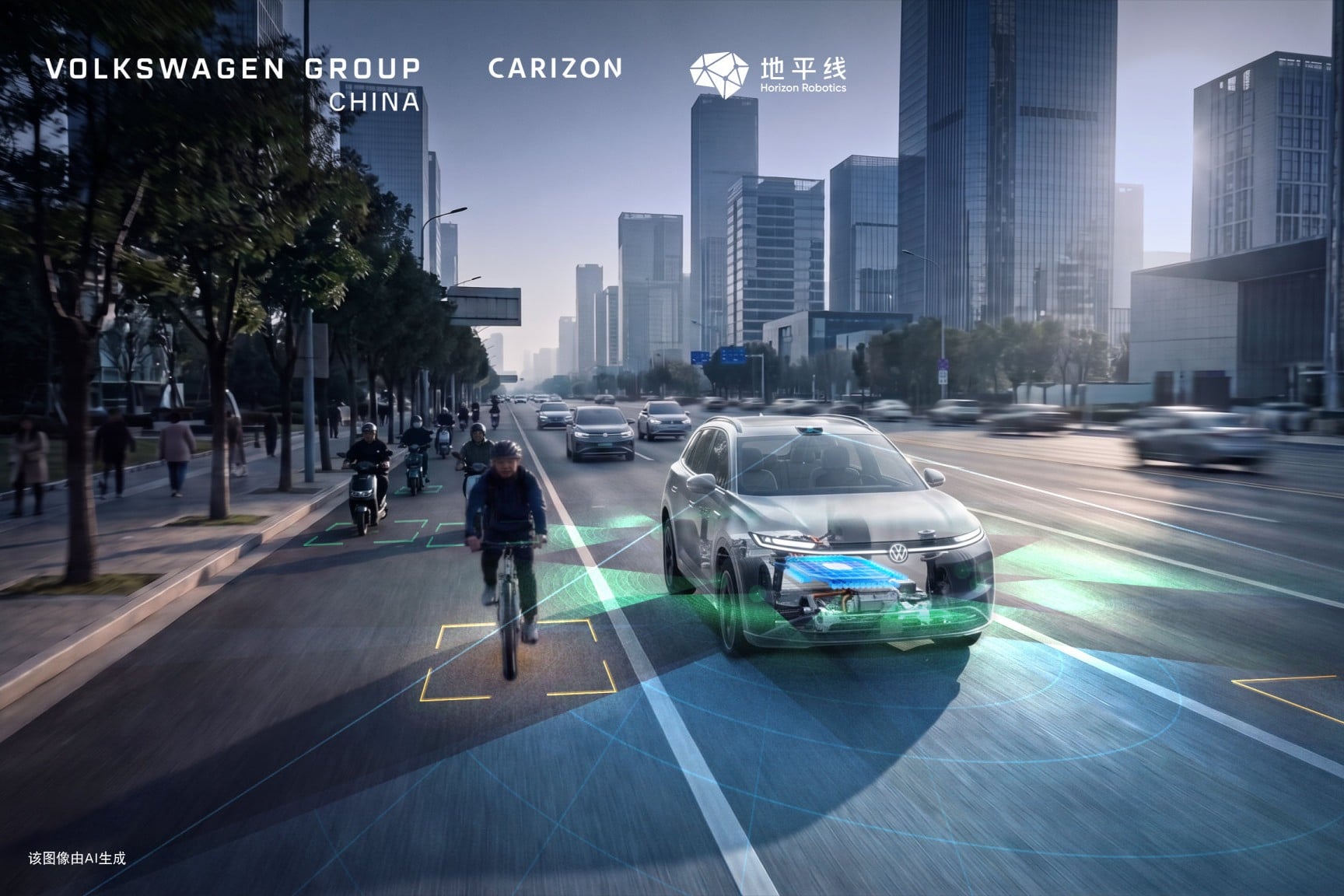
Volkswagen Group China now has the green light to run highly automated driving on public roads in Hefei. The approval hands the German giant a real-world testing ground for SAE Level 3 tech, and the company says the data it collects will feed into a push toward series production in 2027.
The technology comes out of Carizon, the joint venture VW set up with Chinese AI specialist Horizon Robotics. Level 3 means the car handles the driving within set conditions — the person behind the wheel can take their hands off and look elsewhere, though they must be ready to retake control when the system asks. Usually that window is around ten seconds.
A Simulated Fleet Running in the Background
Alongside the road tests, VW is leaning on an in-house AI world model called GAIA 2.0. According to the group, the model already runs daily simulations covering roughly five million kilometres, built on data drawn from 30 million real traffic scenarios. VW frames this as groundwork for higher automation levels down the line.
At a glance: SAE Level 3 public-road testing in Hefei · 2027 series-production target · GAIA 2.0 simulates ~5 million km per day · Data from 30 million real scenarios
Xpeng Moves to the Service Side
Xpeng’s approval goes further up the ladder. The Guangzhou-based manufacturer can now run Level 4 robotaxi demonstration drives across the entire city, not just on selected stretches. What stands out here is the shift in emphasis: the company says the point is no longer purely technical validation of autonomous driving but the operational side of a mobility service — taking orders, dispatching cars, carrying passengers, and coping with the odd exceptional situation.
Access will start small. Xpeng plans to hand out invitation codes gradually, then use the feedback to sharpen its processes and fleet management. Worth noting: Xpeng has no intention of running big robotaxi fleets on its own. The plan is to supply vehicles, software and AI tech, and to work with partners — earning money through hardware sales, technology services and commission-based participation.
That strategy got a brand name in the first half of October, when Xpeng unveiled its robotaxi label Yoyo and opened registration to the first outside users in China. The new permit is another step toward commercial operation. On international ambitions, the company says talks with European mobility platforms are already underway.
Two Very Different Bets
The contrast between the two announcements is hard to miss. VW is still in the validation phase, collecting data and chasing a 2027 production target with a partner-built stack. Xpeng is already rehearsing the business model — sign-ups, dispatch, fares — while keeping the fleet side at arm’s length.
Both matter for how quickly Chinese roads become a proving ground for hands-off driving. And for VW, Hefei is now the place where that argument gets tested against real traffic.
Source: electrive.com
What do you think?