
Baidu and Lyft's Freenow Plot Driverless London Launch by 2027
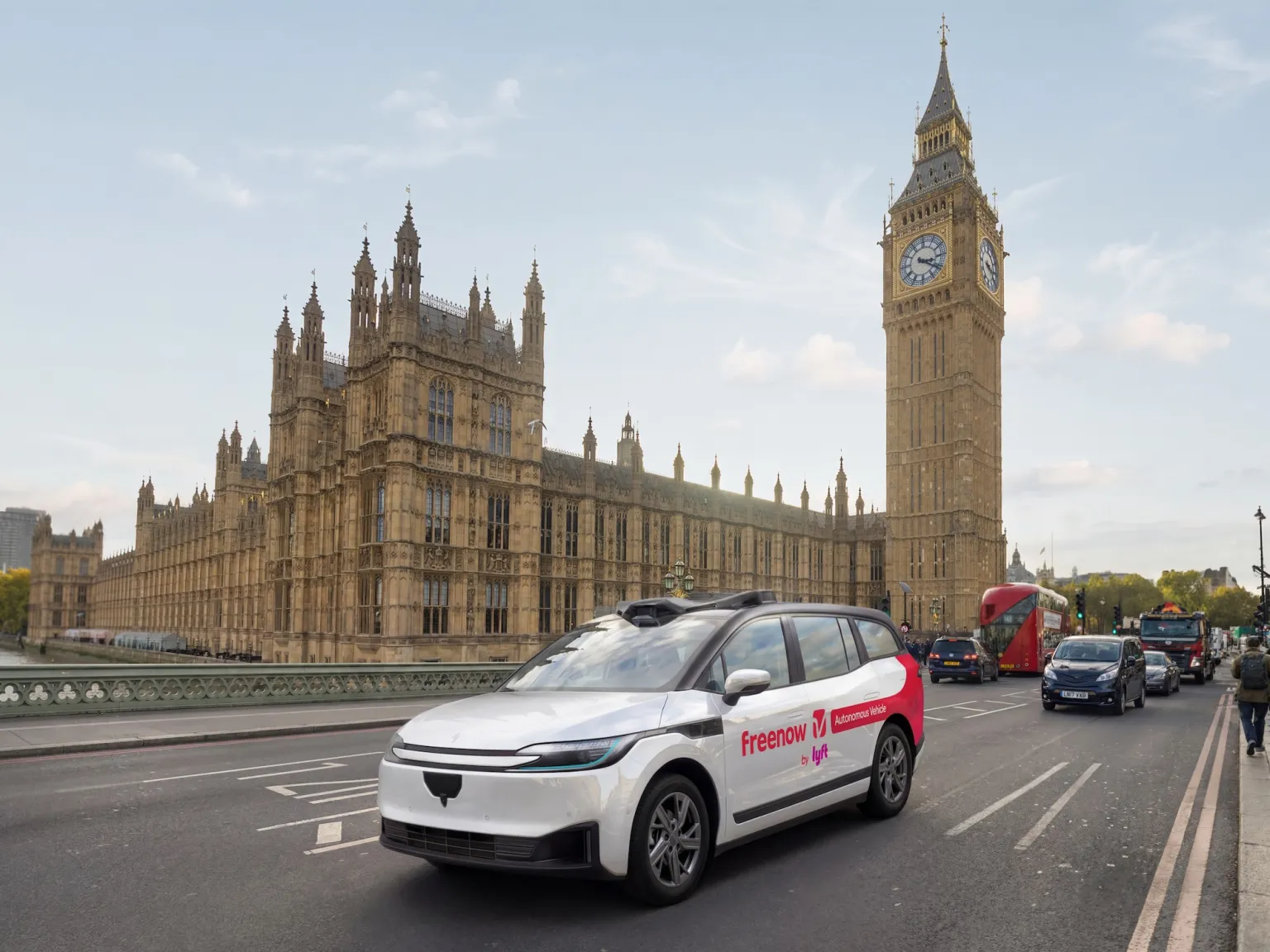
London is quietly turning into the West’s biggest audition stage for Chinese autonomous driving — and Baidu just booked its slot. Together with Lyft-owned Freenow, the company has pulled the wraps off its RT6 robotaxi in the British capital, with fully driverless trials pencilled in for next year and a paid commercial service targeted for 2027.
The two partners have been running supervised tests in the borough of Brent since July, with a safety driver aboard at all times. Scaling up is the next step. Danny O’Gorman, who heads Freenow in the UK, put expectations at a few dozen cars over the next year or two rather than a sudden flood of vehicles.
A tougher classroom than it looks
London is not an easy place to teach a machine to drive. O’Gorman points to speed bumps, cramped streets and the city’s pervasive 20 mph zones — quirks that make the capital a far cry from the wide, grid-like roads robotaxis cut their teeth on in Arizona or California.
His comparison is refreshingly simple: the software is picking up local road etiquette the same way a learner driver does before a test. Freenow is also in close contact with Transport for London, and formal regulatory guidance was expected within days of the announcement.
Key Specs: Purpose-built robotaxi · detachable steering wheel · unit cost around US$37,000 · LiDAR and HD mapping stack
The RT6’s economics are the part rivals should worry about. Unlike Waymo’s retrofitted Jaguar I-Pace fleet, Baidu’s car was designed from the ground up for ride-hailing, and at roughly US$37,000 a unit it undercuts what most Western operators can manage.
A packed starting grid
Baidu is not arriving to an empty track. Wayve and Uber fired the starting gun in September with 15 vehicles and safety drivers on board, while Waymo is chasing a fully driverless service through its own app before the year is out. Pony.ai, another Chinese entrant, is testing in the city alongside Uber too.
The technical camps are split, and the divide echoes the long-running Tesla debate. Wayve leans on cameras, radar and a single AI model that copes without HD maps. Waymo and Baidu take the more conservative route, stacking LiDAR with highly detailed mapping.
There is friction on the ground as well. The App Drivers and Couriers Union and the Licensed Taxi Drivers’ Association are pushing back on driverless permits, citing jobs and congestion.
Regulation, not code, sets the pace
For all the talk of software maturity, paperwork will decide who goes live first. TfL has confirmed that no operator has yet registered vehicles with the Vehicle Certification Agency — the first formal hurdle on the road to unsupervised operation. A DVSA permit for fully driverless running looks unlikely before 2027.
That makes Waymo’s end-of-year ambition look optimistic, and Baidu’s 2027 target the safer bet.
Freenow, picked up by Lyft in 2025 for around US$197m, insists it is adding capacity rather than pulling it away. O’Gorman was blunt that the robotaxi is not meant to sideline London’s black cabs or private-hire drivers.
The bigger unknown is political. The RT6 is built in China, and Westminster appears to be weighing tariffs on Chinese EVs in step with the EU. Unless robotaxis get carved out, that levy would land squarely on Baidu’s cost advantage.
So London is testing two things at once: whether Chinese autonomy can handle crooked old streets, and whether Britain treats robotaxis as imports to fence off or services to license.
Source: Automotive World
What do you think?