
Volt Solar Tile Pivots to Australia With a Whole-Home Energy Package
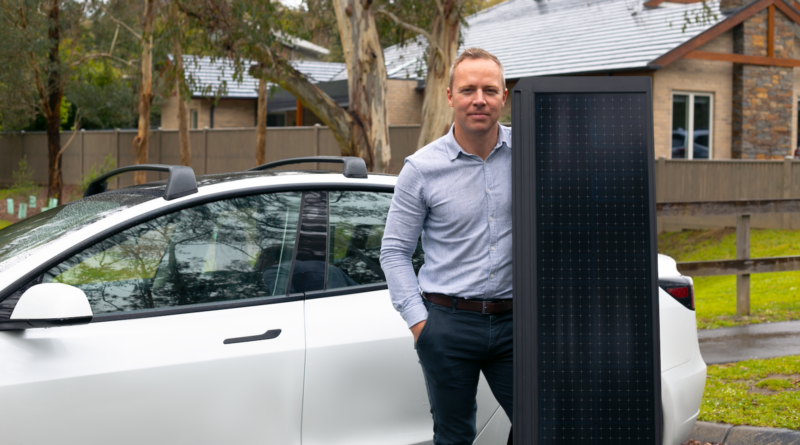
Volt, the company behind an integrated solar roof tile, has shifted its commercial focus sharply toward Australia after its planned US rollout stalled, according to an update from CEO Peter Leeson.
The original strategy leaned on a partnership with Westlake Royal Roofing, a unit of NYSE-listed Westlake Corporation, to pair Volt’s tiles with conventional concrete roofing. That plan lost momentum as the US renewables market cooled. Volt has since concentrated on the Australian market and the solar distribution business, a move some observers had already floated.
Volt’s response has been to sell directly to homeowners, architects and builders, and to package the solar tile with batteries, EV chargers and heat pumps rather than pushing a single product. That broader offer has lifted revenue and helped close more projects, with battery demand acting as the main driver. The company says it has now installed across six countries and four continents, including a project in Argentina in early 2026, while keeping Australia at the center and continuing to see interest in Europe, the Middle East and the Americas.
On the hardware side, Leeson says the latest tile interlocks with standard roof tiles and uses double glass at 3.2 mm plus 3.2 mm, along with M12 cells in place of M6, for lower cost and higher performance. The tile is also 240 mm wider than before. Volt still manufactures in China but wants to onshore production in Australia, naming Tindo as the only domestic manufacturer it would like to work with once volumes grow. So far, fifty roofs have been completed in Australia, concentrated in Sydney and Melbourne, where many older homes need reroofing.
Leeson frames the pitch around economics rather than novelty: if a homeowner is already spending roughly AU$40,000 to AU$50,000 on a new roof, adding solar tiles costs perhaps 10 to 15% more. Volt says a 15 kW roof can produce about 34 kWh a day in winter and near 90 kWh in summer, with hybrid inverters linking the roof, a 24 to 27 kWh home battery and a 12.5 kW DC EV charger on one DC bus. The company is also seeking further crowdfunding as it expands.
What do you think?