
US Q3 2026 EV Sales: A Mixed Picture as Rivian Shines and Legacy Brands Stumble
The US electric vehicle market in the third quarter of 2026 presents a tale of two trajectories: while global adoption of battery-powered cars continues to accelerate, American consumers are showing increased hesitation. This divergence is creating uneven outcomes across automakers, with some brands weathering the storm better than others.
Toyota, historically a slow adopter of full electrification, has posted surprising gains. The bZ, a revamped version of the bZ4X, ranked as the fourth best-selling EV in the US during the first half of the year, trailing only Tesla’s Model Y and Model 3 and Hyundai’s IONIQ 5. Toyota has delivered over 25,000 bZ SUVs so far this year, alongside more than 7,500 C-HR EVs and a handful of bZ Woodland models. Notably, hybrids, plug-in hybrids, and battery electric vehicles now constitute over 57 percent of Toyota’s US sales in Q3.
In contrast, the Detroit Three are facing a harsh reality. General Motors saw a 6 percent year-over-year sales decline, with Ford experiencing a similar drop. Stellantis managed a 3 percent increase overall, buoyed by strong Ram 1500 sales, but its electric Jeep Wagoneer S plummeted 96 percent in Q3, with only 146 units sold. Cadillac, which aims to lead GM’s electric transition, struggled: Lyriq sales fell 51 percent, Vistiq dropped 34 percent, Escalade IQ declined 29 percent, and Optiq slipped 7 percent. Ford’s Mustang Mach-E was down 72 percent in Q3 to 5,574 units, and 59 percent year-to-date. Chevrolet’s electric lineup fared even worse: Equinox EV sales plunged 92 percent in Q3 to 1,905 units, Blazer EV fell 84 percent to 1,261 units, and Silverado EV dropped 58 percent. The GMC Sierra EV also declined 51 percent. A key drawback for GM’s EVs is their relatively slow charging speeds—most peak at 150 kW under ideal conditions—while competitors like BYD offer vehicles that can reach 80 percent charge in just five minutes.
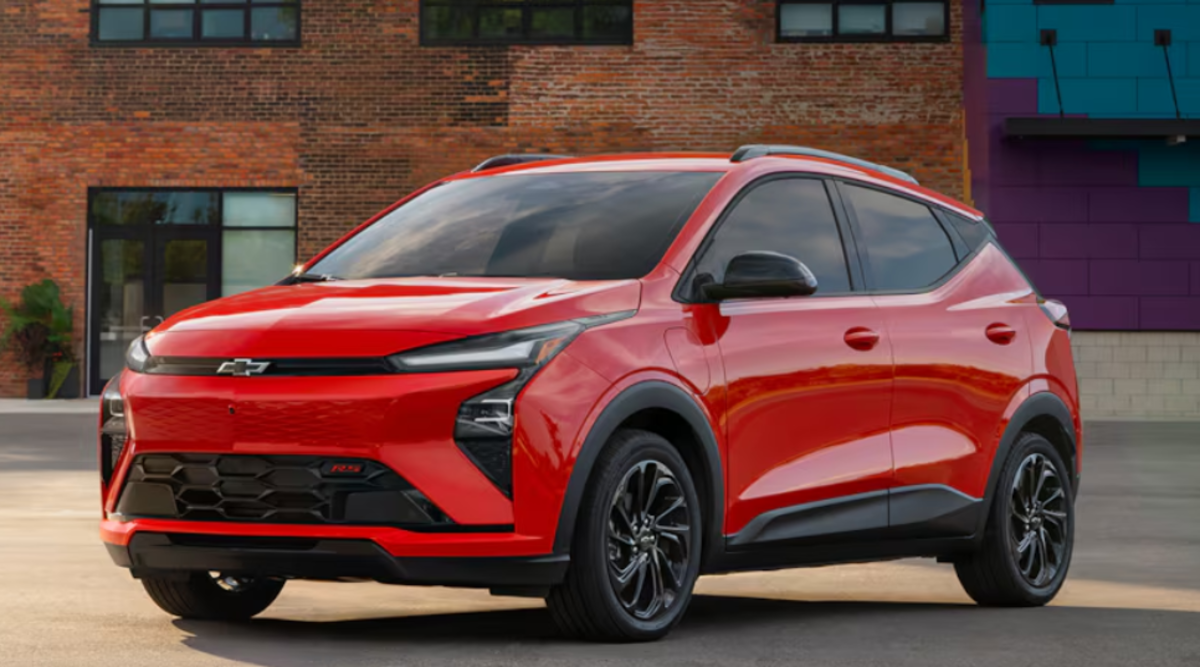
The second-generation Chevy Bolt, despite improvements, has been a sales disappointment. Chevrolet initially planned to build 150,000 units, but only 8,090 have been sold this year, leading to reports that production may end after 35,000 units at its Kansas City plant. Hyundai also faced setbacks: IONIQ 5 sales fell 53 percent in Q3, IONIQ 9 dropped 47 percent, and Kia’s EV6 and EV9 declined 57 percent and 28 percent respectively. Genesis fared poorly too, with GV60 down 53 percent and electrified GV70 down 87 percent year-to-date. Tesla, despite an eighth consecutive month of declining US sales (down 16 percent year-over-year in September), saw its EV market share increase.
The lone bright spot is Rivian, which set a new sales record in Q3 with 19,751 vehicles built and 19,248 delivered, up 45 percent from last year. The R2 midsize SUV, starting just under 45,000 in the future. Meanwhile, rising gasoline and diesel prices are renewing interest in fuel-efficient vehicles, shifting demand toward midsize SUVs and away from large SUVs and trucks. However, as history shows, such shifts can reverse when fuel prices fall again, leaving automakers to navigate an unpredictable market.
What do you think?