
UK Electric Car Sales Jump 36% to a September Record, but the Lobby Wants the Rules Eased
September delivered a landmark month for electric vehicles in the United Kingdom. According to preliminary figures from the Society of Motor Manufacturers and Traders, 99,199 battery-electric cars were registered during the month — a rise of 36.3% compared with a year earlier and a 28.3% slice of the overall market. With 350,518 new cars registered in total, up 12.1%, it was the strongest September the country has seen since 2017, helped by the fact that September is one of the two months each year when new plates are introduced and typically accounts for roughly one in seven annual registrations.
Growth was almost entirely plug-driven. The overall market added 37,725 cars year-on-year; battery-electric models contributed 26,424 of them and plug-in hybrids another 21,302, with PHEVs climbing 55.7% to a record 59,563 units and a record 17% share. Combine the two and 158,762 vehicles, or 45.3% of the market, came with a plug. Petrol fell 6.7% to 131,861 cars, sliding from 45.2% to 37.6% of sales in a single year, while conventional hybrids slipped 4.2%. Diesel was the odd outlier, gaining 11.5% but still accounting for just 4% of registrations. Private buyers showed up in force too, with their registrations up 13.9% — outpacing fleets at 9.6%.
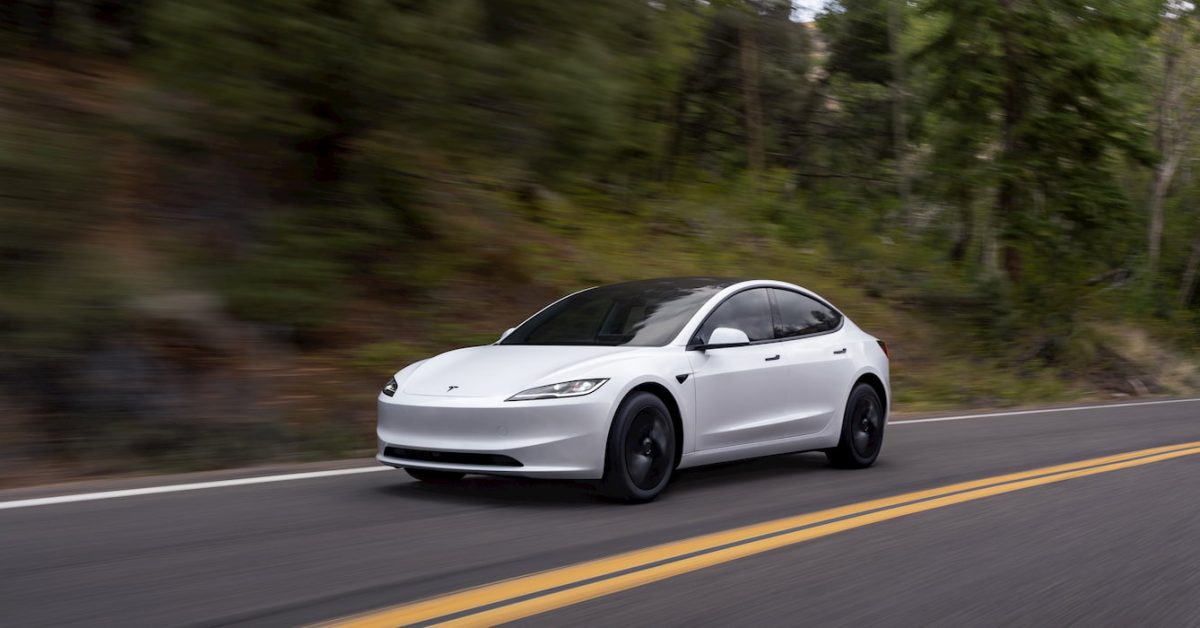
Tesla led the charge. The Model 3 was the country’s best-selling electric car at 9,929 units and the second best-selling car overall, while the Model Y added 5,946 for fifth place. Together the two models made up 16% of all EVs registered in the month, with the lower-priced, China-built Model 3 proving especially popular. Tesla’s quarter-end delivery pattern was evident again: 42% of the Model 3’s 23,704 UK registrations this year landed in September. Behind Tesla, BYD’s Sealion 7 and Seal took the next two EV spots at 3,191 and 3,184 units, just ahead of the Kia EV3 at 3,026, and Leapmotor’s B10 reached the top ten with 1,883. Notably, BYD has been selling well despite not qualifying for the UK’s Electric Car Grant when it arrived last year. The single best-selling car of the month overall was the Jaecoo 7, a Chery SUV offered with petrol and plug-in hybrid powertrains, at 10,813 units.
The record arrives as the government reviews its zero-emission vehicle mandate, whose headline target rises to 33% in 2026 from 28% the previous year. SMMT chief executive Mike Hawes credited wider model choice and high fuel prices for the result, then pointed to what he called the world’s toughest targets and highest energy costs. The association argues that meeting the goal would require roughly 265,000 more EV registrations in the fourth quarter — which, on its own full-year forecast, would mean EVs taking about 60% of the market for three straight months. In practice, the mandate’s flexibilities matter: automakers can earn credits for cutting CO2 on their non-electric cars, draw on future years and purchase credits from rivals. New AutoMotive puts the effective 2026 target at 24.6% once those are counted, and the market’s current 26.2% is already above that line.
Through nine months, the UK has registered 454,945 EVs, up 30.2%, for a 26.2% share. One development worth tracking is the plug-in hybrid, which grew faster than pure electric in September, with the month’s best-selling model available as a PHEV. Should the review grant automakers more credit for plug-ins, expect more of them on forecourts and a slower march toward fully electric sales.
What do you think?