
The Zag List 2026: 100 People Rewriting How the World Moves
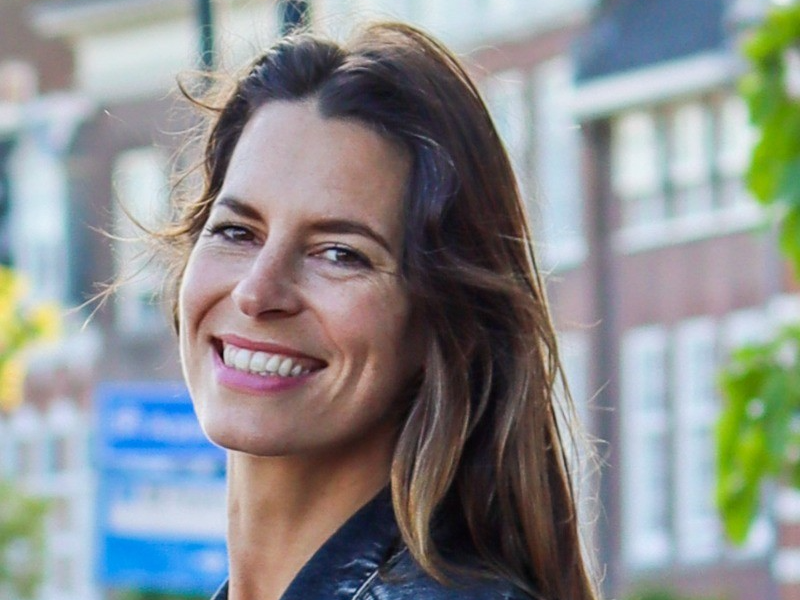
Every year, someone quietly builds the thing that makes a city work a little better. The Zag List 2026 gathers 100 of them — the founders, regulators, investors and campaigners who spent the past twelve months pushing transport forward.
This is the third edition of the list, and the breadth keeps widening. The names range from battery repair specialists in the Netherlands to a Paris mayor putting €200 million into bike lanes, from an autonomous driving CEO closing billion-dollar rounds to a Delhi advocate digitising women’s safety data.
Where the change is actually happening
It is easy to describe mobility as a technology story. The 2026 list makes clear it is just as much a human one.
- Infrastructure and safety: Nowos is repairing lithium-ion batteries as EU rules turn battery repair from optional to mandatory, while Euro NCAP’s Matthew Avery keeps pressing for better rear underrun protection on truck trailers.
- Air and autonomy: Wayve’s Alex Kendall took a $1.2bn Series D at an $8.6bn valuation on the bet that AI can drive without detailed digital maps, and BETA Technologies’ Chris Caputo pushed the ALIA past a 100,000-nautical-mile flight-test milestone.
- Two wheels and last mile: Tyred serviced 150,000 bikes through its mobile repair operation and followed up with its own insurance offering, while HelloRide’s Hayden Choo took Singapore from 1,000 bikes to approval for 25,000.
Names worth knowing: Alix Armour (Nowos) · Alex Kendall (Wayve) · Aicha Evans (Zoox) · Kaushik Burman (Spiro Mobility) · Emmanuel Grégoire (Mayor of Paris) · Maha Shahzad (BusCaro)
The list also makes room for the people who shape policy rather than products. Silviya Barrett’s research at Campaign for Better Transport exposed that just 15% of visually impaired people find UK bus stops easy to use — a statistic that reached a national audience through BBC Radio.
Prof. Chris Griffiths co-authored a study linking London’s ULEZ to growth in children’s lungs. Belle De Gast, Utrecht’s Bicycle Mayor, works in the city that topped the Copenhagenize Index and now hosts the world’s largest bike parking facility beneath Utrecht Centraal, with room for 12,500 machines.
Money is moving, sometimes awkwardly
Several names on the list reflect a sector finally finding its financial footing. Lime listed on Nasdaq this year, with CFO Ann Gugino steering a balance sheet she describes as stronger than at any point in the company’s history. Dott posted its first full-year adjusted profit and raised €85 million to refresh 45,000 vehicles. And Bird and Spin, having lost $300 million in 2019, delivered a $50 million turnaround under Stewart Lyons, then raised another $20 million to deploy 35,000 vehicles.
Not every story is a win yet. David Zipper’s warnings about empty robotaxis circling for fares sit alongside Missy Cummings’ long-running scrutiny of software brittleness. Both are on the list precisely because they keep the pressure on.
What ties the 100 together is less a shared technology than a shared stubbornness. Some are building cargo bikes that cost 3.3p per mile to run. Others are certifying vertiports, financing electric aircraft or mapping street lighting in Indian cities so women can move more safely after dark.
Different tools, same instinct: the way we get around is not fixed, and it is worth fighting over.
Photo: Mikro-mobilite Sektörü (Zag Daily) · Official Press Kit / Editorial (Editorial / Press Kit)
Source: Mikro-mobilite Sektörü (Zag Daily)
What do you think?