
Tesla's New Roadster Can Fly, Flip and Drive Upside Down — But Do the Claims Hold Up?
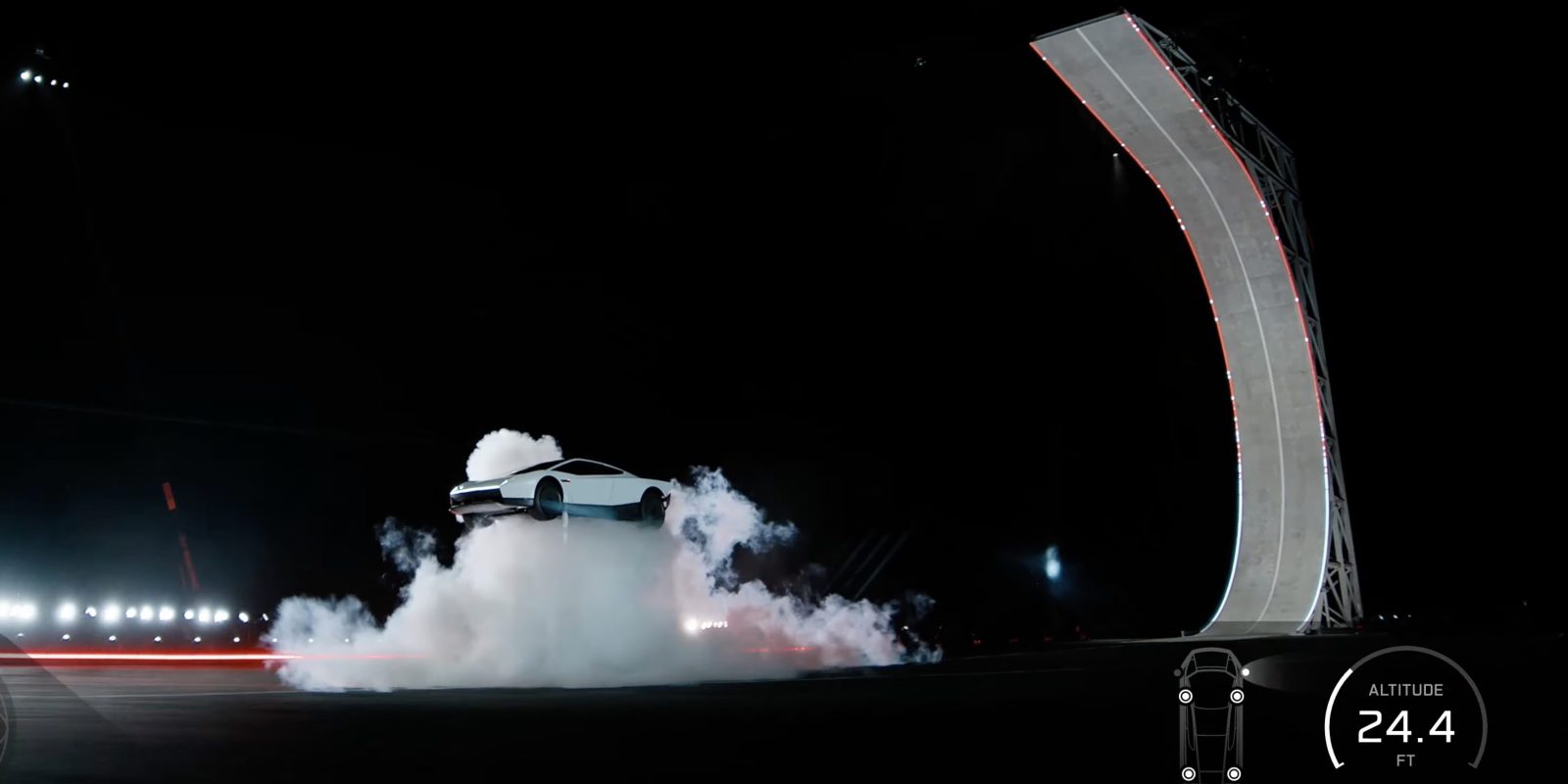
Tesla has finally pulled the wraps off the next-generation Roadster, a car first teased in a very different form back in 2017. Nearly a decade later, the long-delayed electric supercar arrived with a demo reel that seemed to defy physics: the car drove up a near-vertical ramp, clung upside down to the track surface, launched off the end and landed, and even performed a mid-air flip above a row of parked Teslas. CEO Elon Musk promised it would beat every track record in the world. Whether that happens is one question; how the car does any of this is another.
- Suction-based downforce: A “multi-mode suction system” uses four fans to create a low-pressure zone under the car, with adjustable skirts sealing the underside so ambient pressure pushes the vehicle into the surface. Tesla’s displays cited figures around 4,700kg of downforce on a car weighing under 1,700kg — a ratio far beyond what the McMurtry Speirling, the other fan car known for driving upside down, runs. Each fan reportedly draws roughly 20kW, meaning about 80kW (108hp) is spent just holding the car down.
- Cold gas thrusters: The top “Rocket” trim is the only one described as air-ready, mounting compressed-air thrusters around the vehicle, including underneath, for short hops. The mid-tier “Thrust” trim carries 200L of gas storage, while Rocket reportedly sacrifices the second seat for an extra 400L and adds downward thrusters at each corner plus two up front for yaw control.
- A sub-one-second sprint: Tesla claims a 0-60mph time under one second — a figure no production car has come close to — alongside cornering capability quoted at over 2G.
- A very loud party trick: Attendees standing hundreds of feet away were reportedly asked to wear earplugs during the ramp run, a striking contrast to the quiet reputation EVs have built.
- Trim lineup: Performance, Thrust and Rocket tiers were announced, with hints that a base version could arrive later.
Why It Matters
The fan-car concept is genuine engineering, not stage magic. Pulling air out from under a vehicle adds apparent weight to the tires without adding mass, which sharpens grip in braking, cornering and acceleration alike — exactly the kind of advantage a track-focused EV wants. The thrusters tell a different story: pushing a car upward does nothing for lap times, and the airborne stunts serve spectacle more than stopwatch. The bigger context is timing. Since the Roadster was first shown, Rimac, Xiaomi, Porsche and Lotus have all pushed electric performance into territory that once looked like Tesla’s alone, and BYD has demonstrated active suspension capable of making a car jump. Tesla is no longer blazing a trail so much as rejoining a crowded one — and the coming fight will be over verifiable numbers on real circuits, not demo-day choreography.
Source: Electrek
Curious how this compares to other EVs? Try our comparison tool →What do you think?