
Tesla's Cybercab and Semi Share More Engineering DNA Than You'd Expect
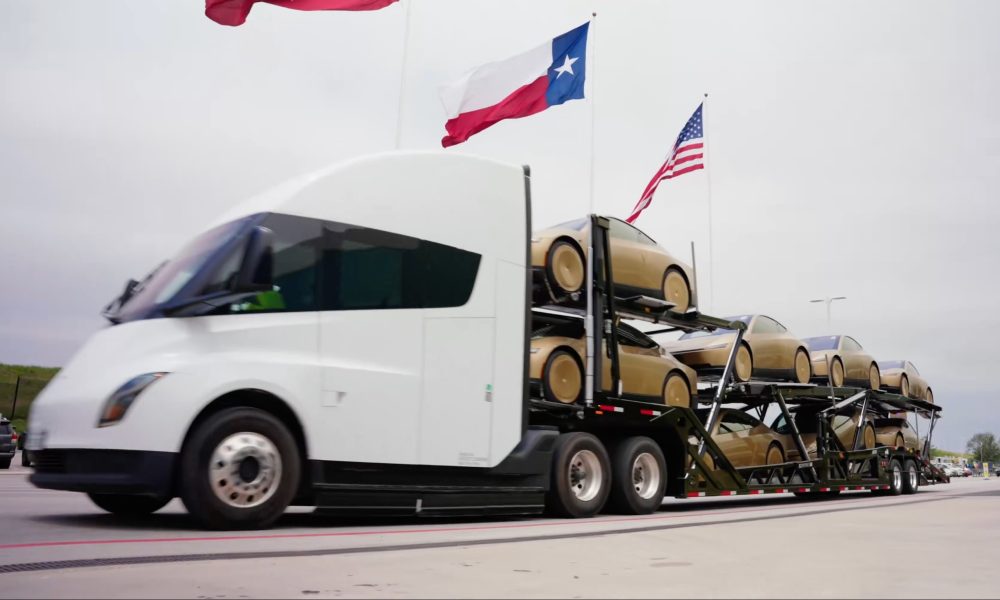
Tesla has a habit of letting components migrate between vehicles that otherwise have nothing to do with each other, and its latest example ties together two machines at opposite ends of the size spectrum: the compact Cybercab robotaxi and the heavy-duty Semi truck.
During a handover event at Tesla’s dedicated Semi production site in Sparks, Nevada, company engineers Lars Moravy and Dan Priestley explained that both vehicles were developed around a single thermal system. The idea, as they described it, was to take Tesla’s most efficient vehicle and its largest one and engineer one thermal architecture capable of serving both, with only minor adjustments.
The shared hardware includes the compressor, pumps and heat exchangers, while the truck gets larger cooling loops and a bigger radiator. Because the system circulates coolant rather than refrigerant through the vehicle, Priestley noted there are no AC or refrigerant lines running to the front, meaning the setup arrives from the factory pre-charged and sealed. The megamanifold handles cabin climate control alongside every powertrain heating and cooling circuit, capturing waste heat from the motors and battery instead of releasing it.
This isn’t a new strategy for Tesla. The Model Y’s Octovalve led to the Super Manifold on the Cybertruck and later Model S and X updates, while the Cybercab introduced a third-generation version that Tesla says is 80 percent automated to produce and 38 percent more efficient than conventional automotive thermal systems. The company has followed a similar path with 4680 cells, which appear in both the Cybertruck and Semi, and with heat-pump compressors already used across its passenger lineup. For fleet operators, the payoff is a sealed, low-maintenance loop with fewer refrigerant repairs and less energy spent on cabin heating in cold weather.
What do you think?