
Tesla Roadster: What We Know About Tesla's Delayed Electric Supercar
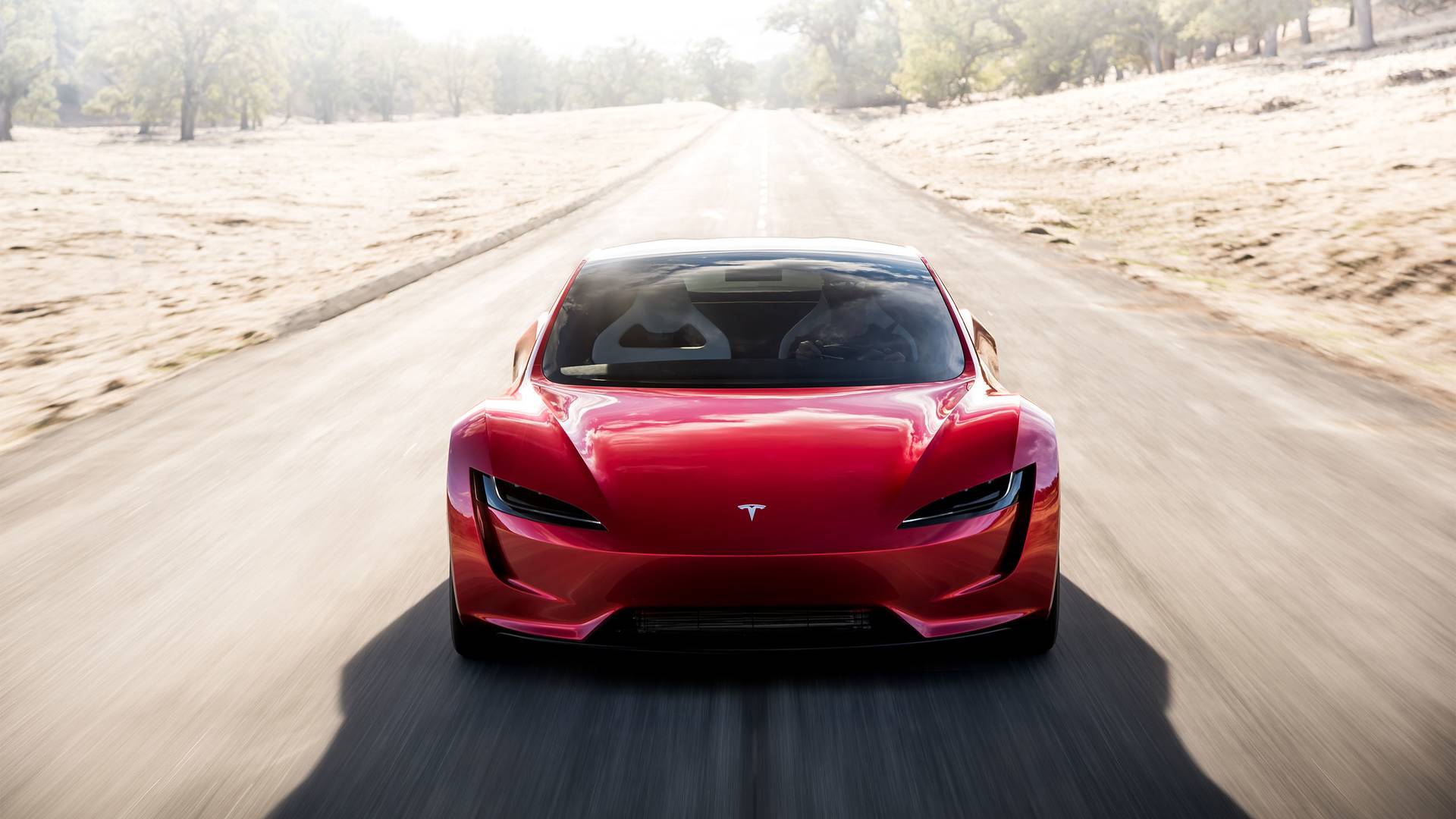
Nearly a decade has passed since Tesla pulled the wraps off a striking red two-door concept at the tail end of its Semi event, and the second-generation Roadster is finally penciled in for an October 2026 debut. The car has become something of a legend in the EV world — not because of what it has delivered, but because of how long it has taken to deliver anything at all. Tesla’s original Roadster, launched back in 2008, was the vehicle that first convinced a skeptical industry that electric performance was not a contradiction in terms, and it paved the way for the Model S and everything that followed.
When the Roadster 2.0 prototype appeared in November 2017, the specifications shown on screen were almost absurd: 7,376 pound-feet of torque, a 0-60 mph time of 1.9 seconds with optional SpaceX thrusters, a quarter mile in 8.9 seconds, a top speed beyond 250 mph, three electric motors, a 250 kWh battery and a claimed 620 miles of range. If those numbers held up, the Roadster would outrun machines costing many times as much, including hypercars powered by large combustion engines and supplementary electric motors. Over time, the claims grew even bolder — Elon Musk at one point floated a sub-one-second 0-60 time, along with a far-fetched notion that miniature thrusters could let the car hover.
A 200 kWh pack and 620 miles of real-world range remain difficult targets even now, largely because the Roadster’s compact footprint leaves little room for such a large battery. Tesla has, however, patented a fan-based system that redirects airflow from beneath the car toward the rear diffuser, a trick that could boost downforce and cut drag. The design itself may also shift: the Semi, Model Y and Model 3 have all adopted cyber-inspired styling cues, and a teaser on Tesla’s site hints at a full-width LED light bar, a substantial rear wing and air streaming from underneath.
Pricing has never been confirmed, yet Tesla has still accepted deposits of $50,000 and $250,000 — the larger sum tied to a Founder’s Series variant that has yet to appear. Production was once slated for 2020 before being pushed back repeatedly. The Roadster will not be a volume seller, so its financial impact is likely to be minor; its real value lies in what it says about Tesla’s engineering ambition. With expectations now heavily tempered, a further round of hype without a tangible product would do more harm than good.
What do you think?