
Tesla Pressures European Regulators Over FSD Approval, Scientists Question Safety Claims
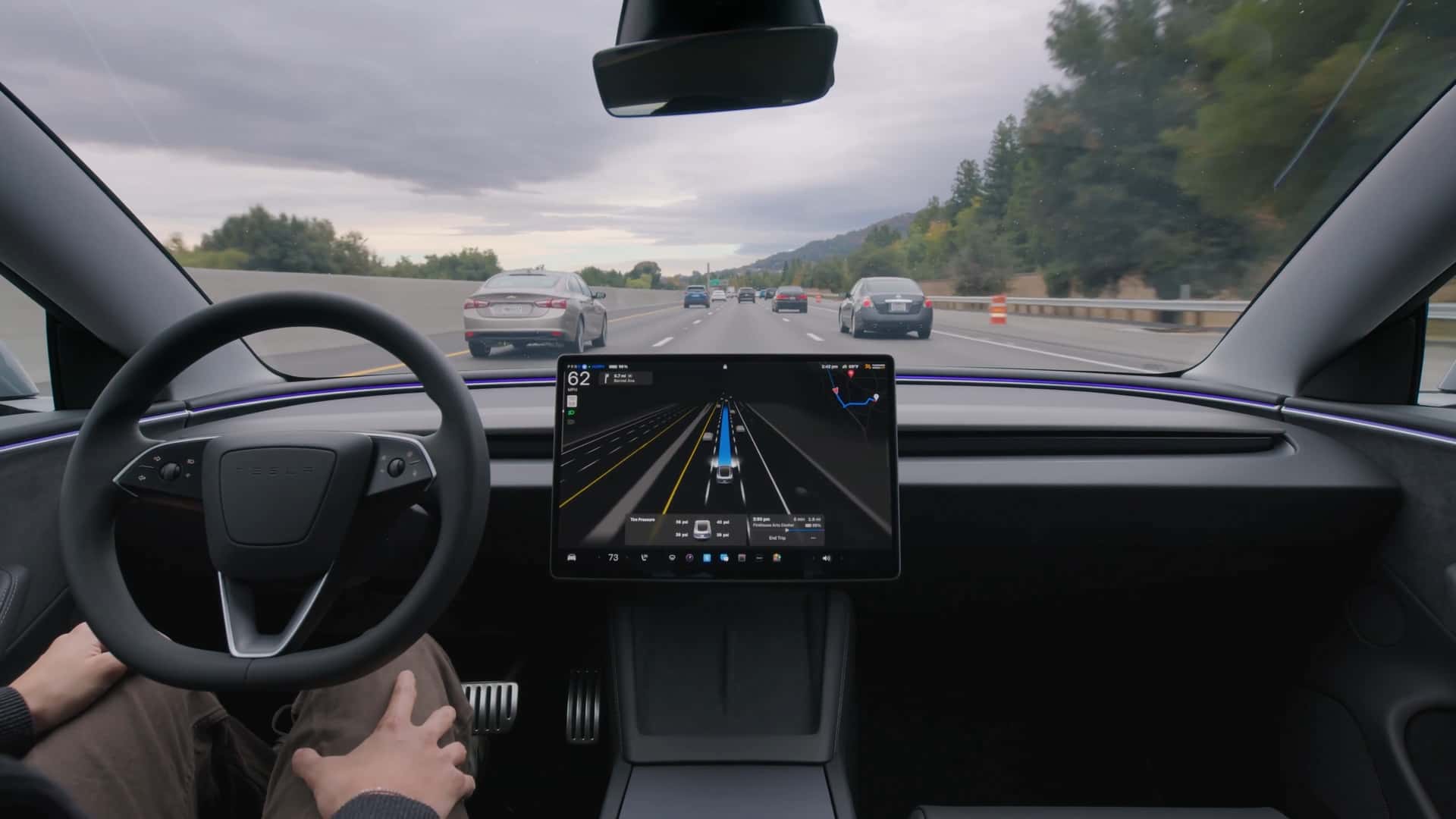
Tesla has been actively lobbying European safety authorities to fast-track approval of its Full Self-Driving (Supervised) system, arguing that any delay in rolling out the technology across the continent will cost lives. However, a new Reuters investigation reveals that independent traffic-safety researchers found no evidence to support that assertion, and identified serious weaknesses in the safety documentation Tesla submitted to regulators.
According to the investigation, which drew on internal emails between Tesla and the Dutch vehicle authority RDW, interviews with agency personnel, and input from seven independent researchers, Tesla’s April “Evidence Dashboard” relied on far fewer FSD test miles than the hundreds of millions logged by Tesla drivers in the real world. Rather than presenting direct crash data, the automaker pointed to what it called “behavioral surrogates” — indicators such as horn usage, abrupt acceleration and braking, low turn-signal compliance, and automatic emergency braking events — as proof that FSD outperforms human drivers. Researchers told Reuters that several of these metrics are weak proxies for actual collision risk, and none of the seven experts believed the study demonstrated that FSD prevents fatal crashes. No publicly available, peer-reviewed study currently shows FSD is safer than a human driver, meaning regulators must largely take Tesla’s word for it before conducting their own tests.
The investigation also surfaced internal correspondence suggesting Tesla repeatedly urged the Dutch RDW to narrow or soften the scope of its evaluation, citing the cost and extent of the review. In one exchange, an RDW staffer reportedly offered to discuss ways to “adjust or reduce” the required scrutiny. The RDW rejected any suggestion that its independence was compromised, describing such discussions with automakers as a routine part of the assessment process that does not affect the thoroughness of its work. The Netherlands ultimately granted approval, and Belgium, Denmark, Estonia, Lithuania, Czechia, Slovenia, and Croatia followed suit. France and Norway have taken a more cautious stance, while Germany appears poised to approve the system and has signaled it will push for EU-wide authorization — though Tesla agreed to rename FSD “Tesla Assisted Driving” there after authorities objected to the original branding.
Tesla and CEO Elon Musk also leveraged X, the social media platform Musk owns, to mobilize supporters. Officials in Sweden and Norway received dozens of emails from Tesla fans urging rapid approval, with some messages effectively telling regulators they would bear responsibility for deaths if FSD were not cleared. It is worth noting that despite its name, FSD is not a fully autonomous system: Tesla states that drivers remain responsible for crashes and must be prepared to take over at any moment. The system can steer, accelerate, brake, and park, but requires continuous supervision. As of the second quarter, Tesla reported roughly 1.5 million FSD subscribers worldwide, and many owners say the system has improved over time. Still, social media clips regularly show questionable behavior — including traffic-rule violations, speeding, and missed obstacles — and fatal crashes involving Teslas with FSD active are under investigation by the NHTSA in the United States.
An EU-wide vote on FSD is now pending. Approval requires backing from 55% of member states representing at least 65% of the bloc’s population. The central question is whether European regulators will independently scrutinize Tesla’s safety claims before granting the green light, or whether the company’s pressure campaign will prompt them to yield.
What do you think?