
Tesla Plans to Hand Cybercab Keys to Paying Customers Before Year's End
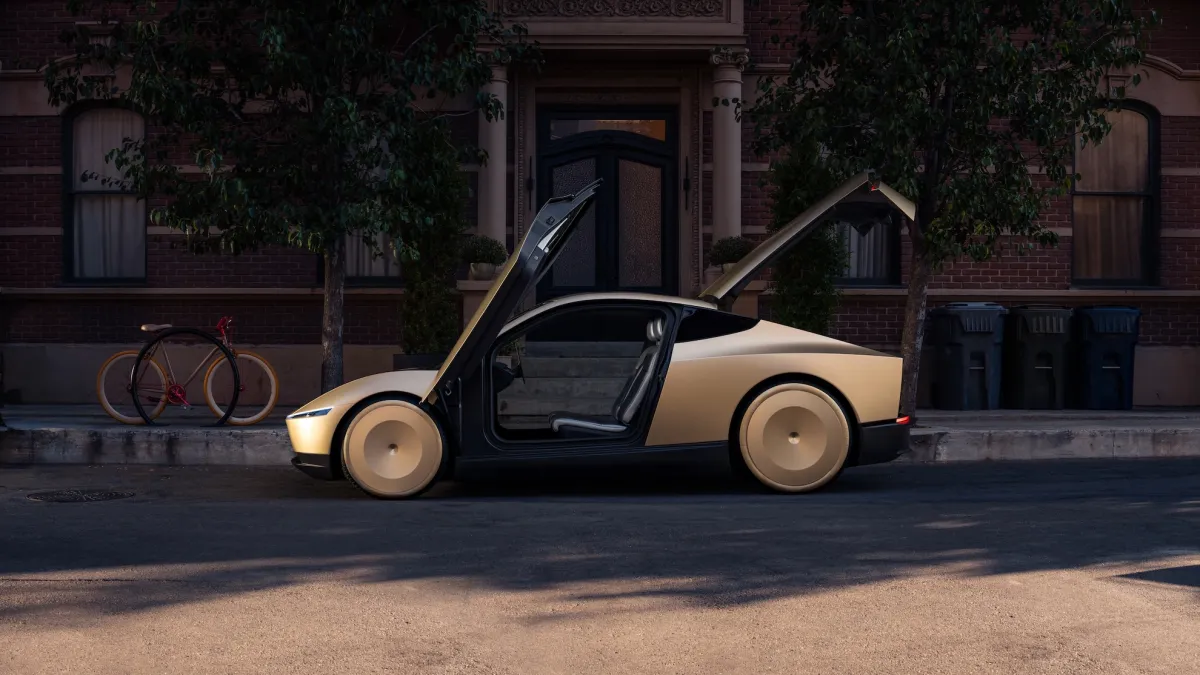
Tesla intends to put its steering-wheel-free Cybercab on sale to outside buyers before the calendar flips to next year, the company said on its third-quarter earnings call — a promise made while federal safety regulators are still examining whether the two-seater is legal on public roads.
Lars Moravy, Tesla’s vice president of engineering, framed the move as a gradual handover. Every Cybercab rolling off the line right now is headed into Tesla’s own robotaxi operation, he said.
From company fleet to customer driveways
Only once that internal fleet expands will Tesla begin delivering “fully designed autonomous vehicles” to buyers — and the start will be deliberately modest. Moravy said the company plans to scale up as it gathers real-world experience in vehicle delivery, ownership and fleet management.
The gold-tinted, two-seat machine has no steering wheel, pedals or mirrors in the conventional sense. That is precisely what has drawn regulatory attention.
The idea of selling robotaxis to third parties first surfaced last month around Tesla’s Cybercab event in Austin, where the company even published an interest form for would-be buyers. Whether Tesla would actually follow through was an open question until Wednesday.
Musk’s shifting story
For years, CEO Elon Musk pitched a different route to autonomy: converting privately owned Teslas into self-driving taxis through a software update. That vision has not arrived.
Today’s owners can pay for Full Self-Driving (Supervised), which handles plenty of driving chores but still demands an attentive human behind the wheel. Musk now says an unsupervised version will reach customers in the second quarter of next year — another slip for people who bought or subscribed to the software years ago.
If both schedules hold, something odd happens: fleet operators could be running autonomous Cybercabs commercially before ordinary Tesla owners get the same capability in their own cars.
A ride-hailing machine, not a garage trophy
Musk was blunt about who the Cybercab is for. It is a transport-as-a-service product, he said, while the Model 3, Model Y and Roadster remain the cars people are meant to own personally. The bulk of Cybercab deployment, in his words, will be Tesla-owned and operated as a service.
The regulatory catch: The National Highway Traffic Safety Administration opened an investigation into the Cybercab just hours after units began running on Austin’s public streets last month.
Federal Motor Vehicle Safety Standards still call for manual controls such as brake pedals, plus rearview and side mirrors. Automakers typically self-certify compliance, and Tesla did the same. NHTSA said its probe will look at the process and technical data behind that certification.
The Department of Transportation has proposed lifting those manual-control requirements for vehicles built to drive themselves, but no rule has been finalized. Until something changes, the investigation’s outcome could decide whether Tesla — or anyone else — can legally put a Cybercab on the road at all.
Source: TechCrunch - Transportation
What do you think?