
Tesla Halts Model 3 Premium Orders in Canada, Blaming a Quota That Data Says Isn't Full
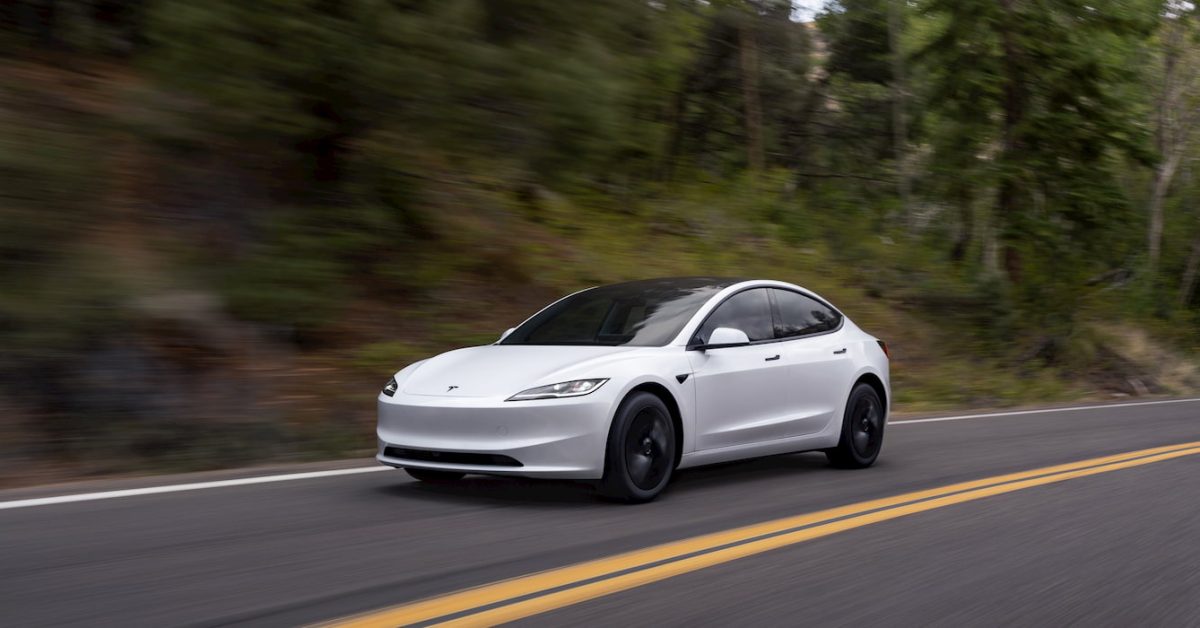
Tesla has quietly removed both versions of its Model 3 Premium — rear-wheel drive and all-wheel drive — from the Canadian order configurator, leaving only the Performance AWD variant available at roughly $936 CAD per month in financing. The automaker’s explanation, posted briefly on its site, is that strong demand drained its allotted import quota for China-built EVs, and that ordering won’t return until Ottawa issues more permits — which Tesla expects around March 2027.
That timeline lines up with how Canada’s quota system is structured. The national cap of 49,000 China-made electric vehicles runs on a March-to-February cycle, so a fresh batch of permits would only become available on March 1, 2027. The problem is that the government’s own tracking data doesn’t support Tesla’s framing. According to Export and Import Controls figures updated October 9, only 15,931 of the year’s permits have been consumed since March 1, leaving 33,069 — about 67% of the annual allocation — unused. The current six-month window alone began with 33,397 permits available: 24,500 in the base allocation plus 8,897 rolled over from the first half.
Monthly import statistics tell a striking story of their own. EVs valued at or below $35,000 — the customs bracket a $39,490 Model 3 RWD falls into, since the threshold is based on import value rather than sticker price — jumped from 465 units in June to 4,743 in July and 2,597 in August. Then the number collapsed to just seven in September, and zero in October as of the latest update. In other words, Tesla went from shipping thousands of Shanghai-built cars per month into Canada to practically none, while most of the quota sat untouched.
The likely explanation sits in a line from Global Affairs Canada’s own notice. The department says it will monitor permit applications to ensure “equitable access” among eligible applicants, and that this “could include setting aside a portion of the available quota” for OEMs, including new entrants. Tesla’s description of the situation as “Tesla’s import quota” suggests it is working under an allocation that isn’t purely first-come, first-served — even though the published rules describe permits as being issued on exactly that basis, with no per-manufacturer ceiling. No company-specific allocations have been made public. Tesla’s advantage in the cheap import lane came partly from timing: its Shanghai-built cars were already in Transport Canada’s certification database in March, while rivals like BYD and Geely were still building out dealer networks.
The bigger picture matters more than the paperwork. The Model 3 Premium RWD landed in Canada in May at a record-low $39,490 CAD — roughly the price of a base Camry, and far below the $79,990 Long Range AWD from Fremont that was previously the cheapest Model 3 on offer and carried Canada’s 25% counter-tariff on US-built vehicles. Canada’s decision to cut tariffs on Chinese EVs from 100% to 6.1% in January was meant to widen competition and push prices down, not to hand one automaker the whole lane. Whether Tesla was quietly capped or simply booked out every permit it expects before February, Canadian buyers who want the affordable Model 3 are now waiting until at least next spring. The episode also raises a harder question: with Canada selling around 1.9 million new vehicles a year, a single low-priced sedan was able to exhaust its share of the program in about four months of deliveries — a sign the 49,000-unit cap may be sized far too small, even though it is already scheduled to climb to 70,000 by 2030.
What do you think?