
Why Weight Budget Matters More Than Motor Choice in Commercial EV Conversions
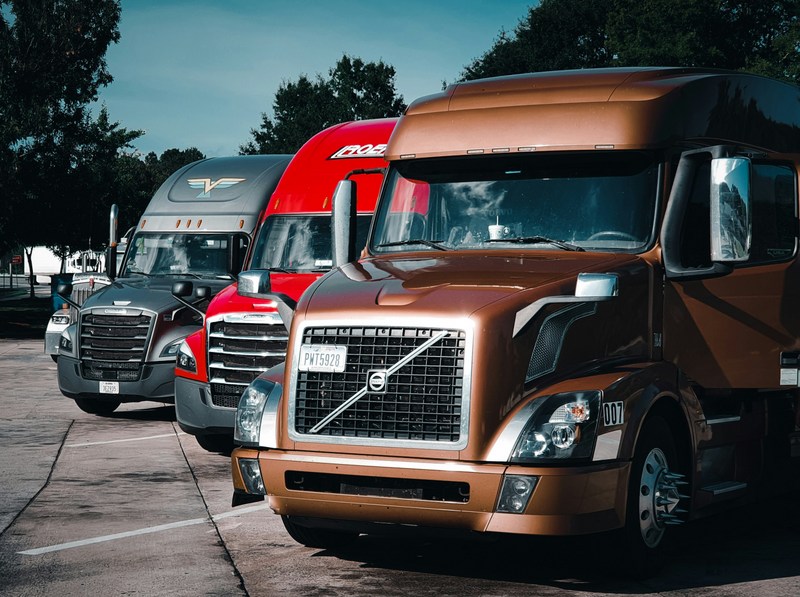
Converting a delivery van, box truck or shuttle bus to electric power is rarely as simple as pulling the diesel engine and dropping in a battery pack with a motor. The real engineering challenge sits in the vehicle’s mass budget: the moment a pack goes in, payload capacity starts shrinking, and fleet managers feel that loss on every revenue-generating route.
A midsize commercial van conversion illustrates the scale. The traction pack alone can add somewhere between 500 and 800 kilograms, and the enclosure, tray, cross-members and mounting hardware tack on another 80 to 180 kilograms before the vehicle turns a wheel. Cells are essentially fixed once the usable energy target is set, so the negotiable mass lives in the surrounding structure: motor and inverter mounts, adapter plates, fasteners and steel subframes. Teams often assume the removed combustion hardware — engine, exhaust, fuel system — will offset much of the added weight. In practice, the buyback is smaller than expected, which pushes attention onto the supporting hardware.
Battery mounting is where overbuilding quietly eats payload. Because designers face uncertain load cases during cornering, braking, road impacts and crashes, they tend to respond with thicker plates, extra cross-members and more fasteners. That instinct adds mass without necessarily improving joint performance. Machined 6061-T6 aluminum cross-members and tray interfaces offer an alternative: pockets, ribs and thicker local bosses concentrate material only where mounting points actually need it. CNC machining also holds pack-location tolerances tightly, cutting the need for slotted holes and heavy adjustment plates. The most effective parts are multi-functional — a single bracket that locates a pack ear, supports a cable clamp and routes a harness can eliminate separate tabs, bolts and washers along with the assembly steps that go with them.
Clamping behavior deserves as much attention as yield strength. Road vibration can bleed preload out of a poorly designed joint even when the bracket is stronger than required, so the goal is a repeatable clamping system with adequate thread engagement, controlled bearing surfaces and a sensible retention method. Settling thread-engagement depth, washer and insert choice, torque specification and fastener sourcing early allows teams to use custom fasteners from prototype through full production instead of adding brackets to accommodate off-the-shelf hardware. Cutting fastener count also reduces drilling, alignment and torque operations — often the easiest kilograms to remove are scattered across bolts, spacers and overlapping plates rather than sitting in one visibly heavy component.
Those saved kilograms translate into operational value. Mass consumes energy through acceleration and rolling resistance; regenerative braking recovers some acceleration energy but never all of it, and it does nothing for the rolling-resistance penalty. On delivery routes with frequent stops and low-speed turns, the effect compounds. As an indicative estimate, stripping 50 to 100 kilograms from a midsize conversion might trim route energy use by roughly one to three percent where repeated acceleration dominates — a few extra miles on a nominal 200-kilometer route, and a saving that repeats every duty cycle without adding battery capacity. Keeping mass inside the gross vehicle weight rating also preserves billable payload or makes room for a slightly larger pack. Total weight alone is not enough to judge, though, since pack placement can overload a single axle even when the vehicle stays under its overall rating.
Material selection follows from the operating environment. Underbody hardware faces water, road salt, grit, stone strikes and constant vibration, so corrosion resistance and fatigue behavior matter alongside strength-to-weight ratio. 6061-T6 is the practical default for machined pack brackets, motor mounts and adapter structures, and it pairs well with threaded inserts or replaceable steel sleeves at serviceable mounting points. 7075-T6 suits compact, heavily loaded joints where its higher yield strength allows a smaller section, though cost and corrosion concerns make it a targeted choice rather than a default. For folded trays, shields and enclosure panels, 5052-H32 forms more readily than heat-treated machining grades, while aluminum extrusion handles straight cross-members efficiently — a constant section carries the span and CNC-machined ends create vehicle-specific interfaces. Carbon fiber reinforced plastic and high-pressure die casting can deliver lightweight parts at OEM volumes, but their tooling and validation costs are hard to recover across a fleet of twenty vehicles.
That economics points toward prototyping workflows rather than dedicated tooling. Rapid-prototype CNC machining and precision sheet metal work let a conversion team test several lightweight aluminum bracket revisions on a pilot vehicle without scrapping tooling after each change, so hole positions, rib thicknesses, service clearances and cable routes can evolve as real load data comes in.
What do you think?