
Tesla Adds Rear Camera Feed and Quiet Mode to Cybercab in Two-Week Turnaround
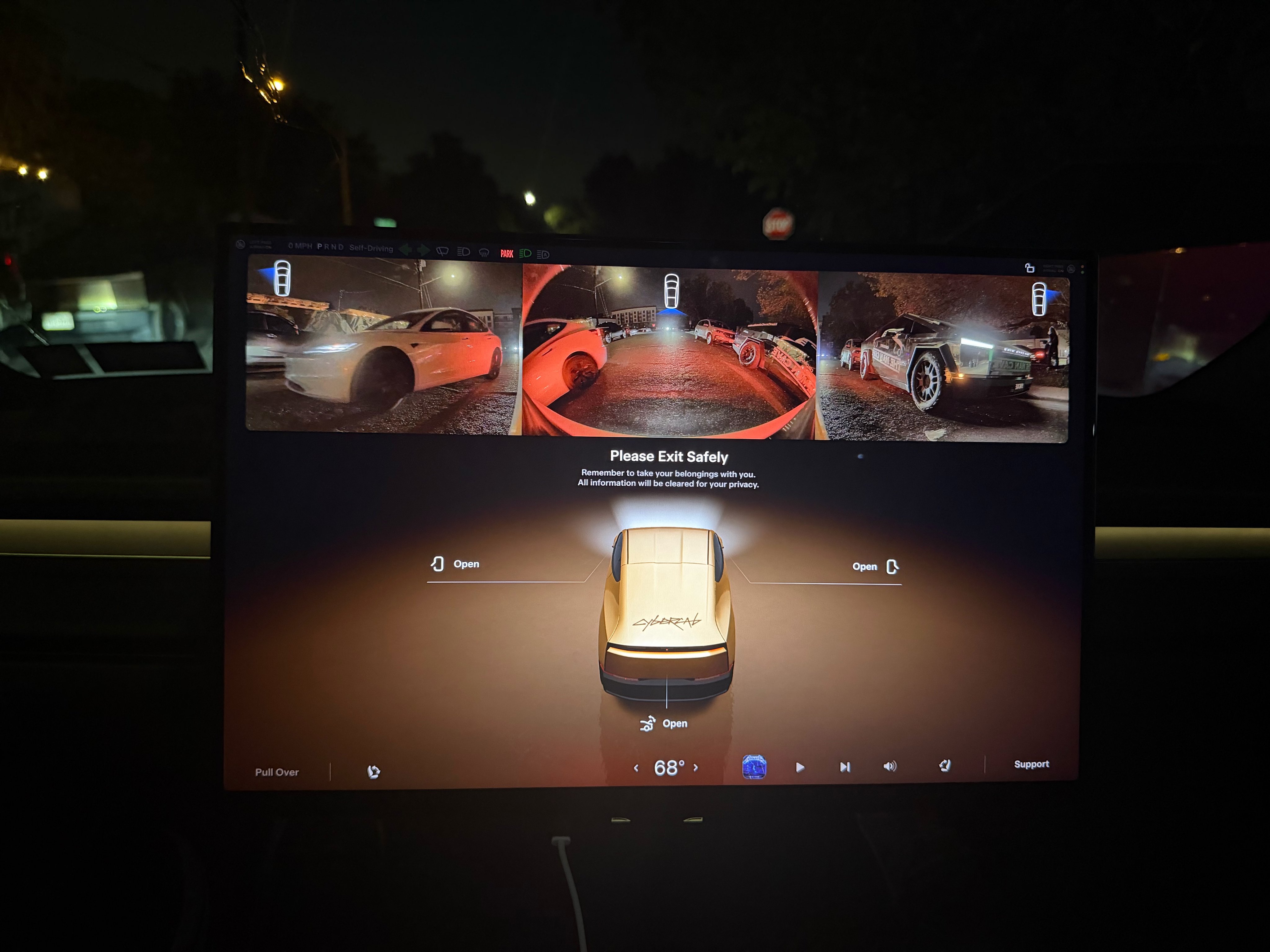
Tesla’s robotaxi passengers in Austin have two new reasons to look at the center screen — and one reason to look away from it. Riders can now pull up a live rear camera feed mid-trip and, separately, switch the display into a darkened quiet mode.
The rearview upgrade fills a hole baked into the Cybercab’s design. There is no steering wheel, no pedals, no mirrors and no rear glass, so a passenger has no natural way to check what is coming up behind the car. The hardware was already there: the eight exterior cameras that feed Tesla’s autonomy stack now serve double duty as a passenger safety tool.
From Request to Release in Two Weeks
The speed here is the story. Earlier this month, Austin rider Dan Burkland publicly asked Tesla to let passengers open the rear and repeater cameras whenever they like, citing peace of mind. Tesla UI software engineer Evan — who posts as @CarCoder — replied simply that it was “in development.” Roughly a fortnight later, it shipped.
Rider Ethan McKanna caught the change late Friday and posted from inside a Cybercab, with a strip of rear video running across the top of the display and another Cybercab visible behind on a bridge. Evan later added a tip: tapping the feed opens additional cameras, while a swipe up or down hides and restores it.
Before this, the only camera access came at the end of a journey, on the “Please Exit Safely” screen — a cyclist-and-traffic check before opening the door. Useful, but hardly a substitute for a proper look around while moving.
A Screen You Can Switch Off
Quiet mode showed up a day earlier. Austin rider Jackson Blatz posted video Friday morning of the revised Robotaxi interface with the option present, which dims the entire display for passengers who want to rest, sleep or simply avoid a glowing panel at night.
Tesla has not published release notes for either feature, which is typical for its robotaxi software rollouts.
Grok Gets a Hand in the Tuning
There is an AI footnote worth flagging. Yun-Ta Tsai, a senior staff engineer on Tesla’s AI team, said the human-facing camera view was optimized with Grok, with part of the algorithm implemented by programming fixed-function hardware directly — enough that he did not need to consult the datasheet. Tsai did not specify which piece of the work Grok handled.
Grok’s footprint inside the fleet keeps widening. Grok Bot is now live across every Cybercab and the Model Y Robotaxi fleet, following the agent’s arrival in Tesla vehicles back in September.
The camera view and quiet mode land in a crowded week for Austin riders, which also delivered a redesigned Live Activity for iPhone and Apple Watch plus live trip sharing.
The Customer-Car Clock Is Ticking
All of this matters beyond the pilot fleet. On Tesla’s third-quarter earnings call, Lars Moravy said the company is targeting customer Cybercab deliveries before the end of 2026. Whether the camera view and quiet mode carry over to Model Y Robotaxis remains unanswered.
For a vehicle with no windows out the back, a camera feed is not a luxury. It is basic situational awareness, delivered by software to hardware that was already bolted on.
Source: Teslarati
What do you think?