
POSCO Future M and Samsung SDI Ink Multi-Billion-Dollar LFP Cathode Deal
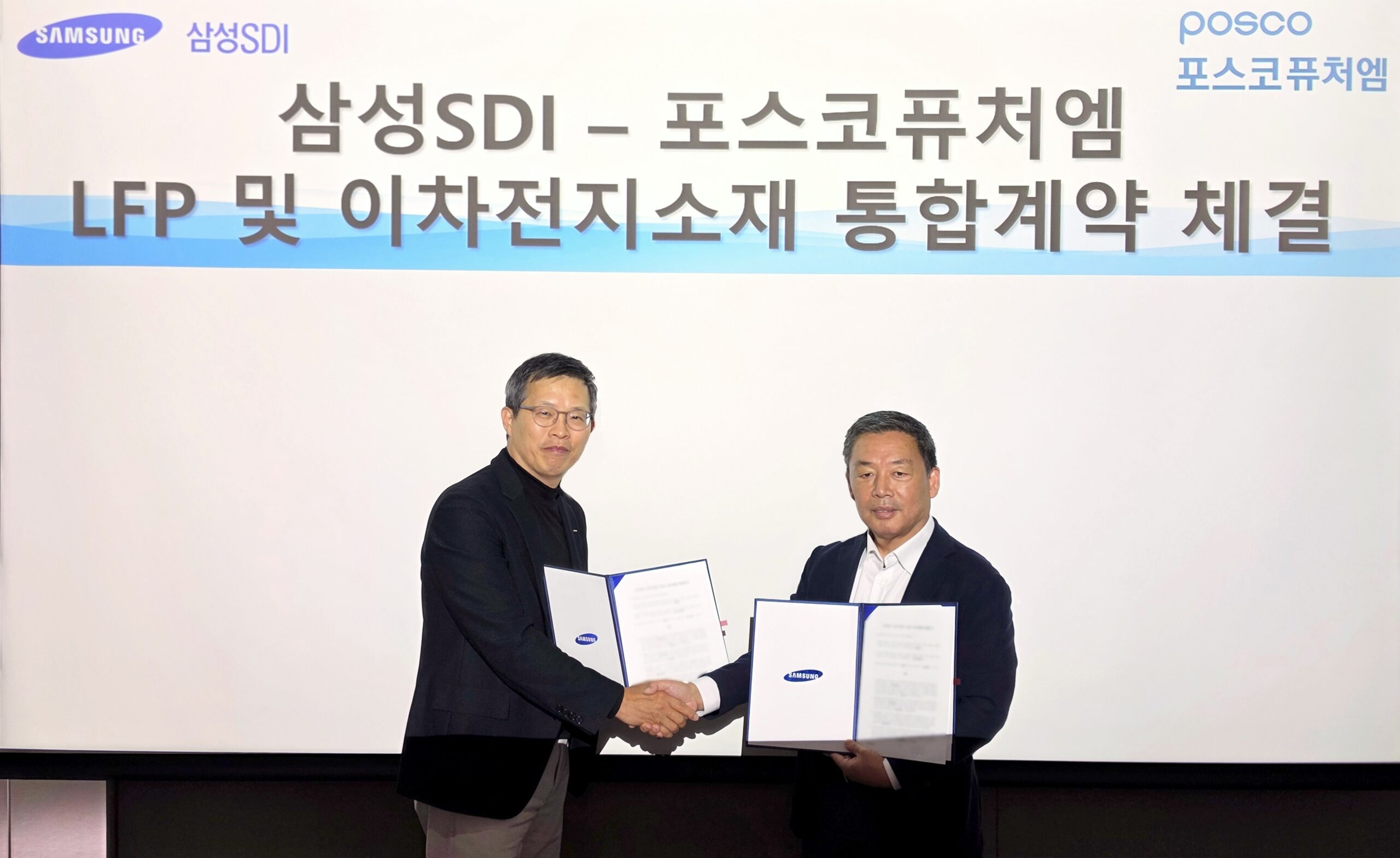
POSCO Future M has secured a long-term supply agreement with Samsung SDI covering lithium iron phosphate (LFP) cathode materials, a contract the Korean materials maker values at six trillion South Korean won — roughly 4.5 billion US dollars. The deal, signed on October 6, 2026, also broadens the two companies’ cooperation into additional battery materials beyond LFP.
The volume commitment behind the agreement is substantially larger than what the pair had sketched out just two months earlier. In August, POSCO Future M and Samsung SDI had settled on 190,000 tonnes of LFP material for the 2027–2032 period; the new contract calls for more than double that amount. POSCO Future M did not disclose a precise updated tonnage in its announcement.
Beyond raw volume, the agreement consolidates several previously separate arrangements for the companies’ main supplied products. It also extends a supply contract originally signed in 2023, which had focused on NCA cathode materials, to now include LFP as well. In addition, the two sides plan to work together on lithium manganese oxide (LMO) cathode materials and synthetic graphite anode materials. POSCO Future M expects the broader product mix to lift total delivery volumes by roughly 45 percent compared with the previous arrangement.
For Samsung SDI, the partnership is a way to lock in cathode and anode materials from sources that are not classified as prohibited foreign entities — what POSCO Future M refers to as non-PFE material. The company has been working to build supply chains that comply with evolving rules on battery component sourcing, particularly as LFP chemistry gains ground in affordable EV segments.
On POSCO Future M’s side, the committed volumes should improve production utilization and make planning more reliable, with implications for both future plant expansions and raw material purchasing. The contract is one of the larger LFP commitments announced in the sector this year, and it underscores how Korean battery players are increasingly turning to iron-based cathodes to serve cost-sensitive vehicle programs.
What do you think?