
Pilot and Tesla Launch First Megacharger Site Built for Heavy-Duty Electric Trucks
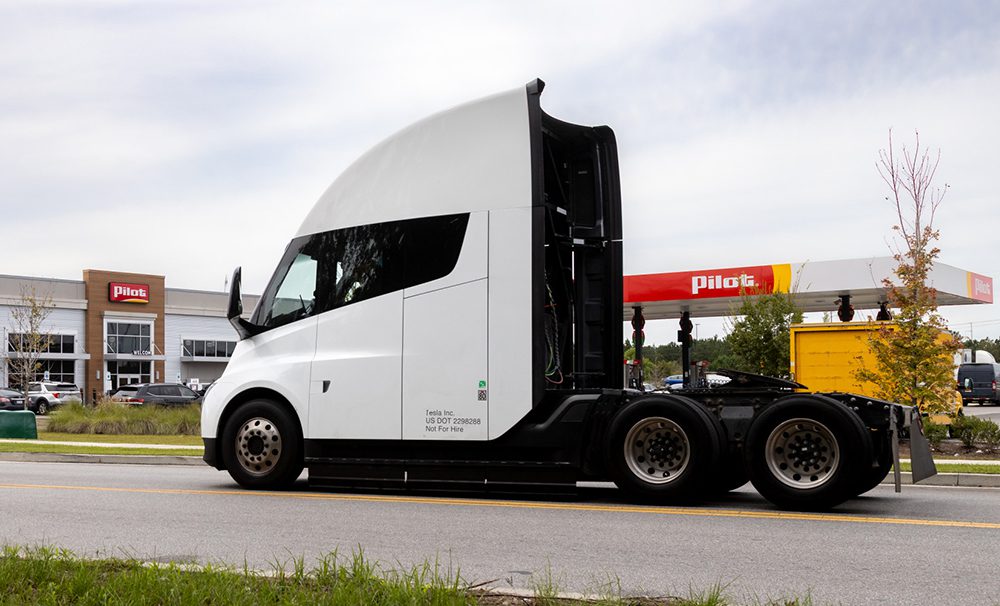
Long-haul electric trucking just got its first dedicated fast-charging hub in the United States. Pilot Flying J, which markets itself as a travel center operator and runs the biggest truck-stop network in North America, has brought its first Tesla Megacharger facility online at a Pilot location in Ellabell, Georgia. The site, known as Pilot #1390, is equipped with six heavy-duty charging stalls — a setup aimed squarely at commercial trucks rather than passenger cars.
The distinction matters. Electric semi-trucks draw far more energy and need far more space to maneuver than a typical EV driver pulling up in a crossover. Pilot’s new stalls are powered by Tesla’s V4 cabinet technology and can push as much as 1.2 megawatts to a single vehicle. That power level is what makes realistic depot-to-destination runs possible for battery-electric freight, cutting the downtime that has long kept fleets from committing to electrification.
Ellabell is only the beginning. Pilot has twelve additional heavy-duty charging locations under construction, with three expected to switch on shortly in Tulare, California; Fort Stockton, Texas; and North Las Vegas, Nevada. Each of those sites will host four to eight stalls using the same Tesla V4 hardware.
Over the longer term, the two companies intend to build out a Megacharger network at selected Pilot stops along Interstate 5, Interstate 10 and other heavily trafficked freight corridors. Their plans span California, Georgia, Indiana, Nevada and Texas — states that together cover a large share of the country’s trucking volume. Shannon Sturgil, Pilot’s Senior VP of Alternative Fuels, framed the rollout as a practical step for fleets, noting that pairing heavy-duty charging with the amenities drivers already depend on makes electrification a more workable choice for long-haul operations.
The announcement lands as truck-stop chains face growing pressure to serve commercial EVs, not just passenger vehicles. Truck charging has lagged behind the passenger-car buildout, and fleet operators have pointed to the lack of corridor coverage as a key barrier. Pilot’s move — and the involvement of Tesla’s high-power hardware — signals that the infrastructure gap on major freight routes may finally be closing.
What do you think?