
Peterbilt Electric Trucks Earn Recognition at the Port of Vancouver
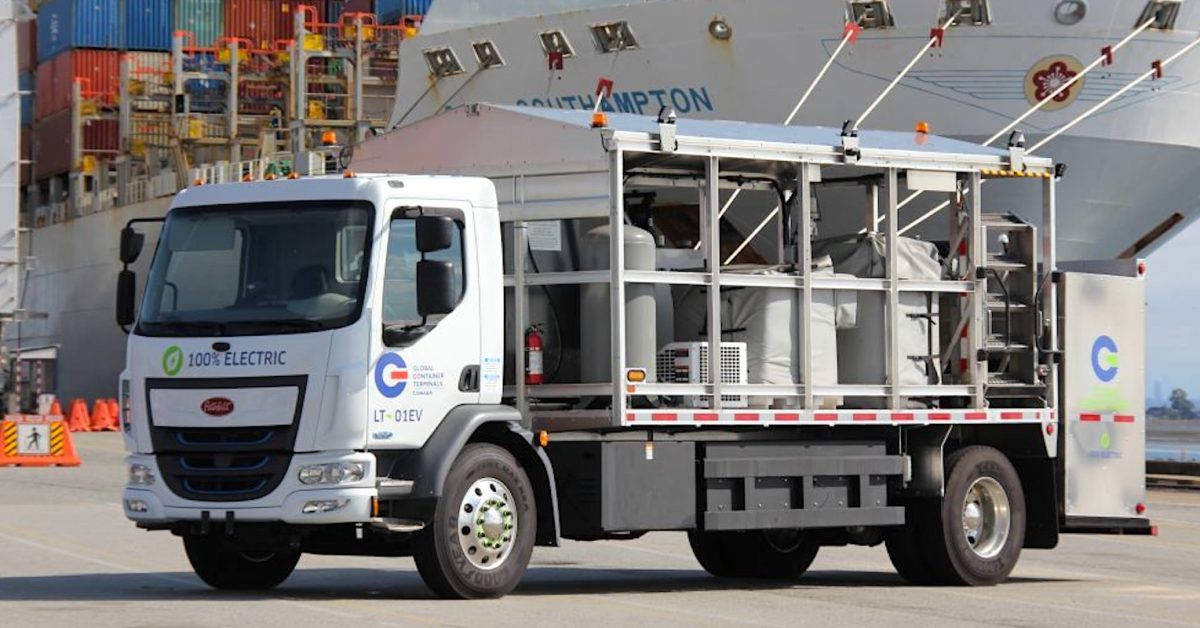
Electric commercial vehicles are proving they can handle the demanding work of a major container terminal. At the Port of Vancouver, GCT Global Container Terminals has deployed Peterbilt battery-electric trucks that are moving cargo without the diesel and propane emissions typical of port operations. The effort recently earned the operator a BC Hydro Luminaries Project of the Year award, with Peterbilt congratulating its partners on the recognition.
GCT’s sustainability targets are ambitious. The terminal operator has committed to cutting absolute emissions by 45% by 2030 and reaching net zero by 2050 across its Vanterm and Deltaport facilities. The electric fleet includes a Peterbilt 220EV configured as a lubrication service truck that maintains rubber-tired gantry cranes, and a 520EV tanker that refuels remaining diesel equipment on site. Peterbilt describes this as the largest fleet rollout of its kind at any terminal in Canada.
Peterbilt’s national sales manager, Martin Blanchet, highlighted why port work suits electric vocational trucks. Port vehicles often idle for long periods and require substantial electric power take-off, conditions where battery-electric drivetrains can outperform conventional setups. The 220EV offers up to 282 kWh of battery capacity and roughly 259 kW of continuous power, while the heavier 520EV packs 400 kWh and delivers around 400 kW. Both eliminate tailpipe emissions and reduce fuel costs for the operator.
These trucks join an existing fleet of Peterbilt 579EV Class 8 tractors already hauling containers at the port. That deployment is part of a data-sharing pilot funded through Canada’s ELECTRA program, which stands for Electric Container Trucking progrAm. The initiative works with five port shipping companies and offers heavily subsidized 60-month lease terms on new electric semi trucks along with supporting charging infrastructure, aiming to measure the real-world benefits of electric drayage on first-mile delivery routes.
The Vancouver deployment reflects a broader trend of electrifying port operations, where high-idle duty cycles and concentrated routes make battery power a practical fit. By combining hydroelectric power with zero-emission work trucks, GCT is demonstrating how commercial fleets can cut pollution while keeping cargo moving.
What do you think?