
One In Four Mercedes-Benz Cars Sold Last Quarter Was A Plug-In
Mercedes-Benz closed the third quarter with a widening split in its sales figures: fewer cars left showrooms overall, but the share carrying a charging port climbed to a new high. Roughly 407,200 passenger cars were delivered worldwide between July and September, an 8% dip versus the same stretch a year earlier. The Three-Pointed Star pointed to a difficult Chinese market for the shortfall, noting that volumes outside China actually improved by about 6%. That pattern is hardly unique to Mercedes—most European manufacturers have been fighting headwinds in the world’s largest car market.
The electrified slice of the business, however, told a different story. Battery-electric deliveries reached 68,400 units, a 61% increase year-over-year and roughly 29% above the prior quarter. Pure EVs thus accounted for a record 16.8% of passenger car sales, up 7.2 percentage points from a year ago. Once plug-in hybrids are folded in, one out of every four new Mercedes-Benz cars sold in the quarter had a cable to plug in.
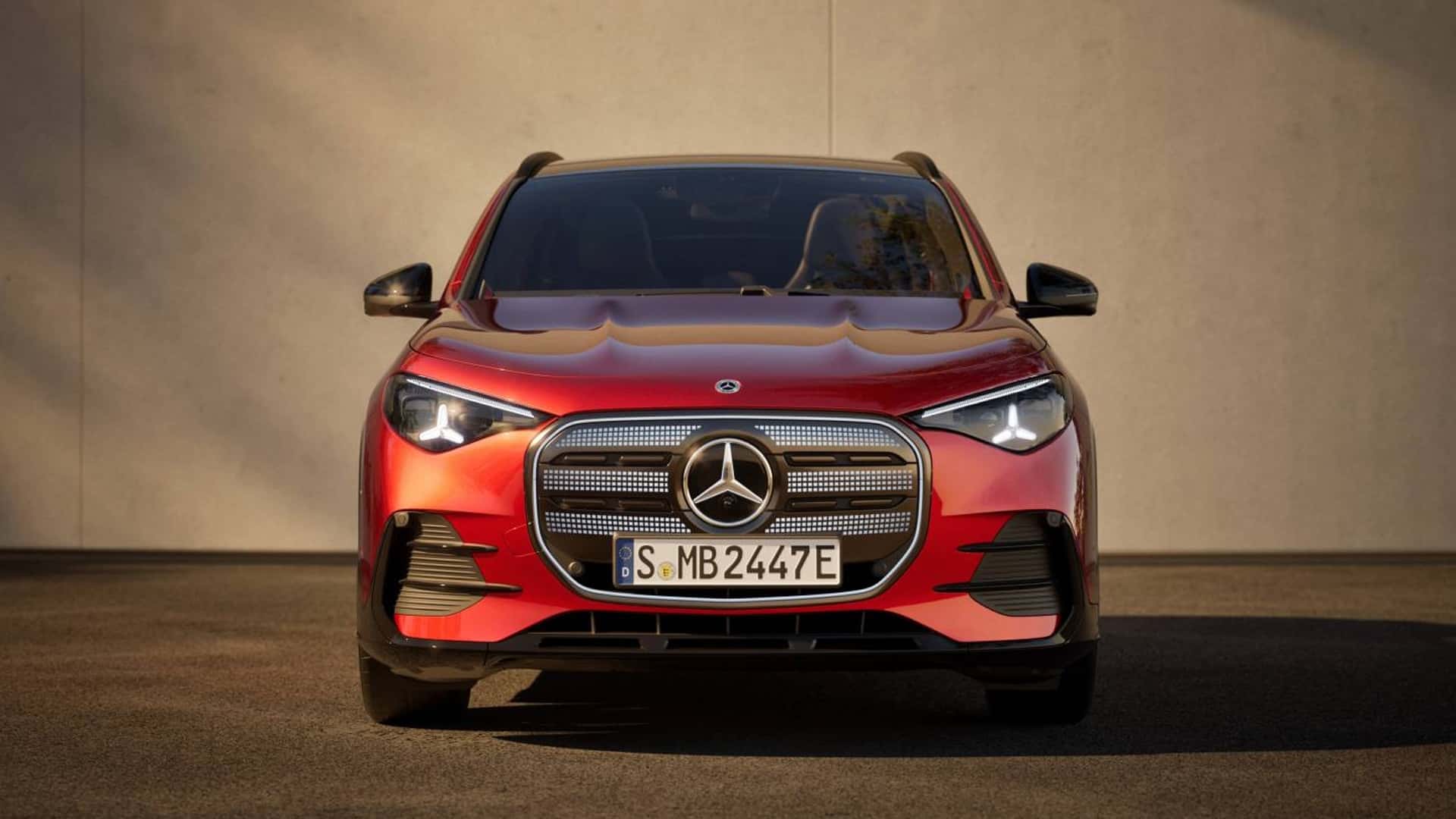
Europe did most of the heavy lifting. The new electric GLC has become the main growth engine, helping push regional EV deliveries up 78% year-over-year—close to one in three Mercedes cars sold on the continent was fully electric. Demand has been strong enough that the electric CLA, GLA, GLB and GLC are all spoken for in the EU through the rest of 2026. Mercedes’ van division also reported a rising share of electric sales, with EVs making up around 11% of its total volume and as much as 15% in Europe.
The question is whether that momentum translates to the United States, where the growth curve is not expected to match Europe’s pace. Mercedes is preparing a broad product push to help, with new EVs planned across nameplates including the C-Class, GLC and GLB. For now, the headline is a company whose total volume is shrinking while its electric mix expands faster than at any point in its history—a shift that matters far more to its long-term positioning than the quarterly sales dip itself.
What do you think?