
One Family, Five Waves of Electric Adoption in Just Over a Decade
When a household starts buying electric vehicles, the shift rarely happens all at once. In one Utah-based family, the conversion unfolded across roughly a dozen years and multiple distinct phases, a pattern that may look familiar to anyone who has watched friends and relatives slowly come around to plug-in driving.
The story begins in early 2014, when the author leased an 80-mile Nissan Leaf purely for local errands, while his brother picked up a BMW i3 REx with 72 miles of electric range and a tiny 2.5-gallon backup tank for extended trips. Even reaching the airport 40 miles away required a stop at a Nissan dealer in downtown Salt Lake City. Those early limitations are a reminder of how quickly capability has moved: a short-range commuter car back then could not manage a single regional errand without planning.
The second phase brought long-range Teslas into the picture, including a 2017 Model S, a 2017 Model X, and a 2018 Model 3, and family members began regular cross-country drives. A third phase pulled in friends and neighbors, including a 2018 Model S, a 2021 Model Y, and a used 2018 Model 3 bought for only $11,000 after a $4,200 used-EV subsidy, with battery warranty still covering 20,000 miles and 18 months. That price point shows how the used market has opened EV ownership to buyers who never considered a new electric car.
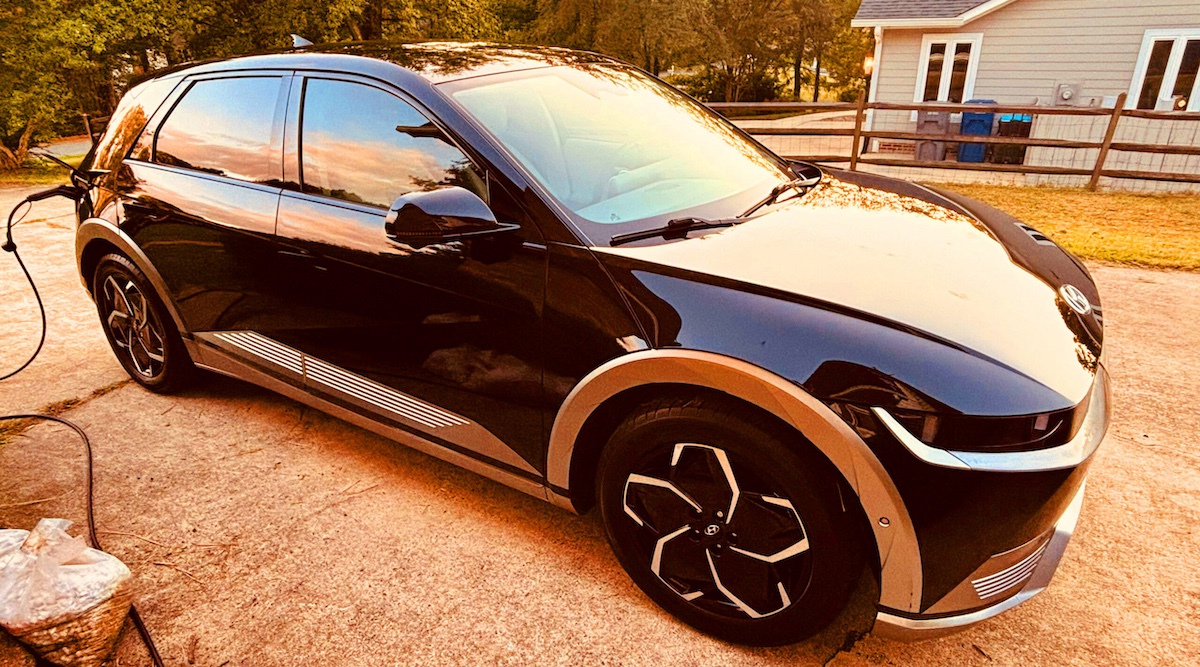
The most recent wave is more varied. A 2023 Hyundai IONIQ 5 replaced a wrecked vehicle and is charged at work, eliminating fuel costs. Two drivers use 2023 and 2026 Model Ys equipped with Hardware 4 cameras and the latest Full Self Driving software, while a second daughter switched to a 2026 Toyota RAV4 plug-in hybrid with 52 miles of electric range, plugging in at home for the vast majority of trips and relying on gasoline only about a tenth of the time. Gasoline prices above $4.00 a gallon make that calculation even more attractive.
The family’s approach has been low-pressure: no hard selling, just a suggestion that an electric car deserve serious consideration at the next purchase, paired with practical points about home Level 2 charging, no oil changes, and reliable fast-charging on major highways. The result is a quiet example of how peer influence, falling used prices, and improving range have moved EVs from a novelty to a default choice for many households.
What do you think?