
New South Wales Grants Apartment Dwellers a 'Right to Charge' at Home
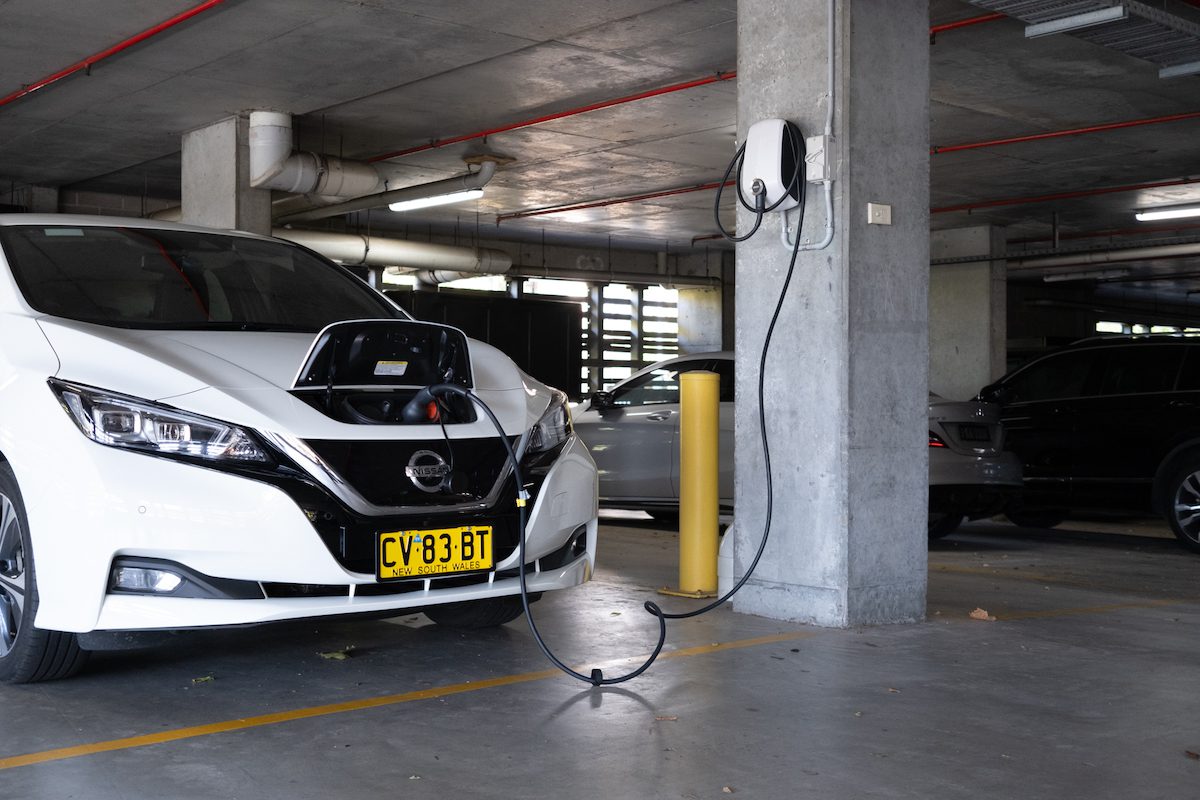
Apartment owners in New South Wales just got a firmer legal footing to plug in where they park. The state parliament has passed amendments to its Strata Schemes Management Act that stop strata committees from rejecting EV charger installations without a good reason.
The rules were first tabled in 2025, and the EV-related sections have now cleared the chamber. In practice, that means an owner who applies to fit a charger on their own lot can go ahead even if the job touches shared property — but committees can still say no where the objection is reasonable.
That does not mean an open season on whatever hardware a resident fancies. The legislation gives no blanket approval for every charging setup, a point some industry voices have stretched into warnings about overloaded building supply and fire risk.
What the building actually controls
Here the legislation draws a fairly clear line: it is the owners corporation — not the individual applicant — that picks which charging option suits a building.
So any single approval has to be judged against the eventual load of a full building-wide roll-out. The practical outcome is that strata schemes should be choosing scalable demand-management systems from day one, rather than bolting on whatever is cheapest.
That rules out most unmanaged chargers wired back to a single owner’s switchboard, including plain power points. And on fire safety, the numbers don’t support the scare stories; the owners corporation is also free to draw up its own EV charging strategy, which is where genuine safety questions can be handled.
Five steps, templates and a deadline
For buildings that aren’t yet ready for EVs, the state government’s dedicated page lays out a five-step path to get there, alongside the responsibilities falling to owners and owners corporations.
- By-law protection: any strata rule that unreasonably blocks a charger on an owner’s lot can be invalidated.
- Response times: maximum periods are now set for replying to a charging request.
- Cost: in most cases the owner or tenant pays for the charger itself.
- Paperwork: the government has published a quick-reference guide, resident survey and request templates, energy assessment forms and sample meeting motions.
Those deadlines matter. They target the small but stubborn group of committees that have taken a flat “no EVs” stance to dodge the cost of charger planning or upgrading ageing switchboards — obstruction that the new provisions are designed to break.
There’s a useful distinction buried in the material too: electric cars aren’t treated as carrying a higher fire risk, while e-bikes and scooters are. Lumping the two together to discredit EV charging is, politely put, a stretch.
Other states are watching
NSW is further along than most of Australia on this front. Victoria has already issued its own detailed guide for strata EV charger installs, and the hope is that the NSW model nudges the remaining states and territories toward similar laws.
For now, the takeaway for apartment dwellers is simple: the committee no longer holds an automatic veto. The building may still shape how charging happens — but refusing to engage is getting harder to defend.
Source: The Driven
Curious how this compares to other EVs? Try our comparison tool →What do you think?