
Fraunhofer ISE Pushes Silicon-Rich Cells Past 1,000 Cycles — With a Mechanical Assist
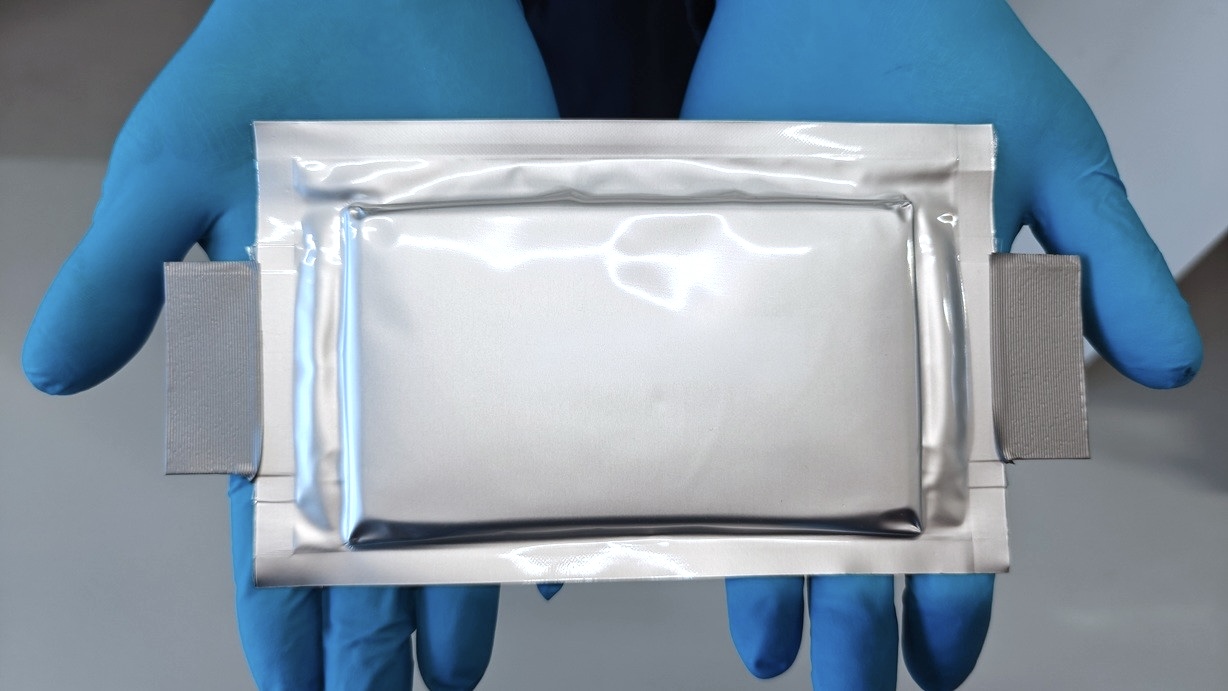
Silicon-rich anodes have long promised more energy per kilogram, but they have a nasty habit of fading fast. Researchers at Fraunhofer ISE now say they have pushed their own pouch cells past 1,000 full cycles while keeping more than 83 percent of original capacity — provided the cell is clamped under 1,000 kilopascals of external pressure.
That pressure is the headline finding. The team ran the same cells at two axial pressures, 300 and 1,000 kPa, charging and discharging each within an hour. At the higher clamp load, capacity held up. At the lower one, usable capacity slid noticeably.
Why pressure changes the story
Mechanical compression does two useful things: it keeps the electrical contact tight and it slows the detachment of electrode material. Neither is glamorous, but both matter for a chemistry that tends to swell and crack as it cycles.
The Freiburg researchers also flagged a widening gap between the capacity measured at low discharge rates and what the cell can actually deliver in normal operation as cycling progressed. In other words: lab-friendly numbers are not the whole picture, and any real-world application will need to be judged under realistic duty cycles.
Key Specs: 280 Wh/kg in the research cell · ~330 Wh/kg expected in an industrial format · 25 Ah capacity · 40-layer pouch · 1,000 kPa compression · >83% capacity after 1,000+ cycles
The cell itself
The cells tested are not tiny lab curiosities. Each is a 40-layer pouch with 25 Ah of capacity, pairing a silicon-carbon/graphite anode with a nickel-rich NMC cathode. The silicon-carbon composite makes up 51 percent of the anode active material.
Fraunhofer ISE built them on its own semi-automated line, and they serve as a reference platform for testing new materials, cell concepts and operating conditions.
On energy density, the research cells reach 280 Wh/kg. The institute expects roughly 330 Wh/kg once the design is translated into an industrially optimised cell format.
What it means for EVs and beyond
Higher energy density from silicon-rich anodes has obvious appeal for electric vehicles, but also for aerospace and stationary storage. The catch has always been cycle life, and that is exactly what this test chips away at.
- The upside: 1,000+ cycles with modest fade under the right mechanical conditions
- The caveat: the result depends on sustained external compression, which adds engineering complexity to pack design
- The next question: how these cells behave under fast charging and variable real-world loads, not just steady one-hour cycles
A cell that needs to be held under pressure is a packaging problem as much as a chemistry one. Still, 83 percent after a thousand cycles is a useful marker for a technology that has spent years being talked about as promising rather than proven.
The StrOboBatt work does not settle the silicon anode debate. It does give pack engineers something concrete to design around.
Source: Battery-News
Curious how this compares to other EVs? Try our comparison tool →What do you think?