
Neolix Bets $400M That Driver Shortages, Not Tech, Will Sell Its Robovans
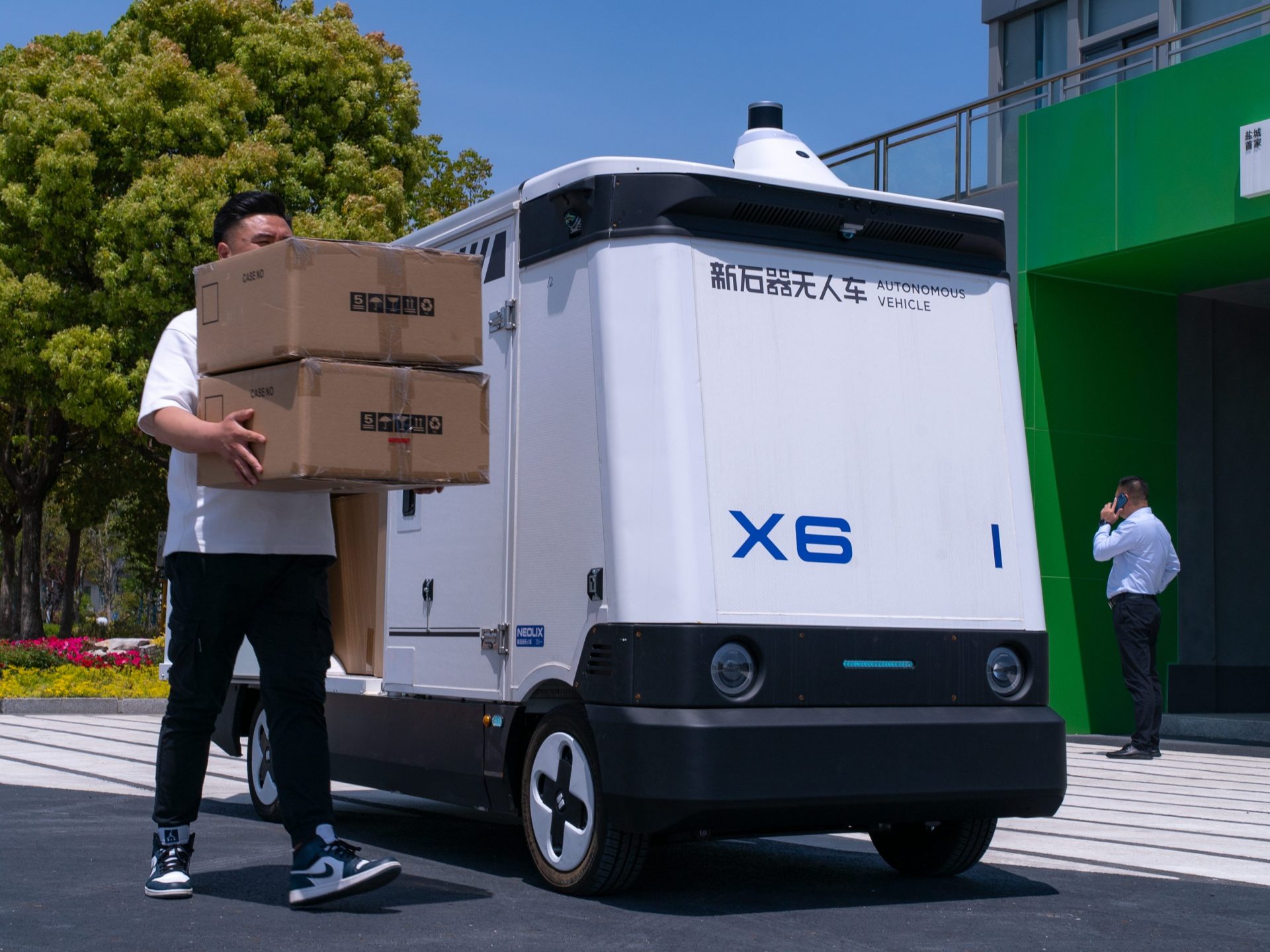
Chinese autonomous delivery vehicle maker Neolix has closed a Series E round that pushes its total funding past $1.4 billion, and it is putting the money to work in Europe, the Middle East and Asia. The pitch, according to Executive President Will Zhao, is less about clever software than about a labour market that is running dry.
“This is a labour story before it’s a technology story,” Zhao told Zag Daily.
That framing matters. In markets with ageing workforces and climbing wages, logistics operators are struggling to staff last-mile routes, and a vehicle that fills the gap starts to look like a practical answer rather than a science project.
Where the money goes
The $400 million round was co-led by Boyu Capital and a Chinese state-backed fund, with Alibaba’s AEF NextGen Fund, Monolith Management, Granite Asia and Temasek-backed Vertex Growth also participating.
- Priority regions: Middle East, Europe, Japan, South Korea and Southeast Asia
- Target customers: express delivery, e-commerce, postal services, retail and manufacturing
- Fleet today: more than 30,000 vehicles across 320+ cities in over 20 countries and regions
- Distance logged: upwards of 260 million kilometres
The company also plans local service hubs in its major overseas markets — a sensible move, since a broken-down robovan in a foreign city is a support problem before it is a technology problem.
Malaysia as the test case
Neolix’s most advanced overseas project sits in Malaysia, where it signed a distribution agreement with conglomerate Sunway Group on October 21. The deal covers potential deployments for last-mile delivery and the movement of goods and medical supplies between facilities.
Sandbox trials have been running there for three months, with the safety assessment nearing completion ahead of the vehicle type approval process. Neolix already works with local logistics players including Tiong Nam Logistics and SF Express.
By the numbers: $1.4bn cumulative funding · 30,000+ vehicles in service · 260m+ km driven · production cost down to under RMB100,000 (€13,446)
The economics are moving in the right direction, too. Neolix says its vehicle production costs fell below RMB100,000 (€13,446) in 2025, down from an estimated RMB300,000–500,000 (€40,349–67,249) in 2021. Cheaper sensors and computing platforms have done much of the heavy lifting.
Zhao describes a flywheel: a bigger fleet generates more driving data, which sharpens the end-to-end autonomous models, which lowers costs, which opens the door to more customers. The fresh capital is earmarked for exactly that R&D work.
The competition is not standing still
Back home, the race for investment has become crowded. Rival Zelos raised more than $300 million in February, and Alibaba’s Cainiao agreed in January to back Zelos and fold it into its own autonomous driving unit.
Regulation remains the brake pedal. Zhao argues that wider access to public roads — and a broader range of operating conditions — is needed before the data pipeline can deliver real improvement. Hardware and running costs have to keep falling as well.
And there is a caveat worth keeping in view: a driverless vehicle still needs someone to load, unload and hand over the parcels. How much autonomous delivery actually cuts from total fulfilment costs depends on how much of the surrounding operation gets automated too. The van drives itself. The rest of the chain, for now, does not.
Source: Mikro-mobilite Sektörü (Zag Daily)
What do you think?