
Modern Agriculture's Hidden Bill: $12 Trillion a Year and a Planet Paying the Price
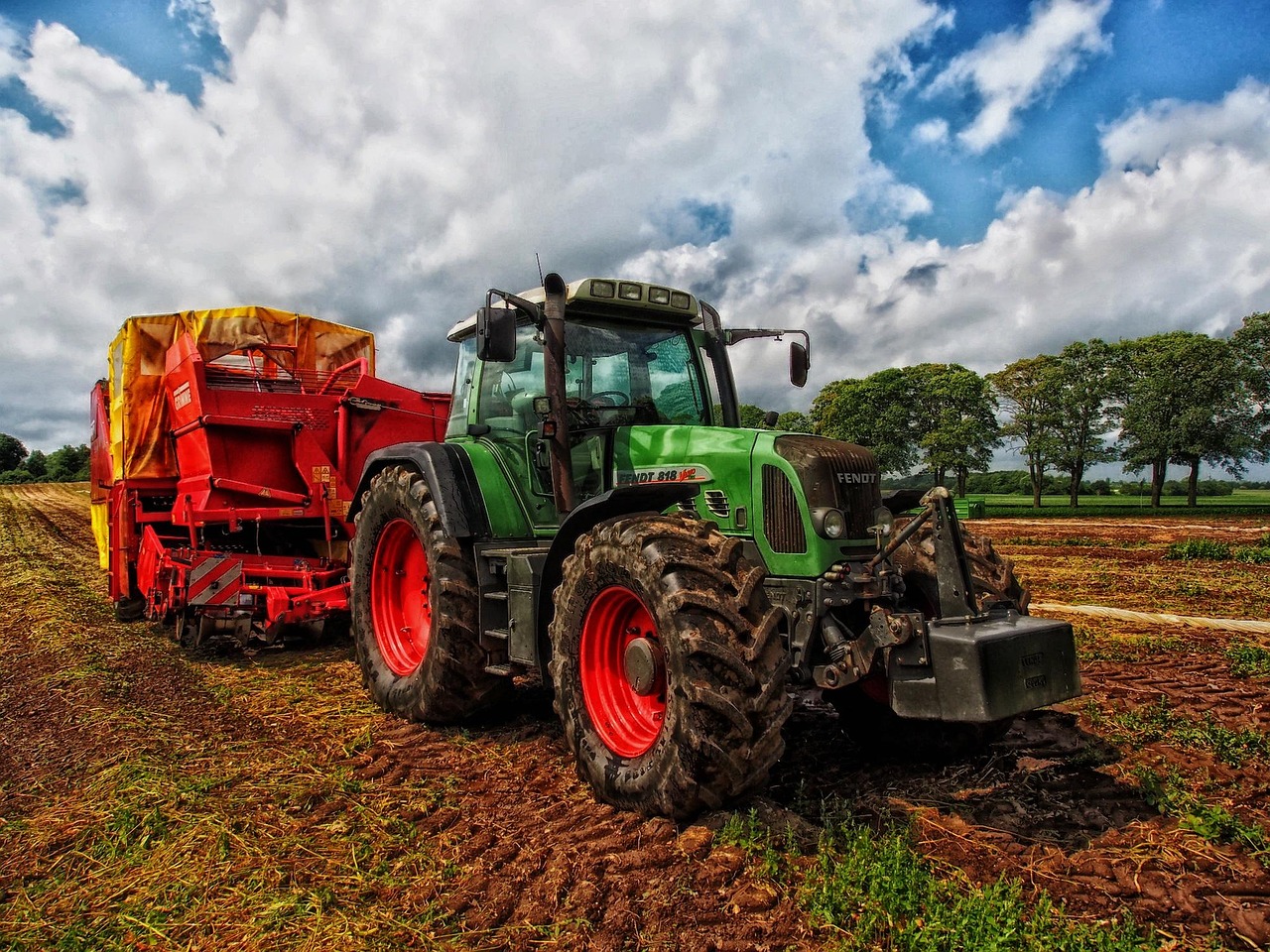
Modern farming has pulled off an impressive trick: it keeps feeding more people from fewer hands, yet the ledger behind that success is deeply troubling. A single farmer supported roughly 25.8 people in 1962; today the figure stands near 155. That productivity leap, however, has been purchased with damage that never shows up at the till. According to the UN, global agrifood systems rack up an estimated $12 trillion in hidden social and environmental costs each year, while the Rockefeller Foundation reckons the true cost of the US food system alone reaches $3.2 trillion annually — three times what Americans actually hand over at the checkout.
Wayne Visser, writing on the problem, frames this as a kind of institutional sociopathy, or “ecopathy,” since nature absorbs most of the harm. It is the product of nearly two centuries spent tuning agriculture almost exclusively for efficiency through mechanisation, seed engineering, and chemical inputs. The story of synthetic fertiliser is instructive: the plant-growth properties of nitrogen and bonemeal were identified by German chemist Justus von Liebig, British industrialist John Bennet Lawes built the first artificial fertiliser plant at Rothamsted in 1841, and BASF began commercial synthetic nitrogen production seven decades later. The consequences now come in three flavours. Living soil is being reduced to inert dirt as microbes are starved and ground acidity rises — nutrients in our food have fallen by as much as 80 percent since 1940, meaning eight oranges today may deliver the vitamin A that one once did. Monocropping squeezes out wild plants, which ripples upward through insects, birds, and mammals; more than 40 percent of insect species are declining and a third face extinction, while wildlife populations have dropped 73 percent since 1970. And runoff overloads waterways, triggering algal blooms, oxygen-starved dead zones, and a breach of the planetary boundary for biochemical flows.
What makes this especially uncomfortable is that the biodiversity cost was visible from the outset. Liebig’s own Park Grass Experiment in 1856 compared organic and chemical treatments across 24 strips of land at Rothamsted and found that chemically fed plots held only two or three wild plant species, against roughly 50 on untreated ground.
Against that backdrop, an alternative movement has been building slowly. The first organic labels appeared in Germany in 1928, the UK in 1967, and the US in 1973. Organic management now covers 98.9 million hectares — still only 2.1 percent of cultivated land, though regional shares run higher, at 13 percent in Australia and 11 percent in Europe. Regenerative agriculture marks the next step, moving past simply restricting chemicals toward actively rebuilding soil health through perennial and cover crops, compost, diverse rotations, reduced tillage, integrated livestock, and converting farm waste into biochar.
Much of this is old practice dressed in new evidence. An Iowa trial combining corn, soybean, oat, and alfalfa over multiyear cycles found that four-year rotations cut fossil energy use by 64 percent and slashed carbon and particulate emissions by 42 percent and 57 percent respectively — while raising corn and soybean yields and improving overall returns. The climate arithmetic is similarly striking: the IPCC estimates that regenerating soils could reliably offset 10 to 15 percent of global emissions, or 4 to 5 gigatonnes of CO2 per year, with more optimistic studies suggesting soils could store 15 billion tonnes of carbon annually. Regenerative farming is no cure-all, but it may hold part of the answer.
What do you think?