
Lucid's Quarterly Output Slips to Two-Year Low as New CEO Rebuilds the Company
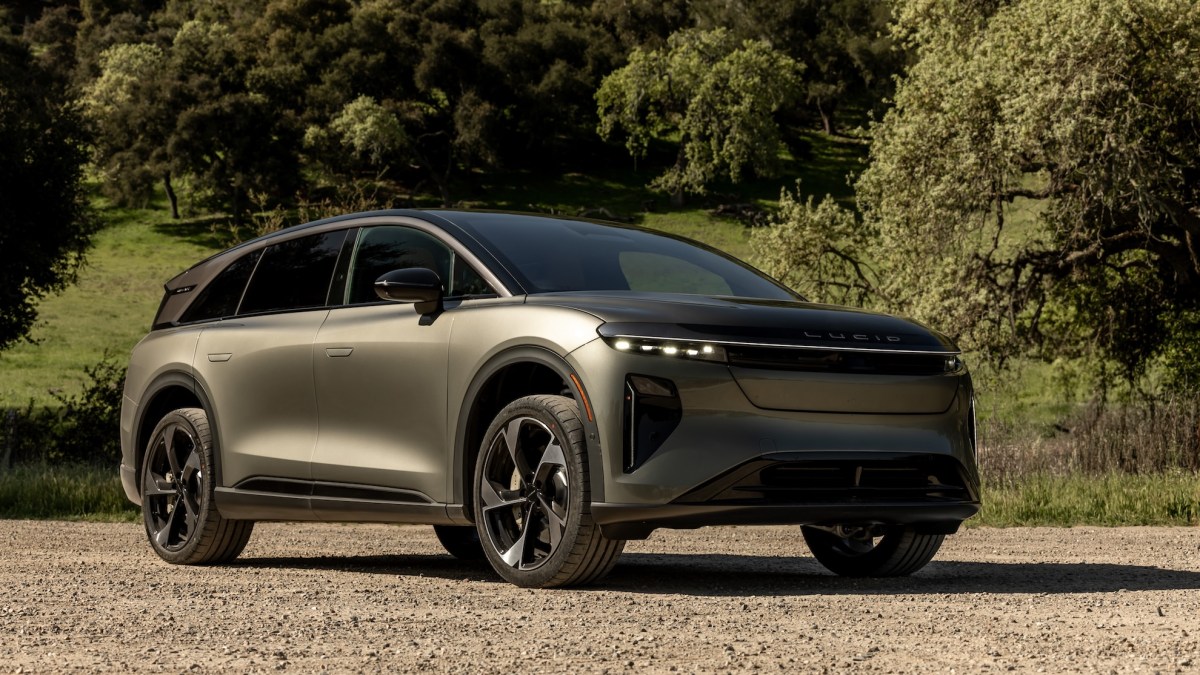
Lucid Motors has reported its weakest production quarter in nearly two years. The automaker assembled just 2,954 vehicles between July and September, a 54% decline versus the same period a year earlier. That marks the third consecutive quarter of shrinking output and the smallest volume since the opening quarter of 2025, when Lucid was still ramping up its second model, the Gravity SUV.
On the demand side, Lucid handed over 3,806 vehicles in the quarter, essentially level with the prior quarter and down roughly 200 units year over year. For five of the past six quarters, the company has built more cars than it has delivered — a clear sign that its luxury EVs are still searching for a broad customer base. The company says the production pullback is deliberate, meant to align supply more closely with actual orders.
The numbers land just days after rival Rivian recorded the strongest quarter in its history on the back of the R2, its new, more affordable SUV. Rivian shipped close to 20,000 vehicles in its first full quarter of R2 production, up sharply from 12,194 in the previous quarter. That comparison sharpens the contrast with Lucid, which once projected shipping as many as 90,000 EVs in 2024 alone when it went public through a SPAC merger in 2021 and raised $4 billion.
CEO Silvio Napoli, who took the top job earlier this year, has spent recent months on a push to “simplify the company.” The plan has involved cutting roughly 1,500 jobs, tightening the leadership structure, and removing a second shift at Lucid’s Arizona plant, all in pursuit of 50,000.
Napoli has been candid about the company’s missteps, acknowledging that Lucid brought strong technology and products to market but failed to execute consistently — missing commitments, launching vehicles before they were ready, underinvesting in service, and reacting too slowly to quality problems. He has also warned that rushing the Cosmos to showrooms would risk repeating those errors, noting that the cheaper model could open a wider market only if it arrives fully prepared.
What do you think?