
London Ambulance Service Signs Charging Partners for Its Electric Fleet
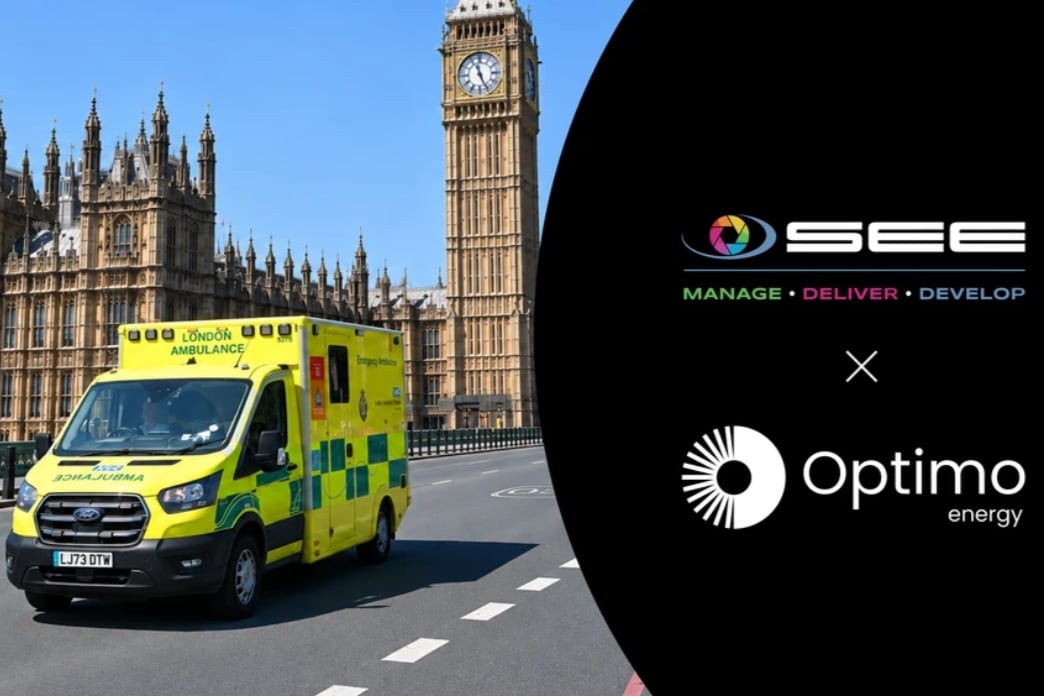
London’s ambulance crews are switching to battery power, and the charging network behind them now has a dedicated operations team. SEE Services has won the contract to build and maintain charging infrastructure across the London Ambulance Service (LAS) estate, and it has picked Optimo Energy to run the software layer that keeps those chargers talking to each other.
The deal covers more than 700 charging connectors spread across NHS sites in the capital — a sprawling, always-on network that has to work when an emergency call comes in, not when it’s convenient.
From Four Vans to a Real Fleet
The electrification of LAS has been creeping forward for a few years. London’s first fully electric ambulance went into service on New Year’s Eve 2023. Four bespoke emergency EVs followed in 2024, and by July 2026 the service had added 77 more electric vehicles to its ranks.
That kind of growth changes the charging problem. A handful of vehicles can be handled with a few wall boxes and a clipboard. A fleet of that size, running 24/7, needs something closer to air traffic control.
The stakes: “These are vehicles that people depend on in an emergency, and we take our responsibility to deliver and maintain their charging infrastructure seriously.” — Lance Curtis, EV Manager at SEE Services
Software as the Glue
Optimo’s job is to sit above the hardware. Its platform pulls together charger data, vehicle energy information and site-level power management, then adds real-time monitoring, remote diagnostics and charge control. Support runs around the clock, every day of the year — which, for an emergency service, is less a nice-to-have than a baseline.
When something goes wrong, the two companies will handle it jointly. Optimo’s remote team flags and diagnoses the fault; SEE Services sends engineers to the site. Splitting the work that way keeps a dead charger from turning into a stranded ambulance.
- Infrastructure: SEE Services, covering installation and maintenance
- Software and operations: Optimo Energy, handling monitoring, diagnostics and control
- Scale: 700+ connectors across the LAS estate
- Timeline so far: First electric ambulance in late 2023, four custom EVs in 2024, 77 added in July 2026
Daniel Homoki-Farkas, CEO and co-founder of Optimo Energy, framed his company’s role in straightforward terms: making the hardware function as one connected charging operation rather than a collection of separate plugs.
Why an Ambulance Fleet Is a Harder Test
Emergency fleets are unforgiving customers for charging infrastructure. Vehicles return at unpredictable hours, need to leave at a moment’s notice, and can’t wait in a queue behind a staff car. NHS trusts have been under pressure to electrify, with funding support pushing the process along, but the operational side is where projects tend to stumble.
Getting the software layer right matters more than the headline connector count. If LAS can keep its electric ambulances charged and available, it becomes a useful reference case for other emergency services weighing the same move. If chargers sit idle or fail, the argument for electrification gets harder everywhere.
Photo: electrive.com · Official Press Kit / Editorial (Editorial / Press Kit)
Source: electrive.com
Curious how this compares to other EVs? Try our comparison tool →What do you think?