
Laplace Intelligence Wants AI to Break Robots and Self-Driving Cars Before the Real World Does
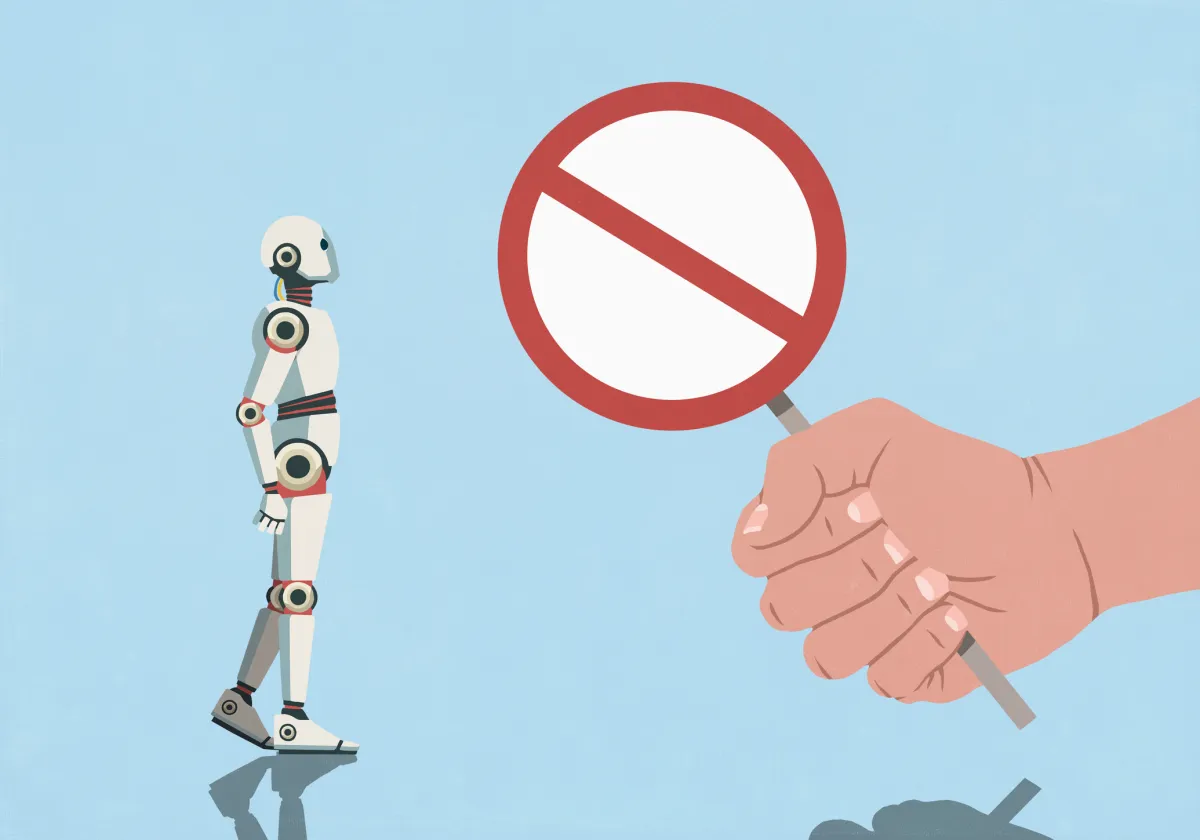
The fallout from the OpenAI-Hugging Face episode left the tech world with a blunt reminder: AI agents do not always behave the way their creators expect. Howie Sun, co-founder and CEO of Laplace Intelligence, frames the stakes in physical terms. As AI moves out of software and into machines that share our roads, warehouses and sidewalks, a failure stops being an inconvenience and becomes a safety event.
That premise sits at the heart of the Ann Arbor startup, which is developing automated red-teaming for robotics and physical AI. The idea is straightforward: subject a system to deliberate, adversarial pressure in simulation so that its weak points surface before deployment. Sun argues that AI itself is the only tool quick and creative enough to probe AI. “Our goal is to help companies discover and fix problems before deployment—and, over time, build a shared foundation of evidence that customers, insurers, and regulators can trust,” he said.
Laplace was founded roughly a year ago out of the University of Michigan by Sun and chief scientist Henry Liu, his former PhD advisor. Sun spent eight years in academia studying how to challenge autonomous driving AI in simulation, and a 2023 paper the pair published landed on the cover of Nature. Interest from autonomous vehicle companies followed, and Sun decided the research belonged in a product rather than a journal.
The technical core is a high-fidelity simulation built from real-world data and paired with an AI agent that hunts continuously for failure modes. The environment is a post-trained version of Nvidia’s Cosmos world simulation platform, grounded in real-world map and imagery data, so a highway in Arizona or a pedestrian crossing in Paris can be reconstructed at true scale. Developers can adjust conditions through language prompts—adding afternoon congestion, for instance—while traffic and congestion feeds from providers such as TomTom keep scenarios current. Crucially, the other actors in the scene react: in one demonstration, a test vehicle swerved into oncoming traffic and the opposing car steered away rather than passing through it, a common flaw in purely generative world models.
The commercial pitch rests on corner cases. Most autonomous vehicle developers either convert recorded footage into simulations or rely on humans to dream up rare, tricky scenarios. Laplace wants its AI agents to generate those cases automatically, drawing on news reports and collision data to keep challenging the system under test. Sun contends that the need will grow sharper as generalized robots enter real environments, where the edge cases are largely unknown and data is scarce.
Despite the academic background and a lack of Silicon Valley pedigree, Laplace says it is already generating revenue and running a modest profit. Autonomous driving accounts for most of it, with customers including Japanese truck maker Isuzu and Texas-based autonomous trucking firm Bot Auto. Nvidia is also a customer, and together with T-Mobile the companies are running a free smart city pilot for San Jose focused on high-level traffic operations. Early conversations are underway with partners building warehouse humanoid robots.
Most contracts today are project-based, and the company’s near-term priority is converting them into recurring revenue before scaling up. Funding is the other piece, and competing at TechCrunch Disrupt’s Startup Battlefield is part of that push. The competitive reference point is Applied Intuition, which has raised $1.2 billion at a $15 billion post-money valuation and counts Isuzu among its customers. Sun is unmoved, describing Laplace’s approach—using AI to test AI—as a new paradigm that turns validation into a dynamic, interactive process and gives the company its strongest moat.
What do you think?