
INIT Buys Majority Stake in Applied Autonomy to Build Autonomous Fleet Control Layer
Karlsruhe-based transport IT provider INIT has moved into the autonomous fleet management business by taking control of Applied Autonomy, a Norwegian software firm based in Kongsberg. The deal, which closed on 1 October 2026, gives INIT 67.74 per cent of the company’s shares, and Applied Autonomy will be folded into INIT’s Integrated Systems business unit. Founded in 2017, Applied Autonomy writes software for running, watching over and coordinating driverless vehicles in public transport, at airports and in logistics.
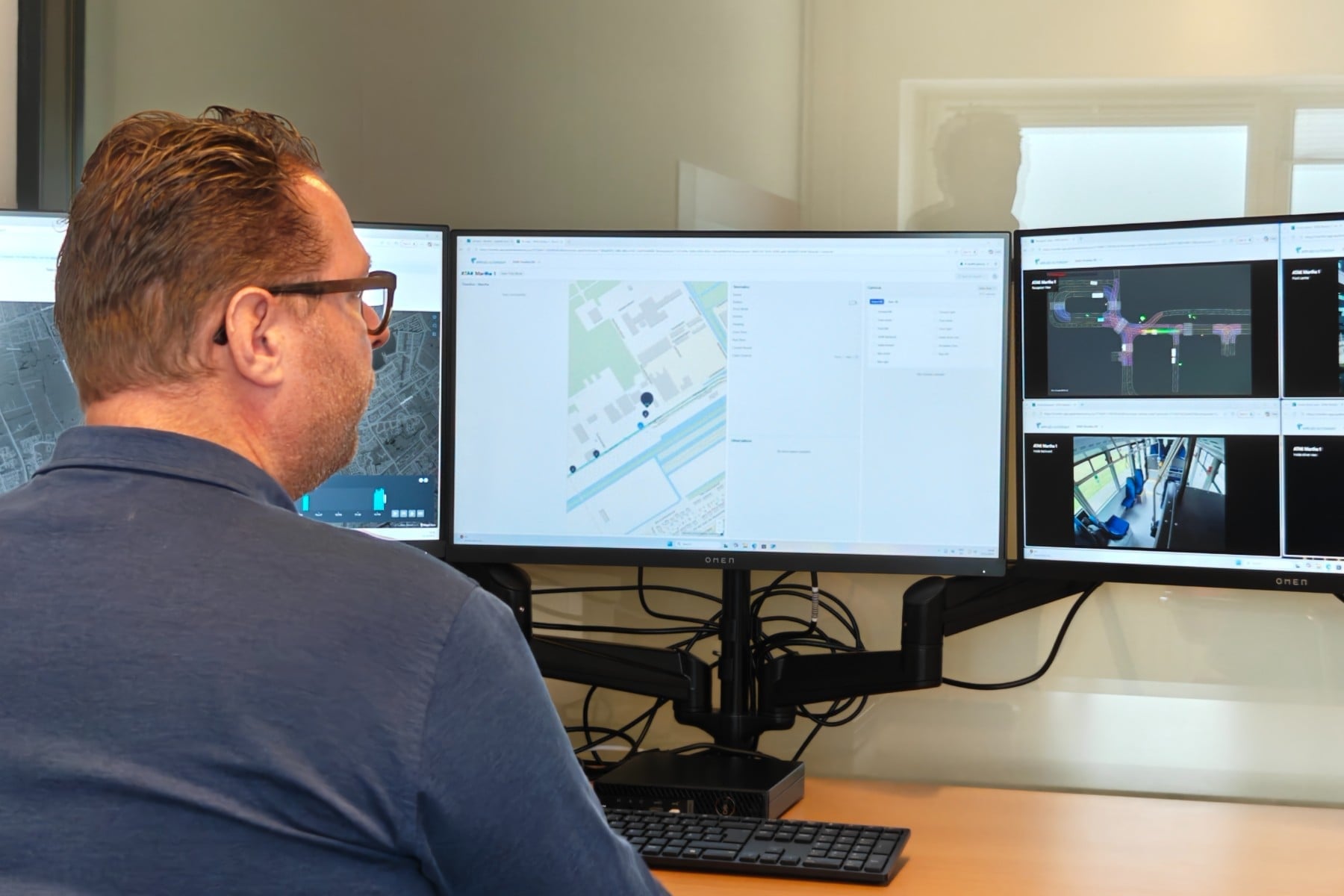
What matters here is what Applied Autonomy does not do. It does not build self-driving stacks of the kind offered by Mobileye or Wayve. Its xFlow platform sits one layer above: it takes autonomous vehicles from different manufacturers and slots them into everyday operational workflows, provides live monitoring of each deployment, and gives operators a way to step in remotely when something needs human judgement. xFlow also feeds operational data out to other systems, and INIT plans to pair it with its MOBILE-ITCS control system so that transport operators can manage mixed fleets in which autonomous and conventional buses run side by side.
A live example of that division of labour is running in Stavanger, Norway. Since 2022 a battery-electric autonomous bus called e-ATAK, built by Turkish manufacturer Karsan, has been under trial there, and since May 2026 it has operated in public scheduled service without a safety driver on board. The automated driving itself comes from Adastec and its flowride.ai platform, while xFlow handles control-centre monitoring and remote operational support. The same combination of Karsan and Adastec technology with xFlow has also been deployed in an autonomy project at Rotterdam Airport.
INIT frames the acquisition as a way to capture a market it expects to grow as autonomous vehicles are introduced into public transport. In a press release, the company’s executive board said the maturity of automated and autonomous vehicles has advanced considerably in recent years, and argued that embedding them in public transport is a building block for Europe’s technological standing and its climate goals, as well as for more sustainable mobility. The board added that the Applied Autonomy deal leaves INIT better placed to take advantage of new opportunities and to create value for shareholders.
The purchase fits a longer pattern of engagement rather than a sudden pivot. INIT has spent years researching autonomous driving solutions without developing a driving function of its own. It currently leads the BRAVE10k project, which is working on the conditions needed to bring more than 10,000 autonomous vehicles into Germany’s public transport network by 2030, with attention on standardised interfaces, digital processes and questions around procurement, approval and economic scaling. In September 2026 INIT also joined MILA.mobility, a research effort coordinated by Leipziger Verkehrsbetriebe in which roughly 30 partners are building an open, manufacturer-neutral platform to link autonomous vehicles with control centre, dispatch and booking systems.
What do you think?