
Hyundai CEO Muñoz Says Fair Trade Rules, Not Fear, Will Decide China's US Breakthrough
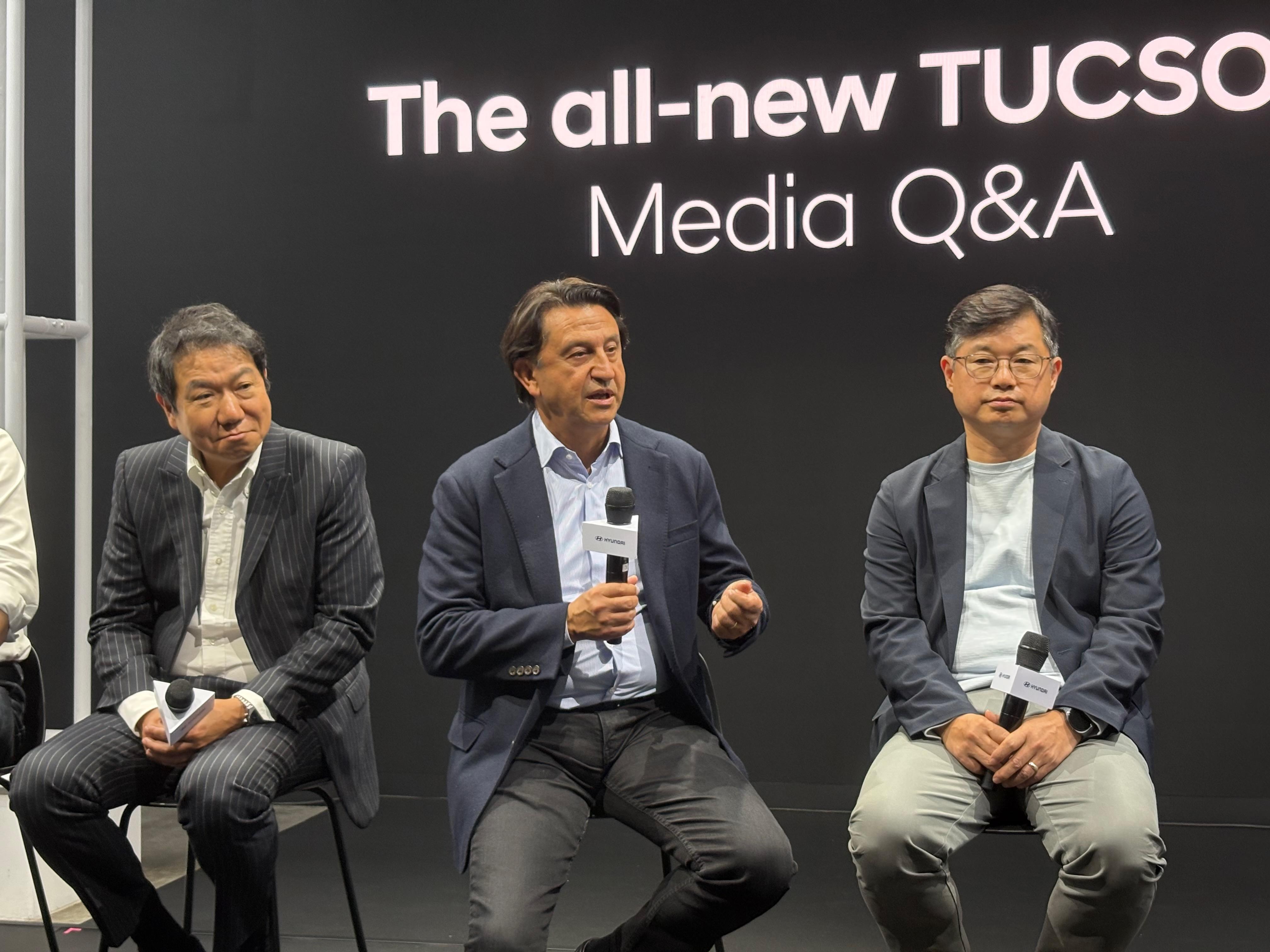
Hyundai chief executive José Muñoz is taking a notably calmer line than many of his peers as the American auto industry braces for the possibility of Chinese electric vehicles reaching US showrooms. Speaking at the unveiling of the 2027 Hyundai Tucson in New York City, Muñoz argued that the right combination of trade protections and product improvements can keep low-cost Chinese imports at bay, provided the rules of the game are applied equally to everyone.
“As long as there is a level playing field for everybody,” Muñoz said, adding that Korean automakers compete globally and thrive wherever that principle holds. His measured tone contrasts with the alarm sounded by rivals who warn that affordable, tech-heavy Chinese EVs could devastate their businesses. The concern is not theoretical: in Europe, Chinese brands have gained rapid ground with vehicles that undercut local offerings, pressuring the likes of Volkswagen, Volvo, and Mercedes. According to the numbers cited, Chinese cars sold in Europe land roughly 30 percent cheaper than comparable European models, even after EU import tariffs are factored in.
The US has so far kept Chinese vehicles out through steep tariffs and restrictions on software of Chinese origin. That wall may not hold indefinitely. President Donald Trump has repeatedly floated the idea of Chinese automakers building plants on US soil if they employ American workers, and many analysts expect a Chinese entry through manufacturing or partnerships sooner rather than later. Asked whether Hyundai has a contingency plan for that scenario, Muñoz said the company has not drafted one, explaining that Hyundai does not build strategies around specific rivals but instead focuses on constant improvement.
If there is a strategy, Muñoz frames it as vertical integration. Making more of its own technology and components, he argues, lowers costs and lifts competitiveness, delivering better quality at a lower price. As a concrete example, he pointed to Hyundai’s $5.8 billion investment in Louisiana to produce green steel, which the company expects to be more environmentally friendly and more cost-effective. The same in-house approach applies to software and other technologies Hyundai wants to control directly. Muñoz also conceded he has no crystal ball, saying he simply looks at what happened in Europe and expects similar behavior elsewhere if Chinese competitors arrive.
On batteries, Muñoz acknowledged the challenge of scale without volume, calling the battery the single largest cost element in an EV. Still, he expressed little worry, pointing to battery production already located in the US by leading global manufacturers. Hyundai runs a battery joint venture with SK On in Georgia, adjacent to its large Metaplant, where its EVs and hybrids are assembled. The company continues to sell the Ioniq 5 and Ioniq 9 stateside alongside a widening hybrid lineup, and the Hyundai Group recently moved past Honda to become the second-largest seller of hybrids in the US behind Toyota. That hybrid momentum matters, given that US EV adoption sits below 6 percent, against over 20 percent in Europe and more than 60 percent in China — a gap shaped by the end of federal subsidies, political polarization, patchy charging infrastructure, and a shortage of affordable electric models.
What do you think?