
Hyster Rolls Out Hydrogen Fuel Cell ReachStacker at Rotterdam Port
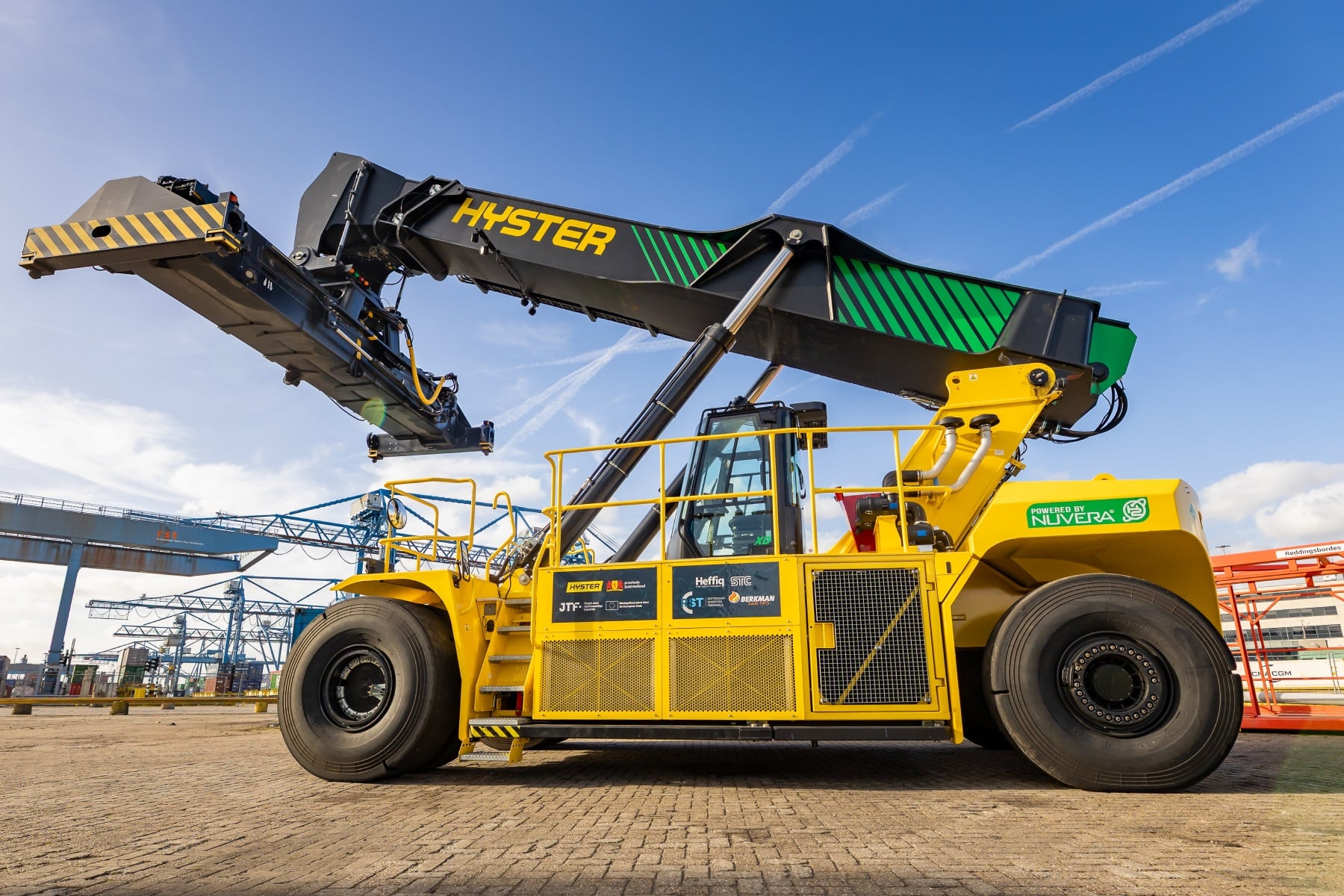
Hyster has delivered a hydrogen fuel cell-powered ReachStacker to the Port of Rotterdam, marking the second such deployment in Europe after an earlier rollout at the Port of Valencia in Spain. The RSJ46-33XDH/62 unit is now stationed at Rotterdam Shortsea Terminals (RST), which ranks as the continent’s largest dedicated hub for short-sea shipping. Its primary task will be moving 45-foot containers, a job supported by a purpose-built spreader.
At the heart of the machine sits a 60 kW fuel cell engine supplied by Nuvera, which transforms hydrogen into electricity to feed a 130 kWh lithium-ion battery pack. Hyster notes that the vehicle shares a common software architecture with its other products, a design choice intended to streamline operation, diagnostics and servicing across the fleet.
The ReachStacker forms part of a multi-year innovation programme focused on cutting carbon emissions from heavy-duty material handling. Funding comes from the Province of South Holland and the EU-backed Just Transition Fund (JTF), among other contributors. The consortium brings together Hyster, RST, Berkman Energie Services, STC Next, HarbourHUB and local Hyster dealer Heffiq, with Hyster specialists collaborating closely with both the dealer and the end customer throughout.
Rotterdam is effectively serving as a live testing ground. Alongside the vehicle, the project is trialling a modular hydrogen refuelling station designed to let operations continue without relying on a fixed supply grid. A joint Experience Centre is another pillar of the effort, offering training on the energy transition and the safe, efficient handling of hydrogen to employees, students and logistics professionals.
“Ports and terminals are under increasing pressure to lower emissions without compromising performance,” said Lucien Robroek, President of Global Big Trucks at Hyster, adding that hydrogen fuel cells could suit duties where equipment must pair zero tailpipe emissions with the power and uptime that intense container handling demands. Jeroen van Dijken of the South Holland provincial government framed the project as evidence of the region’s lead in the energy transition. For RST managing director Arno Storm, the initiative is about acting now rather than deferring sustainability goals, and learning in practice along the way.
What do you think?