
How a Yellow Electric Roadster and a Handful of Emails Brought Elon Musk Into the Car Business
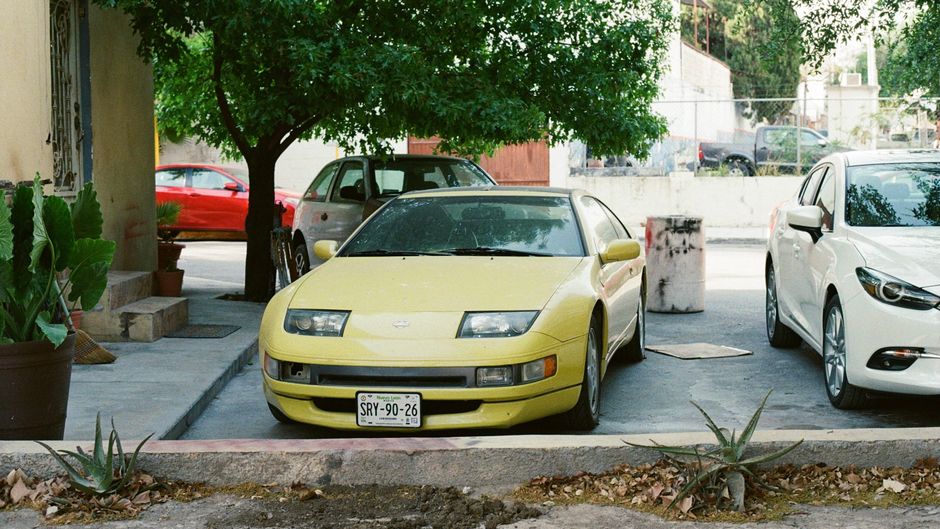
Long before Tesla became a household name, a tiny company called AC Propulsion built a yellow electric sports car called the tZero. Its acceleration was so brutal that a passenger reaching for the dashboard would be pinned back in the seat, unable to touch it. In 2003, Tesla cofounder Martin Eberhard borrowed that car and drove it up and down Silicon Valley’s Sand Hill Road, hoping to impress the venture capitalists who fund startups. He even arranged a demo at Buck’s of Woodside, a restaurant where investors gathered after work. The stunt drew little serious interest, except from two Google founders who happened to be there: Sergey Brin and Larry Page. They mentioned a friend who liked fast cars and had just sold his stake in a startup. That friend was Elon Musk.
At the time, Musk was known for PayPal and SpaceX, not automobiles. He owned a silver McLaren F1, a BMW M5, and a classic Jaguar roadster, and he had no public ambition to build cars. But when AC Propulsion’s Tom Gage emailed him in January 2004 to offer a test drive, Musk quickly accepted. Gage drove the tZero to SpaceX headquarters in El Segundo, California, and made his pitch: electric vehicle technology was being unfairly dismissed after GM killed the EV1 and other automakers shelved their electric programs. AC Propulsion wanted to electrify a Toyota Scion into a practical car called the eBox. Musk was unimpressed. He liked the tZero’s performance, but he thought the eBox made no sense, reportedly asking why anyone would pay $65,000 for a $20,000 car that looked unappealing. He tried to buy the tZero outright; Gage refused. Musk then offered $250,000 for the company to install its lithium-ion pack in his Porsche, and was turned down again. Gage suggested Musk talk to Eberhard instead.
Eberhard and his Tesla cofounder Marc Tarpenning had already been aware of Musk, having seen him speak at a Mars Society conference at Stanford. By early 2004, Tesla was nine months old with just three employees and was licensing AC Propulsion’s drivetrain technology while planning to use the Lotus Elise chassis for its first car. The founders estimated they needed $6.5 million. They met Musk at SpaceX, and the half-hour meeting stretched on as Musk fired questions and canceled his other appointments. Over the following weekend he grilled Tarpenning about the financial model. Impressed by Musk’s technical background and appetite for risk, the founders found their investor: Musk agreed to put in $6.35 million and became chairman and the largest shareholder. Tesla Motors was suddenly a real company, even if almost nobody outside its small circle believed it had a chance.
What do you think?