
Green Science Alliance Opens Battery Recycling Lab in Biel
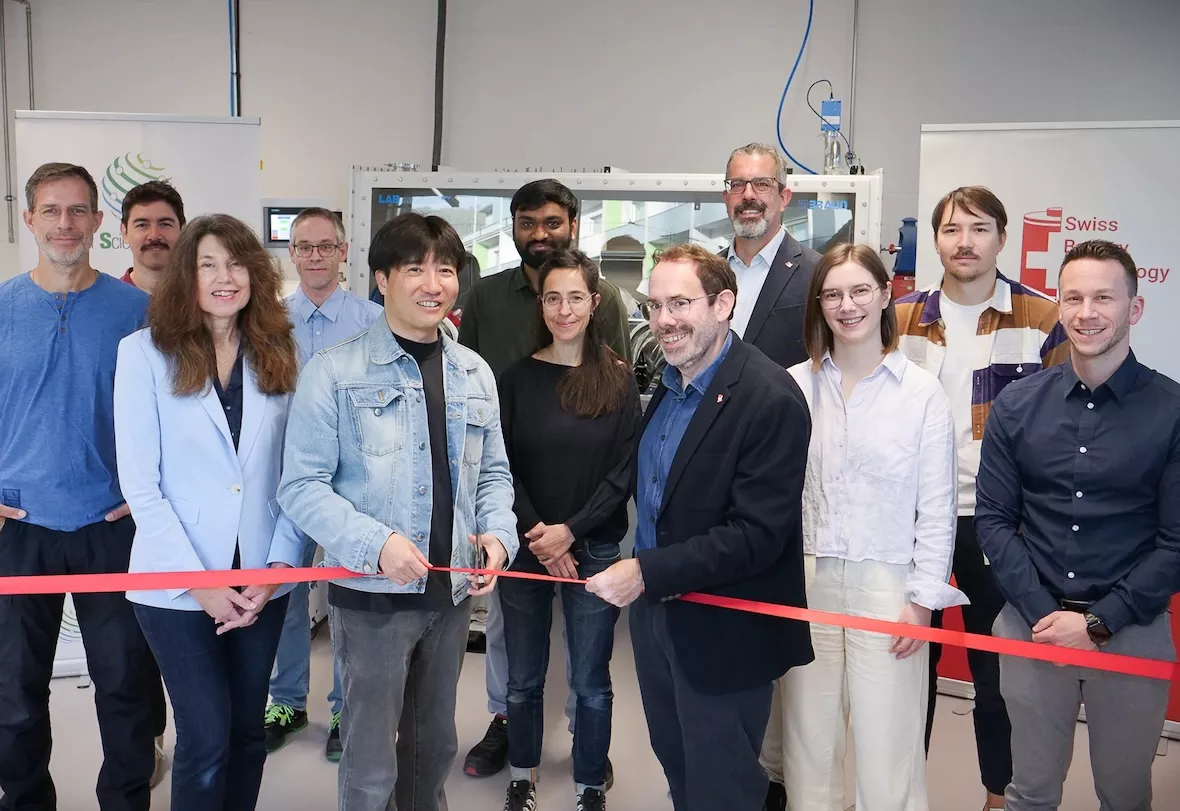
Japanese chemistry and green-tech firm Green Science Alliance (GSA) has opened a battery recycling laboratory in the Swiss city of Biel, cutting the ribbon on 19 October 2026. The facility sits inside the Switzerland Innovation Park Biel/Bienne (SIPBB) in the canton of Bern, and GSA is running it together with the Swiss Battery Technology Center (SBTC).
The two partners are chasing a problem the recycling industry has grappled with for years: what to do with black mass, the dark powder left behind when used lithium-ion packs are mechanically shredded. It is packed with valuable electrode material, but today’s dominant routes dissolve it in acid or base to pull out individual metals — and those metals then need several more steps before they can go back into a cell.
GSA is taking a different route. Rather than breaking the cathode material down into its component elements, the company wants to regenerate the active material in place. Fewer process steps, in theory, means less energy, fewer chemicals and a lighter resource footprint overall.
Promising early numbers
According to GSA’s own figures, cells built with regenerated cathode material have already reached more than 90 percent of the initial capacity of comparable batteries made from commercial material in first trials. The work covers both nickel-manganese-cobalt (NMC) chemistries and lithium iron phosphate (LFP) — the two families that dominate today’s EV market.
At a glance: Lab opened 19 October 2026 · Location: Switzerland Innovation Park Biel/Bienne · Partners: GSA and SBTC · Early capacity retention: over 90 percent · Chemistries: NMC and LFP
Those results come from the company’s own testing, so treat them as a starting point rather than a finished benchmark. The real question is whether the process holds up when scaled from lab samples to production volumes.
From lab bench to factory floor
That is what the next phase is meant to answer. The partners will examine the regenerated materials, build electrodes and full cells from them, and then put those cells through performance testing. Alongside the technical work, they plan to assess the commercial potential and scalability of the method.
For GSA, the Biel site is also a foothold in Europe. The company says it intends to use the SIPBB network to market the technology across the continent and to set up further joint research projects.
Battery recycling is becoming a crowded field as the first big wave of EV packs approaches retirement age, and Europe has been pushing hard to keep more of that material chain inside its borders. Direct cathode regeneration is one of the more attractive ideas in that space — if it works at industrial scale, it could sidestep much of the hydrometallurgical processing that conventional recyclers rely on. For now, the Biel lab is where GSA has to prove it.
Source: Battery-News
Curious how this compares to other EVs? Try our comparison tool →What do you think?