
CATL Pairs Swap Packs With Onboard Extenders to Make Electric Trucks Add Up for Fleets
CATL wants heavy hauling to stop being the weak spot in road transport electrification. Its answer isn’t a bigger battery — it’s two batteries. The Chinese group has introduced a dual-battery setup for electric heavy trucks that links a swappable main pack on the chassis with a fixed range extender mounted behind the cab.
The logic is simple enough. A fixed pack means drivers can run the main battery much closer to empty before pulling into a swap bay, rather than stopping early to play it safe. CATL says the arrangement lifts the main pack’s usable depth of discharge from roughly 70% to over 95%, so trucks arrive at stations with under 5% left in the tank. When the main pack nears exhaustion, the system hands over to the extender in milliseconds.
Key Specs: 77 kWh range extender · 3C charging capability · depth of discharge raised from ~70% to 95%+ · swap time of five minutes · standardised 432 kWh and 513 kWh blocks
The main pack itself follows a standardised swappable format from Qiji Energy, CATL’s swapping partner. The 77 kWh extender, meanwhile, can be specified for different priorities — denser energy storage in one build, cold-climate operation or high power output in another. It stays bolted to the truck for its whole life while the main pack can be leased, which lets fleets scale capacity with seasonal freight demand instead of buying for the busiest week of the year.
“The combination of the dual-electric range extension battery and Qiji’s battery swapping system offers the best solution for heavy truck electrification,” said Jesse Yang, chief executive of Qiji Energy.
Purchasing interest appears to be there. Agreements covering 13,000 trucks were signed at the launch, according to CATL.
Making the Swap Network Work
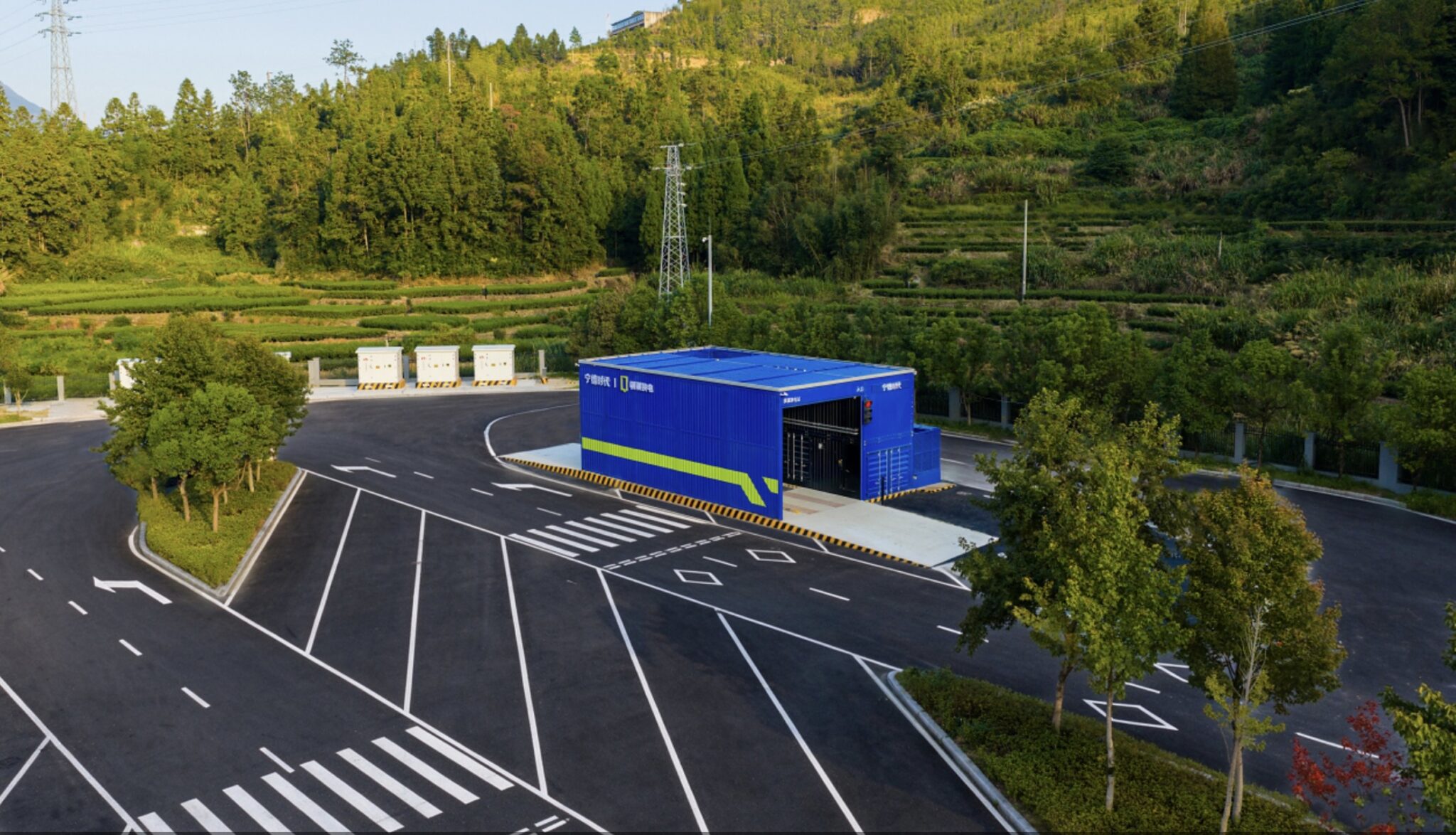
None of this functions without stations, and CATL is building plenty. The company plans 900 truck swap sites in China by the end of 2026, 2,000 by 2027 and a long-term goal of 10,000 nationwide. That rollout is effectively the foundation the product sits on — no corridor of swap bays, no dual-battery pitch.
Qiji is also pushing for shared standards, with its fixed 432 kWh and 513 kWh blocks designed as common building blocks. If enough truckmakers adopt the same interface, the format could become the default for China’s heavy truck sector — and that would tie manufacturers more tightly to CATL’s ecosystem.
There’s a catch, though. Battery leasing, swap stations and pay-per-net-energy pricing move CATL well past cell manufacturing and into energy services, generating recurring income while softening the resale-value worries that keep fleet managers awake. But the model is tightly bound to China’s infrastructure strategy. In Europe, truckmakers have thrown their weight behind megawatt charging rather than swapping, which means this approach may struggle to cross borders. Heavy truck electrification could end up looking quite different depending on which continent you’re standing on.
Source: Automotive World
Curious how this compares to other EVs? Try our comparison tool →What do you think?