
GM's Secret Mini Factory Is Racing to Cut EV Battery Costs
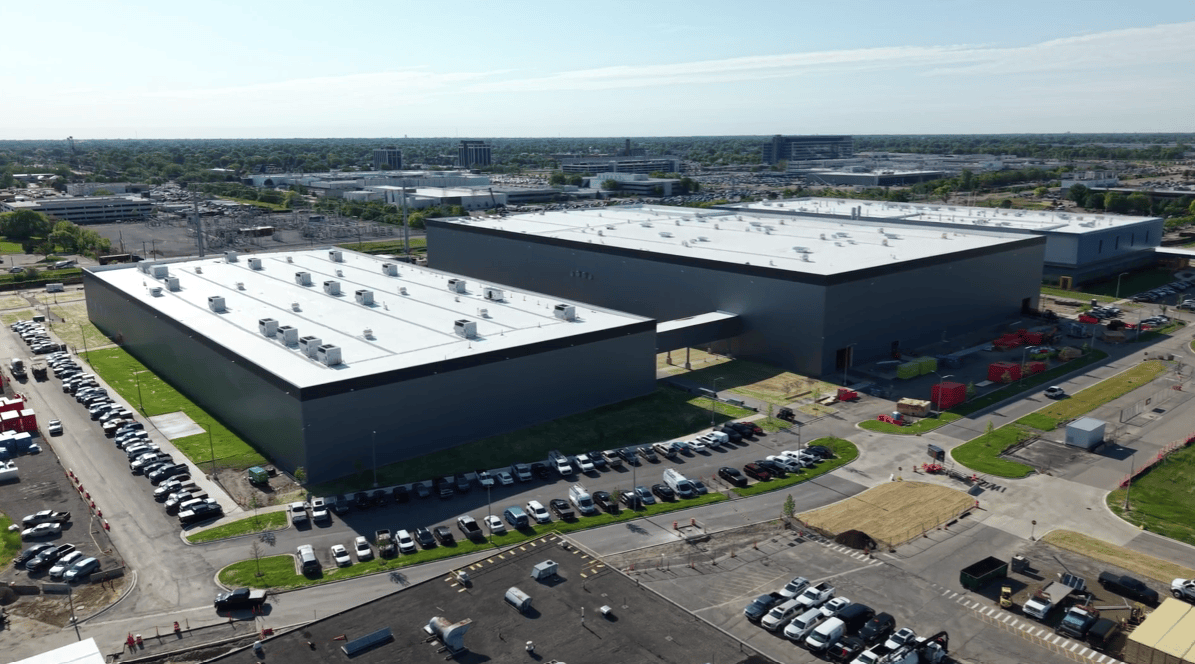
Tucked into a corner of General Motors’ 710-acre technical campus in Warren, Michigan, two unremarkable white buildings house one of the automaker’s most consequential bets. Together spanning roughly 500,000 square feet, they form GM’s new Battery Cell Development Center, a facility still under construction but already central to the company’s effort to bring down the price of its electric vehicles.
The logic behind the project is straightforward: batteries account for 30 to 40 percent of an EV’s total cost, and GM’s current lineup remains too pricey for most buyers. The company sells more EVs in the US than any automaker besides Tesla, yet it needs to move faster and cheaper — both to fend off Tesla and to prepare for an eventual wave of low-cost Chinese EVs that could reach American shores. GM’s answer is to compress the notoriously slow process of turning a lab chemistry into a mass-produced cell.
Mo Gallegos, who leads the center, puts the investment at $900 million. At full tilt, the mini factory could churn out 4 to 5 gigawatt-hours of cells annually, but volume is not the point. The facility is designed as a proving ground where engineers test manufacturing recipes, equipment and processes at low speed before handing them off to full-scale plants. It houses slurry-mixing vats, electrode-coating machinery, a roll press and charging hardware, split across two buildings connected by a bridge that carries rolls of electrode film from one structure to the other. Finished cells undergo eight to 11 days of charging and testing, while dedicated upper floors store metals and films alongside heavy HVAC systems that keep production areas sterile, dust-free and temperature-controlled.
The center’s first output will be lithium manganese-rich, or LMR, prismatic cells, with initial test cells expected in the fourth quarter of this year. Volume production of those cells at GM’s Ultium Cells plant in Spring Hill, Tennessee, is not slated until 2028. After LMR testing begins, the facility will add sodium-ion prismatic cells being developed with startup Peak Energy for battery energy storage. The broader strategy is to reduce reliance on minerals such as cobalt, nickel and rare earths that China has spent 15 years securing dominance over in global supply and processing.
GM’s battery chief Kurt Kelty has described the center as the critical bridge from R&D lab to production, filling a gap that has historically stretched new chemistries from the laboratory to commercial scale over a decade or more. Knowledge gained at the Warren site is meant to flow to partners including Ultium Cells, the joint venture with LG Energy Solution that already operates plants in Ohio and Tennessee. Whether GM can shorten that timeline will shape its ability to sell affordable EVs at meaningful volumes — and its standing in a market where waiting is no longer an option.
What do you think?