
GBT Kicks Off Mass Production of Solid-State Cells on Retooled Lithium-Ion Line
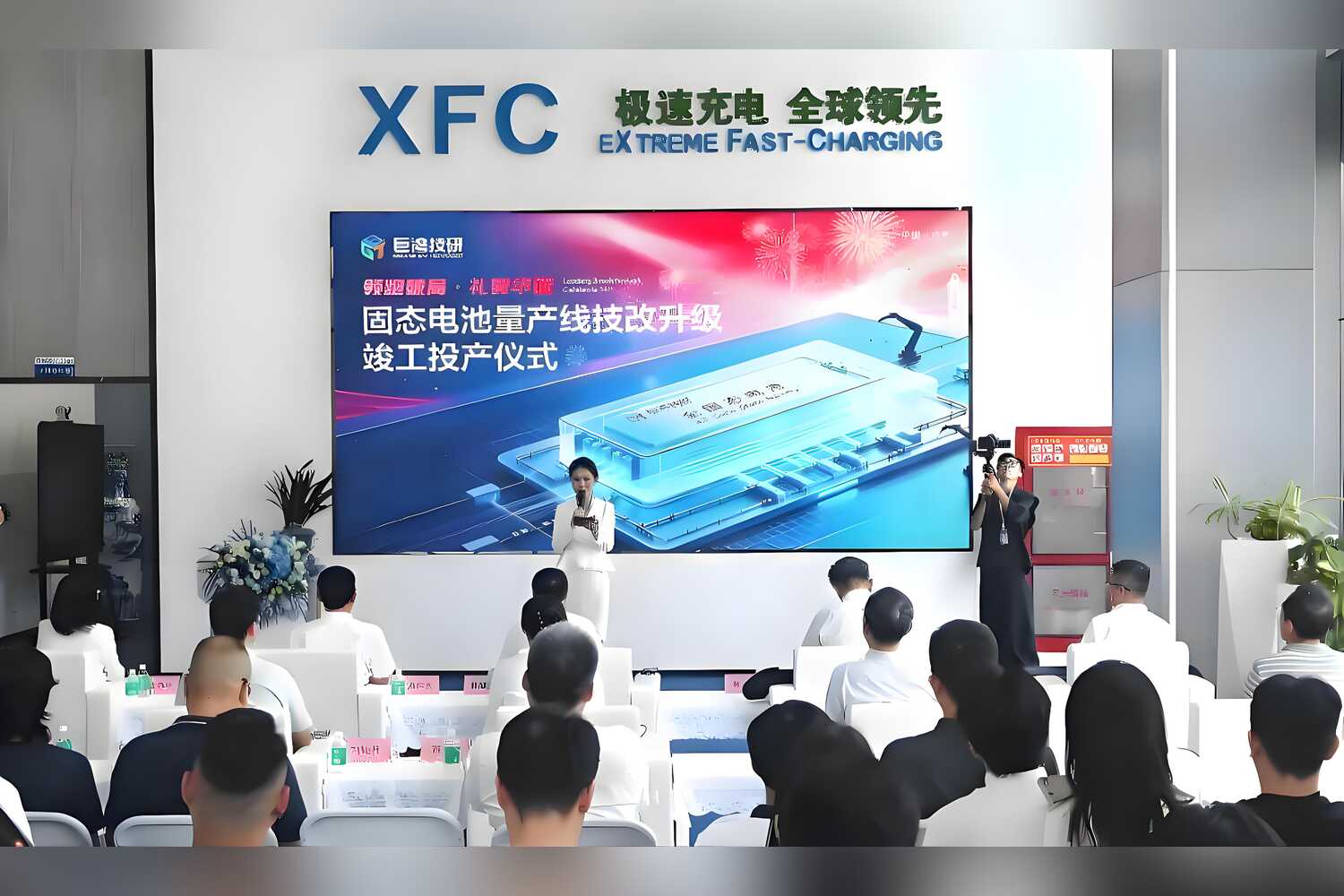
Chinese battery developer Greater Bay Technology (GBT), backed by the GAC Group, has moved solid-state cells from the laboratory into volume manufacturing. The company confirmed that series production began on 13 October at its Nansha plant near Guangzhou, making it one of the first players to put all-solid-state cells onto a real production line rather than a pilot setup.
Instead of breaking ground on a dedicated factory, GBT converted an existing lithium-ion line. The site currently runs at 1 GWh of solid-state capacity, and the company says the rest of the plant’s 4 GWh envelope can be switched over if orders justify it. Because the line can build both conventional lithium-ion and solid-state cells, GBT can flip between the two chemistries as demand shifts — a strategy the company frames as a way to limit capital spending and financial exposure while the technology ramps up.
The manufacturing trick sits in the electrolyte. Rather than handling sulphide electrolytes, which demand oxygen-free, ultra-dry rooms and purpose-built equipment, GBT injects a proprietary organic-inorganic composite electrolyte as a liquid precursor and then cures it inside the cell. The result, according to the company, is a flexible, elastic interface with the electrodes. Crucially, this leaves electrode production, stacking, formation and testing largely untouched, with the electrolyte filling step as the main modification. GBT even produces its own solid electrolyte and key raw materials and claims more than 50 patents around the approach.
On specifications, GBT cites energy densities spanning 260 to 480 Wh/kg depending on cell generation and material mix. The first generation now rolling off the line uses pouch cells with established electrode materials for automotive use; later iterations are expected to adopt lithium-metal anodes. GBT says samples are already with customers across several industries, including automakers running validation tests. For safety, the company points to a nail penetration test on a fully charged cell conducted by an external party, in which neither fire nor explosion occurred, and says cycle stability is on par with conventional lithium-ion cells.
GBT also claims a regulatory first: two of its production cells met the criteria of the National Power Battery Innovation Center’s testing, and the company says it is the first manufacturer verified under China’s GB/T 48093.1-2026 standard, published in August 2026 but not formally in force until January 2028. That standard is intended to draw a clearer line between genuine solid-state batteries and semi-solid or hybrid designs. Commercially, GBT has named Hubei Liming Lithium Technology as a partner to integrate its cells into vehicle and stationary storage systems, plus a collaboration with an eVTOL development centre in Shenzhen. Talks with several major automakers about series applications are described as advanced. The company’s primary target remains electric vehicles, with eVTOLs, humanoid robots, stationary storage and specialty vehicles as additional outlets; in Europe it works with commercial vehicle startup Flynt via cell supply, technology transfer and joint ventures. Whether the retooled-line approach really delivers a faster, cheaper route to solid-state industrialisation will now be judged on volume output, stable quality and competitive cost.
What do you think?