
Fuel Shortages Push Russian Drivers Toward Chinese EVs
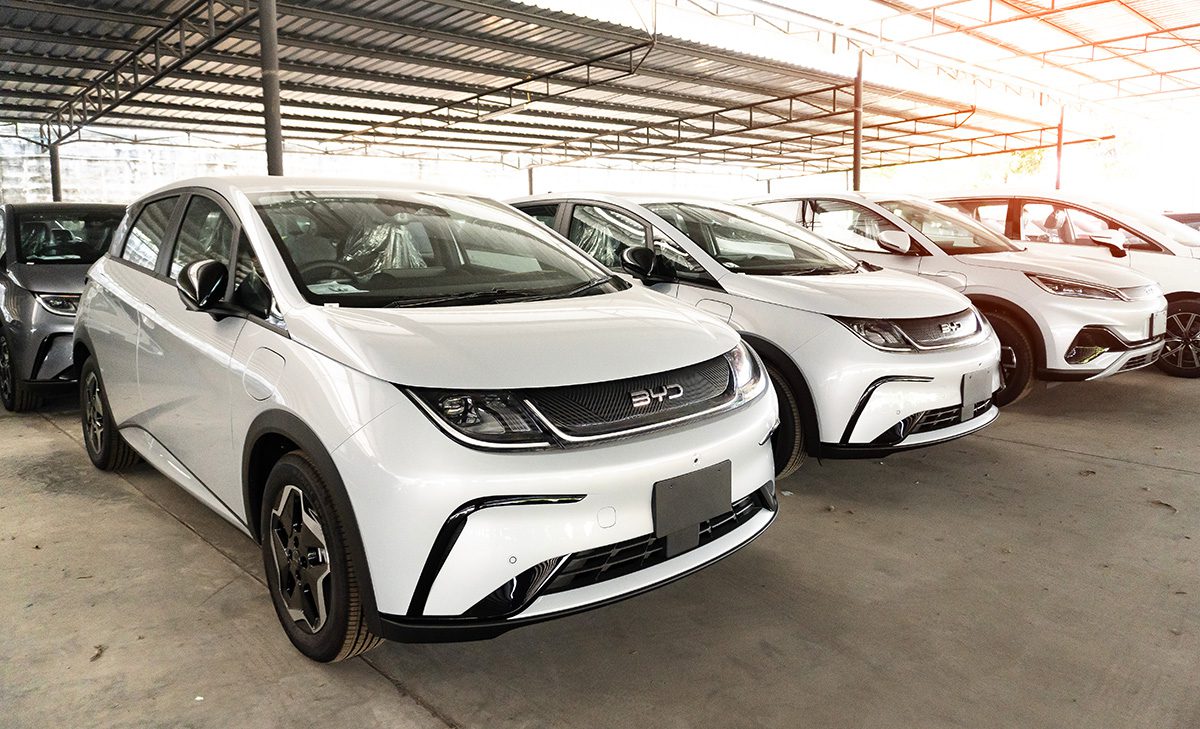
Russia’s EV market is accelerating for reasons that have little to do with climate policy. According to Russian Ministry of Industry and Trade figures cited by The New York Times, sales of electrified vehicles — a category that includes hybrids — climbed from roughly 43,000 units between January and August 2025 to more than 83,000 during the same window this year. Plug-in models alone now account for about 11.5 percent of the country’s car market, up from around 5 percent at the start of the year, per the research firm Avtostat. That places Russia’s plug-in share marginally ahead of the United States, though still far behind China’s roughly 45 percent.
The catalyst is a fuel crisis. Ukrainian drone strikes on oil refineries have disrupted refined product supplies, leaving motorists queueing for hours at filling stations. Auto industry analyst Sergei Tselikov described driving to five nearby stations in July and finding only diesel or low-grade petrol before deciding to purchase a Chinese electric hatchback. To ease the shortfall, authorities have permitted the sale of lower-grade gasoline and diesel — a move with mechanical consequences. One Moscow repair shop manager reported servicing 15 vehicles with clogged diesel soot filters, a failure he attributed to the inferior fuel.
The shift is visible on dealer lots. EVs are selling out, and used electric listings have become hard to find. At a large dealership complex outside Moscow, a manager for Evolute — a brand of Russian-assembled EVs built on Chinese designs — said his inventory was gone. The complex holds more than 40 dealerships, most of which once carried Western, Japanese and South Korean marques; during the Times visit, 25 Chinese showrooms were counted. Queues are now forming at public charging points as well, though they remain shorter than the lines at gas stations.
Moscow’s interest in electrification predates the current crisis. EVs have long been exempt from transport tax nationally, and from parking fees in Moscow and other major cities, while Russian-built electric models qualify for government subsidies. A 2015 decree required all gas stations to install public chargers by November 2016 — a target that was never met. Public charging points have nonetheless expanded from about 1,500 in 2022 to 8,000 this year. The capital began swapping diesel buses for electric ones in 2018 and in 2021 set a goal of electrifying its entire fleet by 2032. What policy could not accomplish in a decade, fuel scarcity appears to be achieving in months — with Chinese manufacturers positioned as the primary beneficiaries.
What do you think?