
Citroën Revives the 2CV as a Lean Electric Concept at the Paris Motor Show
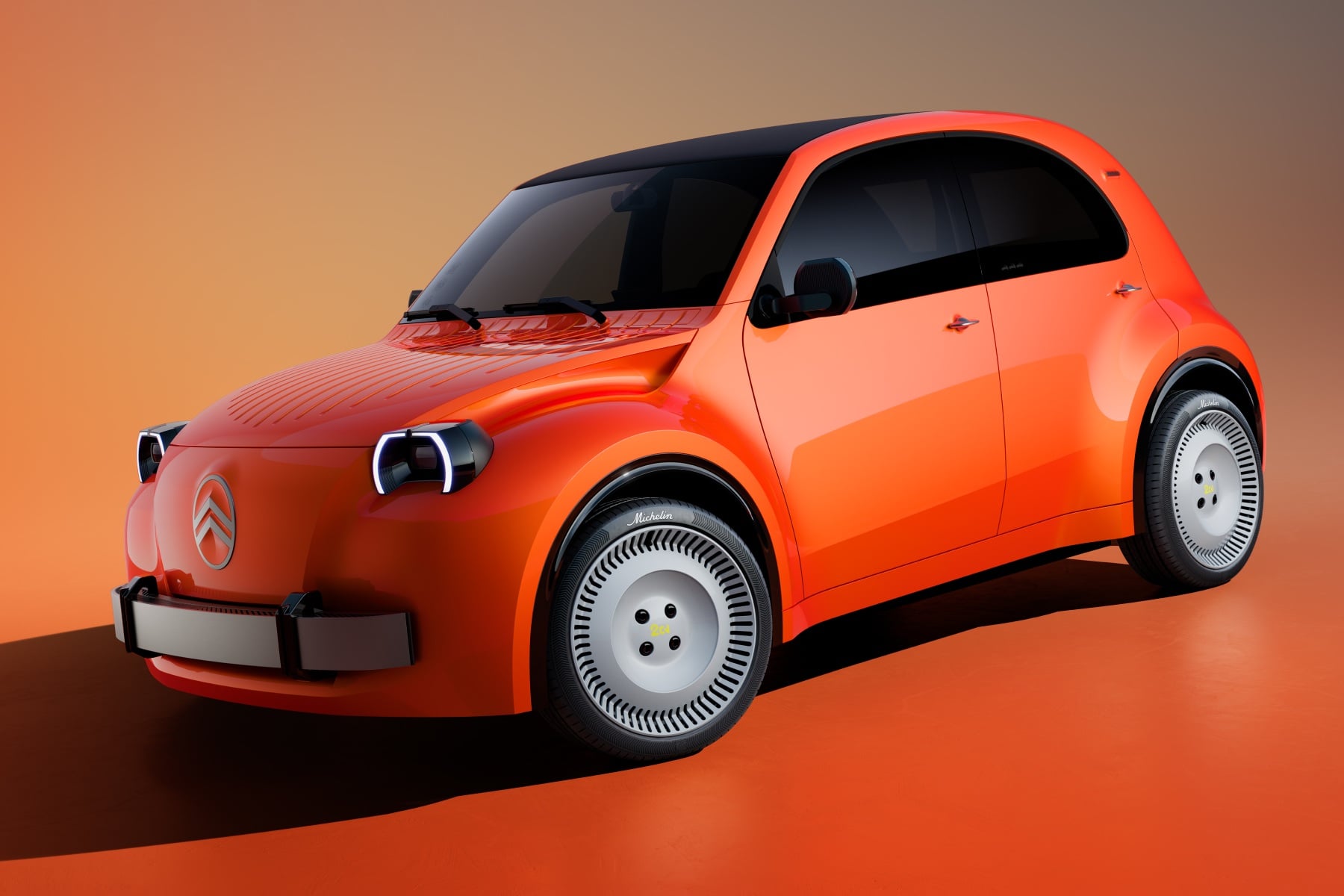
Citroën has pulled the wraps off a modern reinterpretation of its most famous people’s car at the 2026 Paris Motor Show. The 2CV Concept takes the spirit of the post-war original — simplicity, affordability and everyday usefulness — and rebuilds it around an electric drivetrain. Rather than chasing nostalgia for its own sake, the brand says the exercise is about stripping electric mobility back to what drivers actually need.
The original 2CV won hearts not through clever advertising or striking styling, but because it solved real problems for ordinary people. Citroën argues that today’s EV market has drifted in the opposite direction, piling on features and gimmicks to stand out. The concept deliberately avoids that path, including only functions that deliver visible, tangible benefit. CEO Xavier Chardon framed the project as reinventing what made the car unique — its simplicity, accessibility and the freedom it gave owners — rather than copying a machine from the past.
Visually, the concept nods to the 1948 original without disappearing into retro pastiche. Standalone headlights, gently flared fenders and vertical creases on the bonnet and tailgate echo the historic car, while a folding fabric roof keeps the link to the original and trims weight. Citroën is targeting a kerb weight of roughly one tonne for the production version, which would cut running costs and allow a smaller battery to cover everyday range.
Inside, the cabin rejects screen overload. Instead of a wall of displays and a button-heavy steering wheel, there are levers, switches and a compact 8-inch touchscreen with rotary controls, plus a driver display projected into the line of sight. A removable basket sits between driver and passenger, the retro radio lifts out, and door-mounted egg holders wink at the original’s famous brief to carry eggs safely across a rough field. The front bench can be detached and used outside the car, and a second bench serves the rear.
Measuring 3.76 metres, the concept is actually shorter than the original 2CV, slotting between the Ami and C3 in Citroën’s line-up by both size and price. The company is aiming for a starting figure of around €15,000, with a production model expected by 2028. That car will have to meet EU rules for small electric vehicles — the M1E category — meaning European production and a length capped at 4.20 metres. Citroën has not yet published technical specifications for the concept. The brand also worked with Michelin on a virtual “digital tyre twin”, a computer model that tracks pressure, temperature and wear in real time and lets the car adapt its assistance systems to conditions.
What do you think?