
For the First Time, Gas-Only Cars Drop Below Half of Global New Car Sales
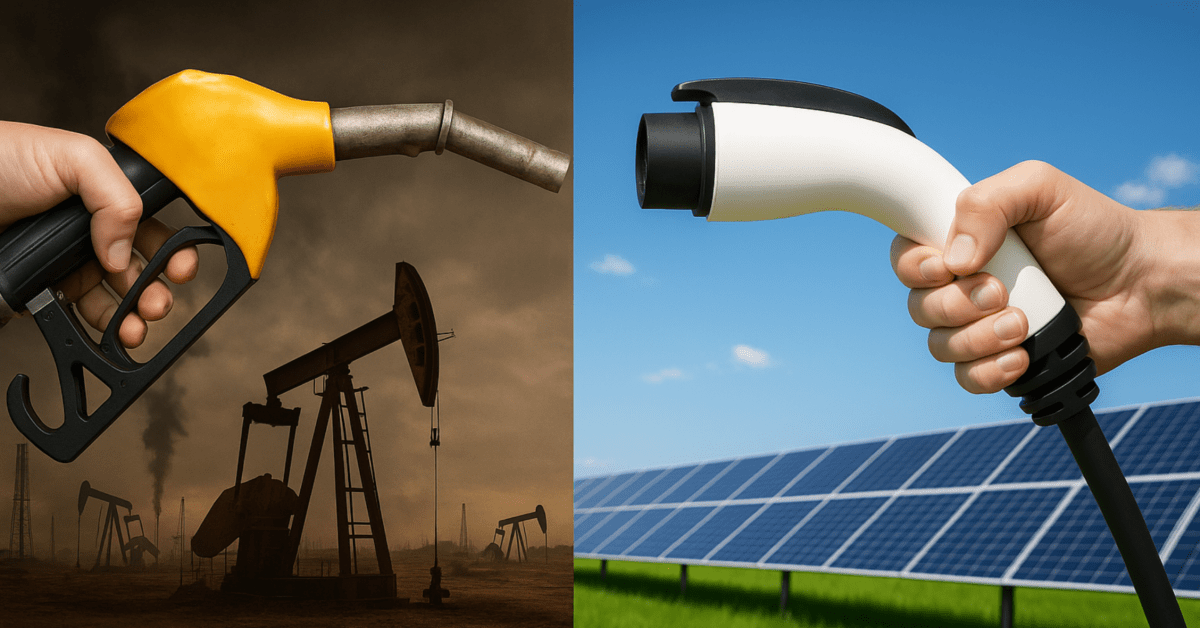
A threshold that once seemed distant has now been crossed. According to data from Mobility Global — the automotive research firm that was spun off from S&P Global earlier this year and was first reported by Nikkei — purely gasoline-powered vehicles accounted for just 49% of new car sales worldwide in the first half of 2026. That marks the first time on record that gas-only cars have fallen below the halfway mark, and it represents a dramatic 24-point decline from their 73% share in 2021. In absolute terms, gasoline-only sales slid 10% year-over-year to 20.25 million units between January and June.
The broader powertrain picture is more nuanced than the headline suggests. Battery-electric vehicles grew 12% to 6.87 million units, capturing 17% of the market, while conventional hybrids rose 10% to 7.27 million units, or 18%. Notably, hybrids outsold pure EVs — a reminder that a significant portion of the shift away from gasoline is landing on electrified vehicles that still carry an engine. Add diesel and plug-in hybrids into the mix and roughly 83% of the world’s new cars in 2026 still came with some form of combustion power. Only the 17% that is fully electric burns no fuel at all.
Regionally, the momentum varies sharply. Battery-electric sales climbed 32% in Europe to 1.81 million units, surged 81% in Southeast Asia to 350,000, and more than doubled in Oceania to 110,000. China, which alone accounts for half the global EV total, dipped 3% to 3.44 million, while North America slipped 15%. Gas-only sales recorded their steepest declines in China, down 26%, followed by Europe at 13%. Analysts attribute part of the acceleration to elevated fuel prices tied to Middle East tensions, which pushed buyers toward lower running costs. With the overall market contracting about 5% in the period, gas-only sales fell at roughly double that rate.
The United States stands out as the exception, but the data there tells a more interesting story than simple headlines suggest. After the federal EV tax credit expired, Cox Automotive expects third-quarter EV sales of around 239,000 units — roughly 6% of the market and down about 45% from the prior year’s rush. Yet those buyers did not flock back to gasoline. Instead, hybrid volume jumped 23% to a record 16.3% share, while the combined ICE share actually fell from 77.6% to 76.8%. Electrified vehicles as a whole edged up from 22.4% to 23.2% of the market.
What makes this milestone particularly striking is how quickly it arrived. Gas-only cars shed nearly a quarter of their global market share in under five years, and no credible data points to a reversal. Industry observers also note that EV owners rarely return to combustion — a dynamic reinforced by consumer surveys showing the overwhelming majority of electric drivers intend to stay electric. While the first-half figure reflects a six-month window during an oil price shock, the underlying trajectory appears to be accelerating rather than stalling. The question now is not whether gasoline will eventually lose its majority for good, but how fast the remaining engine-equipped share — hybrids, PHEVs and diesels included — will follow.
What do you think?